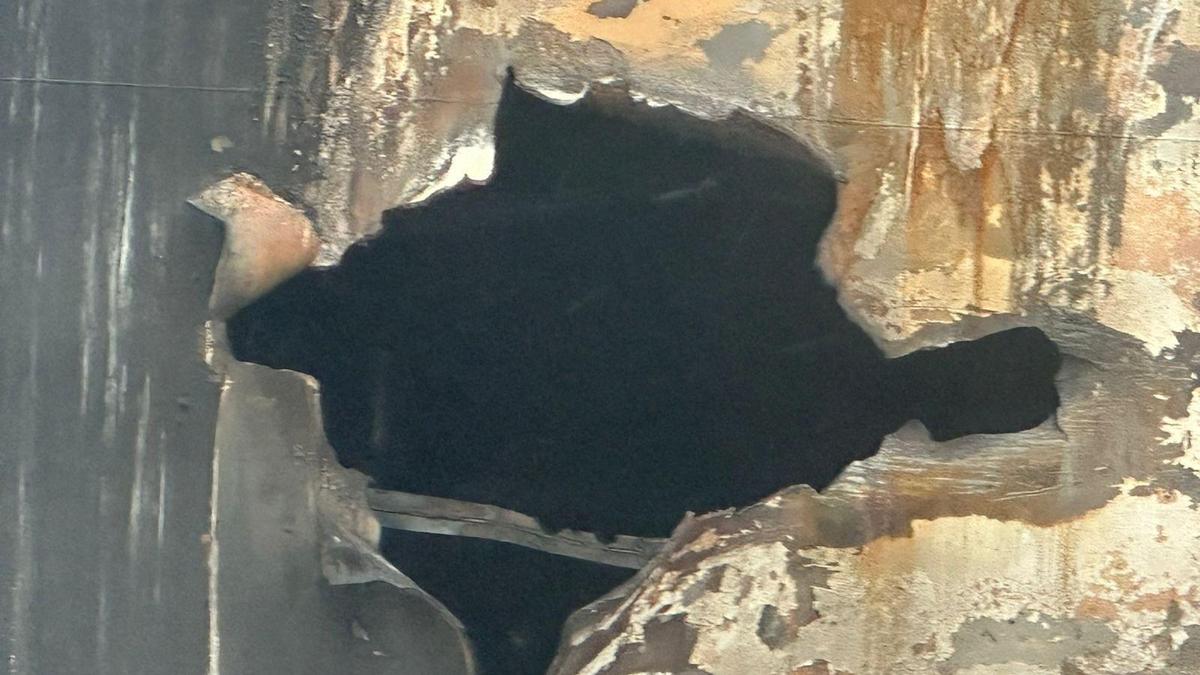
The coffee in Martha’s mug was still warm when the first vibration rattled the windowpane. It wasn’t the sharp, localized crack of a car backfiring or the low rumble of a passing freight train. This was different. It was a heavy, visceral thrum that seemed to originate from the earth itself, vibrating upward through the soles of her slippers. Martha lives in a small border town where, for decades, the most exciting news was the annual harvest festival. Now, the news is a constant, low-frequency hum of anxiety.
War is usually something viewed through the sterile glass of a smartphone screen. It is a series of blue and red arrows on a digital map, a collection of statistics about caloric intake and troop movements. But when conflict edges toward a border, it ceases to be a data point. It becomes a sensory experience. It is the smell of diesel from convoys that never used to pass this way. It is the sight of a neighbor suddenly boarding up a cellar that has been empty since the seventies.
The Geography of Fear
Distance is a psychological construct. We tell ourselves we are safe because we are "here" and the trouble is "there." But map lines are invisible to the wind, and they are increasingly porous to the fallout of modern combat. When war feels next door, the very concept of home begins to liquefy.
Consider the hypothetical case of a town like Martha’s—let’s call it Oakhaven. Geographically, Oakhaven is twenty miles from a contested zone. On paper, it is at peace. In reality, the local economy has already collapsed. The supply chains that brought fresh produce and spare parts have snapped. The "invisible stakes" aren't just about physical safety; they are about the erosion of the future. Why plant a garden if you might not be there to harvest it? Why invest in a business when the bank across the border just evaporated?
This is the hidden tax of proximity. It is a slow-motion trauma that rarely makes the evening news. The cameras are focused on the craters and the smoke plumes, but they miss the quiet desperation of a father sitting at a kitchen table, staring at a map and wondering if twenty miles is enough of a head start.
The Sound of Silence
In a peaceful society, silence is a luxury. In a border zone, silence is terrifying.
When the birds stop singing and the usual chatter of the street dies down, the mind fills the vacuum with every horror it has ever read about. This is where the psychological weight of conflict truly settles. It’s the "What if?" that follows every meal.
- What if the power grid goes down tonight?
- What if the bridge is closed by morning?
- What if the people we see fleeing today are just the first wave?
These questions aren't academic. They are survival calculations made in the dark. The human brain is not wired for prolonged uncertainty; it is wired for action. But when the threat is a geopolitical tide, there is no action to take. You simply wait. You watch the horizon. You listen for the thrum.
The Economics of the Suitcase
There is a specific kind of grief involved in deciding what fits into a single piece of luggage. This is the moment abstract war becomes a physical reality. It is the weight of a photo album versus the weight of an extra gallon of water. It is the realization that your entire life—your books, your heirlooms, your heavy winter coats—can be reduced to what you can carry while running.
Statistics tell us that millions are displaced every year. What they don't tell us is the smell of those suitcases: a mix of mothballs, hurried sweat, and the dampness of a basement. They don't mention the way a child clings to a plastic toy because it is the only thing that still connects them to a world that made sense forty-eight hours ago.
We often talk about "refugees" as a monolithic group. We forget that every person in that line was, until very recently, someone who cared about their lawn, or their high school exams, or the specific way the light hit their kitchen at 4:00 PM. War doesn't just destroy buildings. It destroys the context of a human life.
The Invisible Shield
We like to believe in the "robustness" of our institutions. We trust that the treaties signed in mahogany-rowed rooms will hold back the tide. But for those living on the edge, those papers feel thin.
The real shield isn't a treaty. It’s the community.
In Martha’s town, something strange happened as the tension rose. People who hadn't spoken in years started sharing generators. The local baker stopped charging for day-old bread, leaving it in a basket on the curb for those passing through. There is a communal defiance in kindness. When the world outside turns predatory, the world inside the neighborhood often turns protective. This is the "human element" that data analysts can't quantify. You cannot put "neighborly love" on a tactical map, but it is often the only thing keeping the social fabric from tearing apart completely.
The Anatomy of a Border
A border is more than a line on a map; it is a psychological threshold. On one side, there is the familiar. On the other, the unknown. When war reaches that line, the border stops being a gateway and starts being a mirror. It forces us to look at our own vulnerability.
We see the people crossing—tired, dusty, eyes wide with a thousand-yard stare—and we see ourselves. We realize that the only thing separating our morning coffee from their forced march is a few miles of dirt and a stroke of luck.
The tension doesn't just go away when the noise stops. It settles into the bones. Even if the conflict recedes, the memory of the vibration remains. The windowpanes are still there, but they feel more fragile than they did before.
The Cost of Watching
There is a unique exhaustion that comes from being a witness. For those living "next door," the war is a 24-hour performance they never asked to attend. They see the flares at night. They hear the jets. They watch the plumes of smoke rise like black ink in a clear bowl of water.
This proximity creates a strange kind of survivor's guilt. You are safe, for now. You have a roof, for now. But the "for now" is a heavy burden. It prevents you from fully inhabiting your own life. You live in a state of perpetual readiness, a coiled spring that never gets to release.
The experts talk about "geopolitical shifts" and "regional instability." They use words that sound like they belong in a textbook. They don't talk about the way Martha’s hands shake when she tries to pour more coffee. They don't talk about the way the local children have stopped playing "soldier" and started playing "doctor," because they’ve seen too many of the former and not enough of the latter.
The Weight of the Morning
The sun eventually rises, even over a landscape of fear. In the morning light, the red glow on the horizon fades into a pale, dusty yellow. The vibrations might stop for a few hours. The birds might even try a few notes.
But the town is changed. The people are changed.
They have learned the most uncomfortable truth of the modern age: the world is much smaller than we thought. The "next door" isn't a metaphor anymore. It is the street you live on. It is the person you see in the mirror.
Martha finishes her coffee. It’s cold now. She doesn't pour a fresh cup. Instead, she goes to the hallway and checks the bag she packed three nights ago. She touches the zipper, feels the weight of it, and then sits back down.
The vibration starts again. Low. Steady.
She doesn't look at the news. She doesn't need to. She just watches the dust dance in a shaft of light on the floor, waiting to see if the windowpane will hold this time.