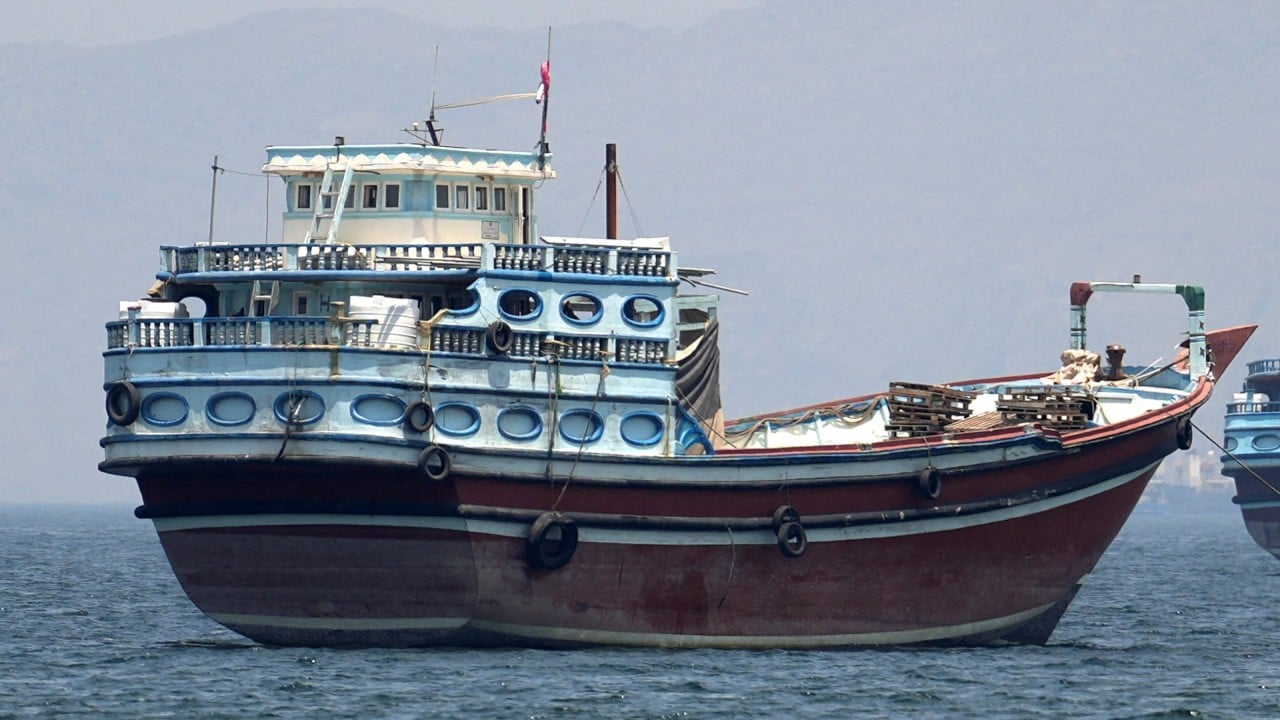
The sun beat down on the shimmering waters of the Strait of Hormuz, where the world’s pulse is measured in barrels per day. On the deck of a weathered freighter, a sailor watches the horizon. He isn't looking for storms. He is looking for gray hulls and the silent, invisible weight of a global economy being squeezed into a chokehold.
Thousands of miles away, in the air-conditioned theater of the White House, the rhetoric is sharpening. Donald Trump stands before a bank of microphones, his words carrying the weight of a naval blockade that isn't just about ships and steel. It is about the fundamental leverage of survival. The message to Tehran is blunt, stripped of the usual diplomatic lace: "Get smart soon."
This isn't a chess match played with wooden pieces. It is a high-stakes standoff where the board is the global energy market and the pieces are the lives of millions caught between a revolutionary regime and a superpower’s resolve.
The Anatomy of a Squeeze
A blockade is a strange, quiet kind of war. It doesn't always start with an explosion. It starts with a signature on a piece of paper in Washington. Then, the ripples move outward. Insurance companies stop covering tankers. Banks freeze lines of credit. Suddenly, a nation that sits on some of the largest oil reserves on the planet finds itself unable to sell a single drop to a legitimate buyer.
Imagine a man standing in a lush garden, surrounded by fruit, yet forbidden from taking a single bite or selling a peach to his neighbor. That is the reality of the "maximum pressure" campaign. The United States has signaled that this stalemate could last for months—perhaps longer. The goal is simple, yet devastatingly difficult to achieve: force a total behavioral shift in a government that has spent decades building its identity on resistance.
The strategy relies on the idea that every system has a breaking point. If you stop the flow of capital, you stop the ability to fund proxies, to build missiles, and to maintain domestic order. But the human cost of that pressure doesn't just hit the halls of power in Tehran. It hits the bazaar. It hits the family trying to buy imported medicine. It hits the student watching their currency evaporate before their eyes.
The View from the Bridge
To understand why this is happening, one has to look at the map. The Strait of Hormuz is a narrow throat. At its skinniest point, the shipping lanes are only two miles wide. Through this tiny passage flows nearly a third of all seaborne-traded oil.
When the President warns Iran to "get smart," he is referencing the looming threat of a total maritime shutdown. If Iran retaliates by trying to close that throat, the world doesn't just see a price hike at the pump. The world sees a systemic cardiac arrest.
Consider a hypothetical logistics manager in Singapore named Chen. For Chen, a blockade in the Middle East means his entire supply chain is now a series of red blinking lights. If the tankers don't move, the refineries in Asia go dry. If the refineries go dry, the factories stop. If the factories stop, the global consumer feels the ghost of a conflict they thought was "over there" suddenly haunting their own bank account.
The United States is betting that its naval superiority can maintain the flow while keeping the Iranian economy in a cage. It is a delicate, dangerous dance. One miscalculation by a drone operator or a fast-boat commander could turn a cold blockade into a hot war in the space of a heartbeat.
The Psychology of "Getting Smart"
What does it mean for a nation to "get smart" in the eyes of an American president?
In this context, it means abandonment. Abandonment of the nuclear path, abandonment of regional influence, and a return to the negotiating table from a position of profound weakness. The White House is operating on the belief that the Iranian leadership is fundamentally rational—that they will eventually choose survival over ideology.
However, the history of the region suggests that "smart" is a subjective term. To a hardline cleric or a Revolutionary Guard commander, "smart" might look like doubling down. It might look like asymmetrical warfare, using mines and "ghost tankers" to bypass the very blockade designed to hold them.
There is a psychological tug-of-war happening. Trump’s rhetoric is designed to project a sense of inevitability. He wants the world—and specifically the Iranian people—to believe that the current path leads only to a dead end. By stating the blockade could last months, he is removing the hope of a quick reprieve. He is settling in for a siege.
The Invisible Stakes
We often talk about these events in terms of geopolitics, a word that sounds like it belongs in a textbook. But geopolitics is just a fancy name for the way geography forces us to fight or cooperate.
The invisible stakes are the precedents being set. If a superpower can successfully isolate a major regional power through financial and maritime dominance alone, the nature of global conflict changes. The battlefield becomes the SWIFT banking system and the hull of a VLCC (Very Large Crude Carrier).
The sailor on that freighter in the Strait knows this. He feels the tension in the way the radar sweeps the horizon. He knows that he is a tiny speck in a massive game of chicken. He is the human element in a story that the headlines usually distill into "crude oil futures" and "diplomatic warnings."
The "months" Trump speaks of will feel like a lifetime for those on the ground. For the American taxpayer, it’s a question of how long the U.S. can maintain such a massive naval presence without a spark turning into a blaze. For the Iranian citizen, it’s a question of how much more the floor can drop before there is nothing left to stand on.
The air in the Oval Office is still. The cameras have been packed away, and the President has moved on to the next briefing. But the words remain, hanging over the Persian Gulf like a low-pressure system before a hurricane. The blockade holds. The ships wait. The world holds its breath, waiting to see who flinches first in a contest where the prize is not victory, but the mere permission to breathe again in the global marketplace.
History is rarely made by the people who want peace; it is made by those who have the power to define the terms of the struggle. Right now, those terms are being written in the cold language of an embargo, and the ink is the very oil that the world so desperately craves.
The valve is closed. The hand on the handle is firm. And the clock is ticking toward a "smart" decision that neither side seems ready to make.