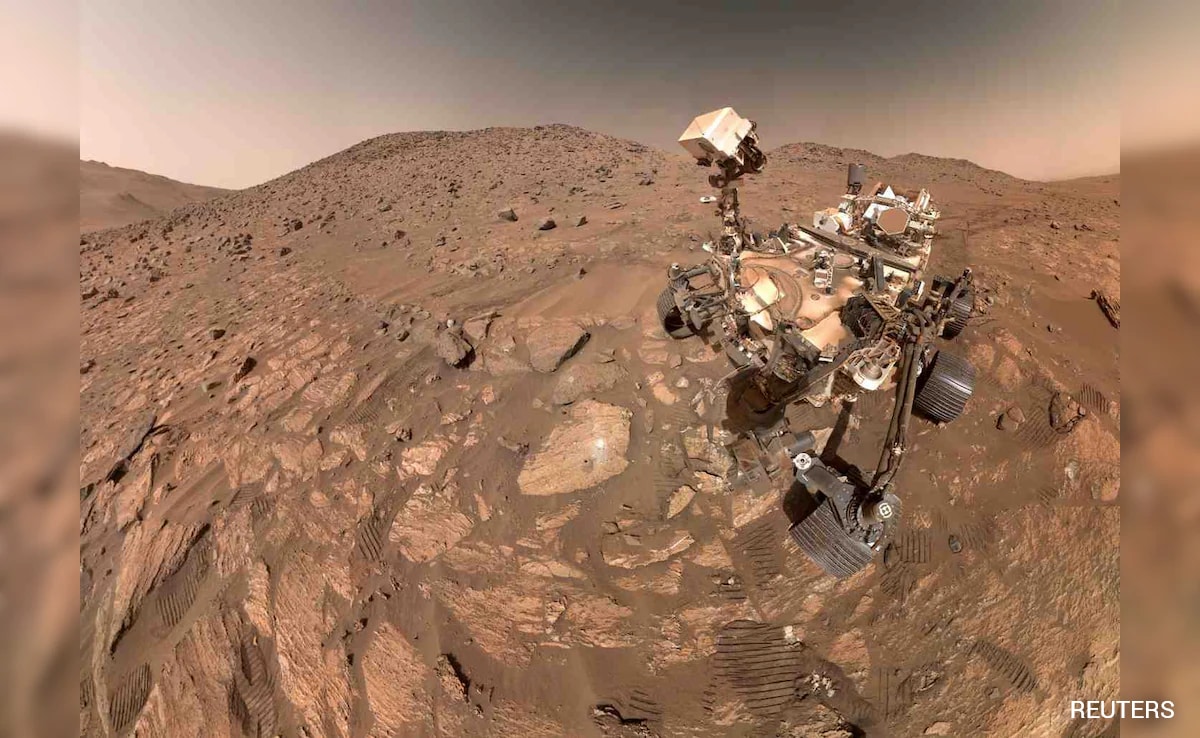
Mars isn't the dry, red husk we see today. It used to be alive with the sound of rushing water. That's not just a poetic guess anymore. NASA’s Perseverance rover just beamed back data that practically confirms a massive, 4-billion-year-old river delta sits buried beneath the dust of Jezero Crater. This isn't just another "maybe there was water" story. This is the smoking gun for a wet, habitable Mars that lasted far longer than we previously thought.
If you’ve been following the Mars missions, you know the drill. We find some clay, we find some salts, and we say, "Hey, water was here." But this discovery is different. We're looking at a structured, layered delta system that rivals the complexity of the Mississippi or the Nile. It’s a geological time capsule.
Why the Jezero Crater Discovery is a Huge Deal
For years, the scientific community debated whether Mars had persistent rivers or just flash floods from melting ice. Flash floods don't build deltas like this. To get the kind of sedimentary layering Perseverance found, you need stability. You need a river that flowed for tens of thousands, maybe millions, of years.
The rover used its RIMFAX (Radar Imager for Mars' Subsurface Experiment) to peer 65 feet underground. What it saw was startling. Instead of a jumble of rocks, it found neat, tilted layers of sediment. In geology, we call these "foreset beds." They only form when a steady river hits a larger body of water—in this case, a massive lake that once filled the entire 28-mile-wide crater.
Think about that. Four billion years ago, while Earth was just starting to figure out single-celled life, Mars had a lake the size of Lake Tahoe fed by a constant river. If you're looking for life, this is the prime real estate. Deltas are nature's best filters. They trap organic matter in fine-grained silt and bury it quickly, protecting it from the harsh radiation that fries everything on the Martian surface today.
The Secret Layers Beneath the Dust
The radar data reveals that the delta wasn't built in one go. It shows signs of two distinct periods of activity. There’s a lower layer of steady, calm deposition. This suggests a long-term, stable climate. Then, there’s a layer above it with much larger boulders. That indicates a shift to high-energy flooding later in the planet’s history.
This tells us the Martian climate didn't just "switch off." It went through violent, dramatic transitions. Scientists like Briony Horgan and the team at Purdue University have been analyzing these images, and the consensus is shifting. We aren't just looking at a "wet phase." We're looking at a complex planetary history that includes a fluctuating atmosphere.
Most people think Mars lost its water because it’s small and its core cooled down. That's true, but the timeline is the shocker. This delta dates back to the Noachian period, about 3.7 to 4.1 billion years ago. Finding such a well-preserved structure means the geological record on Mars is actually better than Earth's. Why? Because Mars doesn't have plate tectonics. On Earth, the crust gets recycled. On Mars, the history just sits there, waiting for a robot to drive over it.
What This Means for Finding Ancient Life
Let's get real about the "L" word: Life. NASA isn't saying they found Martians. But they found the place where Martians would’ve lived. In any delta on Earth, the bottom-set beds—the deepest, finest layers of mud—are teeming with microbial life.
Perseverance has already started drilling. It’s collecting "pucks" of this delta material. These samples are the most valuable rocks in the solar system. The rover is currently caching them on the surface for the Mars Sample Return (MSR) mission.
Here is the kicker. If those samples contain "biosignatures"—chemical footprints left by ancient microbes—we’ll know for a fact that life isn't unique to Earth. That changes the math for the entire universe. If two planets in one solar system both started life, then the galaxy is likely crawling with it.
The Problems with the Current Mission
It’s not all high-fives at NASA. The Mars Sample Return mission is in a bit of a funding crisis. It’s expensive. It’s complicated. It involves launching a rocket from the surface of another planet, which we've never done.
Some critics argue we should just send better labs to the rover. But you can't fit a multi-billion dollar, building-sized mass spectrometer onto a rover. To know for sure if those 4-billion-year-old layers contain life, we have to get them back to Earth. The discovery of this buried delta raises the stakes. We can't afford to leave these samples sitting in the dirt.
How to Track the Next Big Discovery
If you want to keep up with what Perseverance is doing, you don't need to wait for the big press releases. NASA actually dumps a lot of the raw image data onto their public servers almost daily.
- Watch the SHERLOC and WATSON instruments: These are the tools looking at the chemistry of the rocks at a microscopic level.
- Follow the "Delta Top" progress: The rover is currently climbing onto the flat top of the delta. This area contains "light-toned" rocks that are rich in carbonates—minerals that are fantastic at preserving fossils.
- Check the MSR status: Keep an eye on the European Space Agency (ESA) and NASA's joint updates on the retrieval lander.
The discovery of the buried river delta proves that our early models of Mars were too simple. It wasn't just a frozen ball of rock. It was a world of lakes, rivers, and deltas. It was a world that looked a lot like home.
You can head over to the NASA Mars Exploration website to see the latest raw images from the Jezero Crater. Looking at a 4-billion-year-old riverbed in high-def is about as close to time travel as you're ever going to get.