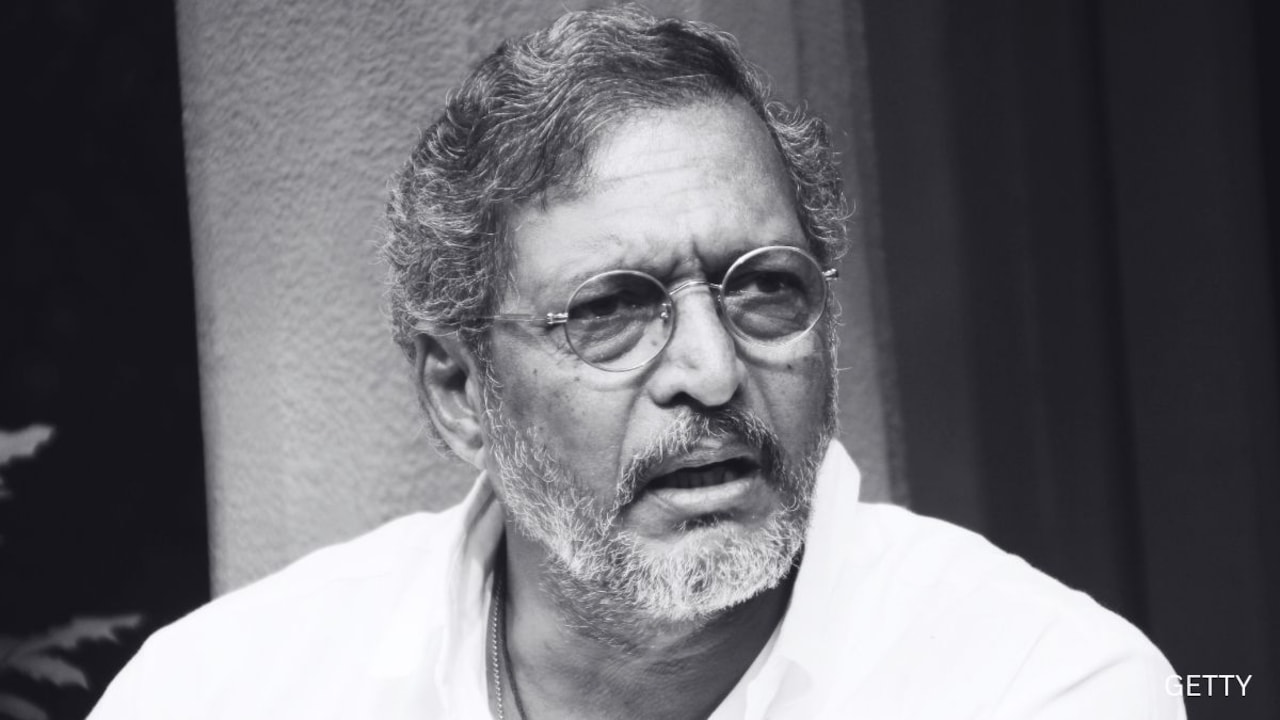
We have confused volume for virtue for decades.
Whenever Nana Patekar opens his mouth on a screen or a public stage, the internet erupts with collective awe. Commentators trip over themselves praising his "plain-speak," his lack of filter, his willingness to say what everyone else is thinking. He plays the perpetual outsider, the gritty common man who refuses to play the polite game of polite society. For a closer look into this area, we suggest: this related article.
It is a brilliantly sustained performance. And it is entirely a myth.
True authenticity does not require a roaring voice, flaring nostrils, and theatrical indignation every single time an opinion is registered. Real candor is quiet, consistent, and often boring. What Patekar has mastered is not raw honesty; it is a specialized brand of performative disruption that benefits the performer far more than the listener. When a man spends his entire career cultivating a persona of aggressive bluntness, that bluntness ceases to be a reflex of character and becomes a protected brand asset. For further information on this issue, in-depth coverage is available at The New York Times.
Look closer at the mechanics of this worship. The lazy consensus in cultural commentary is that his style represents a dying breed of unfiltered integrity in a sanitized film industry. That narrative falls apart the second you examine the power dynamics of how he communicates. When someone with immense cultural capital, towering physical presence, and systemic protection screams truths about society, it is not courageous rebellion. It is a monologue where dissent is effectively silenced by the sheer intimidation factor of the delivery.
We need to stop praising the weaponization of volume.
The Currency of Manufactured Roughness
Industry insiders love to talk about how actors evolve. They praise the ones who shed their gloss for grit. But let us look at the actual utility of raw speech in modern media.
If you package your opinions inside a digestible shell of rage and rustic folksiness, you bypass critical scrutiny. Audiences hear the anger and mistake it for accuracy. They assume that because a man sounds angry enough to break a chair, his underlying premise must be ironclad. That is a cognitive trap. Anger is an emotional state, not an audit.
I have watched public figures weaponize rough edges to deflect accountability for decades. The moment someone questions the substance of their claims, the defenders rush in with the shield of character: "Oh, that is just how he is, he tells it like it is!" It is a bulletproof vest woven from low expectations. We hold everyday citizens to higher standards of constructive discourse than we do celebrated actors who throw verbal tantrums under the banner of honesty.
Consider what actually happens when someone employs plain-speak in a controlled environment like a movie promotion tour or a televised interview. They are performing for an audience that desperately wants to believe authenticity still exists in a manufactured world. Patekar delivers the commodity they crave. He gives them the illusion of a reality check without any of the actual systemic risk.
The Cost of Confusing Tone with Truth
Let us define terms properly since modern media refuses to do so.
Plain-speak is the elimination of jargon and diplomatic padding to clarify a complex truth. It requires intellectual rigor. It means stripping away your own ego to make an idea accessible and actionable.
What Patekar offers is emotional venting disguised as philosophy. There is a vast, unbridgeable chasm between saying something harsh and saying something true. You can be brutal and completely wrong simultaneously. In fact, brutality is frequently deployed precisely because the underlying argument cannot survive a quiet, rational examination.
When an actor stands on a stage and rails against hypocrisy while operating inside the very machinery that creates it, we call that irony. The public calls it bravery. This is the central contradiction of the cult of the rugged man. He critiques the system using the platform the system built for him, funded by the corporate entities he pretends to despise, while his raw delivery ensures no one can interrupt him long enough to point out the contradiction.
Imagine a scenario where we stripped away the thunderous delivery, the dramatic pauses, and the signature gravelly cadence, and transcribed his iconic monologues into plain, neutral text on a white page. Much of the magic evaporates. What remains is a series of generalized frustrations about human nature that any cynical uncle could rattle off at a family dinner. The genius was never in the insight. The genius was in the delivery system.
Why We Fall For The Scripted Outburst
Audiences are exhausted. Modern life is a suffocating labyrinth of curated corporate communication, HR-approved apologies, and focus-grouped public relations statements. Everyone sounds like an automated legal disclaimer.
Into this sterile landscape steps a man who yells, points fingers, and refuses to smile for the camera. It feels like a breath of fresh air. It feels like rebellion.
That is the psychological hook. Because corporate language is so fake, we swing violently to the opposite extreme, assuming that any speech act that violates polite norms must inherently possess moral purity. This is a false binary. A lie shouted at the top of your lungs is still a lie. A toxic mindset wrapped in a homespun jacket is still toxic.
The danger of this worship is that it trains a generation of consumers to equate empathy with weakness and aggression with strength. If you speak softly, carefully, and with measured nuance, you are labeled weak or evasive. If you pound the table and sneer at convention, you are a visionary truth-teller.
That is a catastrophic inversion of intellectual values.
Dismantling the Unfiltered Saint
The trust we place in these cultural archetypes is entirely misplaced because it ignores their self-preservation instincts. No one builds a multi-decade career on pure, unadulterated volatility. True unfiltered chaos is commercially unviable. What we are watching is a carefully managed brand of wildness—a tame beast kept in a rustic cage, let out periodically to roar for the amusement of the ticket-buying public.
When you look at the track record of those who champion this style, you find a common thread. They rarely subject their own core assumptions to rigorous peer review. They do not build sustainable models for change; they drop dramatic soundbites and walk away, leaving the audience to clean up the emotional debris.
Admitting the appeal of this style is easy. It scratches an itch. It feels good to watch someone break the rules on television. But feeling good and being right are two entirely different metrics.
Stop confusing the decibel level of a statement with its depth. Stop rewarding performers for acting like they are too important for manners. And above all, stop letting a thunderous voice do the heavy lifting for an argument that has nothing underneath it.
The next time someone tells you they admire a public figure because he tells it like it is, ask them what specific structural change that honesty produced.
Silence is usually the answer.


