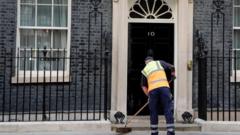
The recent outcry from Conservative council leaders in Westminster, Wandsworth, and Kensington and Chelsea is not merely partisan theatre. It is the sound of a fiscal engine stalling. These local authorities have formally challenged Prime Minister Andy Burnham’s government, arguing that a new, rigid funding formula effectively mandates aggressive council tax hikes. By redirecting central government grants toward more deprived areas, the current administration has effectively shifted the financial burden of essential services onto the residents of these specific boroughs. The reality for these town halls is stark: they face a choice between implementing unprecedented tax increases or gutting local services.
The dispute centres on the government’s latest funding realignment, an update to the so-called Fair Funding Review. The policy logic is ostensibly simple: move money from the wealthiest boroughs, which have historically maintained lower council tax rates, to those with higher social needs. However, for local leaders, the mechanism is less about fairness and more about political misdirection. By reducing grant funding, the government has created a shortfall that can only be filled by raising council tax revenue. Discover more on a connected issue: this related article.
This creates a perverse incentive structure. Councils that kept their tax rates low for years are now being punished for their past fiscal prudence. In the case of Westminster, projections suggest that without a change in course, the authority might eventually face the need for drastic, double-digit tax hikes to bridge a funding gap expected to reach £100 million over the next three years. These are not merely administrative figures; they represent the potential dismantling of neighborhood maintenance, library access, and youth services.
The Myth of Local Autonomy
Central to the tension is the definition of local authority power. The government maintains that it is providing flexibility, noting that several councils have been granted permission to exceed the standard five percent council tax threshold for the coming two years. Yet, for the local leaders in the firing line, this is not empowerment. It is a cynical transfer of accountability. Additional reporting by NBC News delves into related perspectives on this issue.
If a local government raises taxes, it wears the political cost. If it chooses to cut services, it faces the ire of its own residents. In either scenario, the decision originates in Whitehall, yet the blame lands in the town hall. By baking these "assumed" tax increases into the national finance settlement, the central government has effectively stripped councils of their ability to set their own fiscal destiny.
Consider a hypothetical scenario where a borough is stripped of £20 million in annual grant support. To close that gap, the council leadership must either announce a significant increase in local levies or reduce waste collection frequencies and close community centers. If they choose the tax route, they are criticized for being out of touch with rising costs of living. If they cut services, they are seen as failing their statutory duties. The government gains the budgetary savings from the grant cuts, while the local leader becomes the face of the resulting austerity.
The Structural Rot
The broader issue is that council tax in England is a relic, tied to property valuations that have not been reassessed since 1991. Because the tax bands do not reflect current market values, they fail to provide a stable or equitable revenue base. London, where property prices have decoupled from national trends over the last three decades, is particularly susceptible to the distortions this creates.
The government’s decision to squeeze these boroughs suggests a willingness to ignore the systemic instability of the funding system in favor of short-term budgetary rebalancing. While there is a valid argument that wealthy areas should contribute more to national welfare, the implementation here is blunt-force trauma rather than surgical adjustment. It ignores the reality that even "wealthy" boroughs have pockets of extreme poverty and high concentrations of statutory service users, such as those relying on adult social care.
Furthermore, these shifts are occurring during a period of intense inflationary pressure. Local authorities are already struggling with the rising costs of temporary accommodation and social care—both of which are statutory requirements that cannot be ignored. When a local budget is squeezed, these essential services are the last to be touched, meaning the "fat" that might be cut from the budget has often long since been trimmed away.
When Policy Meets Reality
The government’s spokesperson claims that the reforms protect councils from a "cliff edge." But for the leaders on the ground, the cliff is already beneath their feet. When grant funding is withdrawn, the "flexibility" to raise taxes is an illusory benefit. It forces a collision between the council and its tax-paying base, turning citizens against their own local representatives.
This political friction is likely to intensify as the reality of the 2026-2027 settlement hits household budgets. Residents who have enjoyed relatively stable council tax bills are suddenly staring down the barrel of sharp increases. When those bills arrive, the explanation that the shortfall was caused by a national funding formula will offer little comfort to a household struggling to balance its own ledger.
Ultimately, the impasse reveals the limits of modern governance. We are seeing a cycle where national policy is dictated by mathematical formulas that ignore the granular reality of local service delivery. Unless there is a fundamental redesign of how local government is funded—moving beyond the patchwork of annual settlements and legacy tax bands—this tension will only grow. Local leaders are being told to perform a miracle: maintain services, lower local spending, and keep taxes manageable. When the math inevitably fails, it will not be the Whitehall planners who have to answer to the voters on the doorstep. It will be the town halls, left holding the bag for a crisis they did not create.