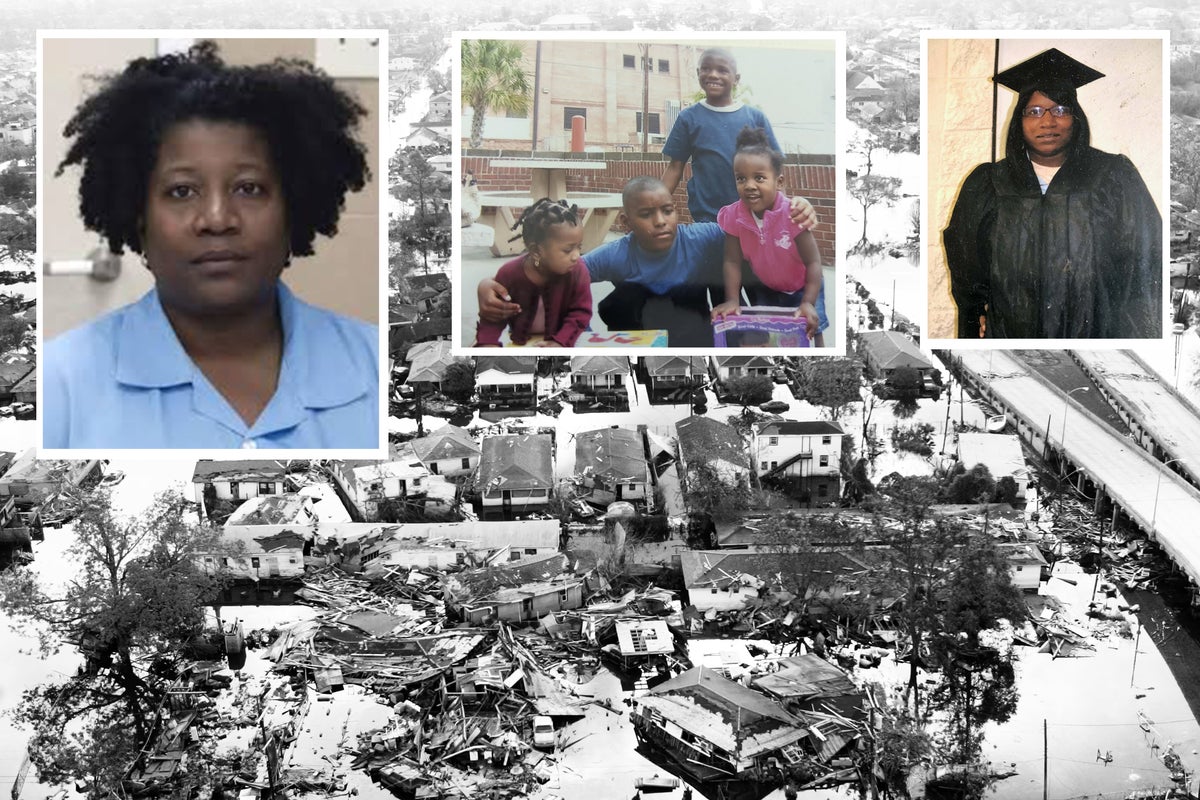
The 2024 parole denial of Tiffany Hall—incarcerated since 2005 for the second-degree murder of her infant during the height of Hurricane Katrina—serves as a case study in the friction between mandatory sentencing structures and the collapse of municipal infrastructure. While public discourse often focuses on the emotional weight of a mother’s struggle to feed a child during a disaster, a rigorous analysis must focus on the breakdown of the Three Pillars of Criminal Liability: the act (actus reus), the intent (mens rea), and the availability of the Necessity Defense.
In Hall’s case, the failure of the Louisiana Board of Pardons and Parole to achieve a unanimous vote—falling short by a single tally—reveals an administrative bottleneck where the law struggles to account for the total failure of the state to provide basic survival resources. To understand the strategic implications of this denial, one must deconstruct the mechanical failure of the New Orleans environment in August 2005 and the resulting legal outcomes that remain rigid twenty years later.
The Infrastructure Collapse and the Necessity Paradox
A legal "necessity" defense operates on the principle that a defendant was forced to choose the lesser of two evils. In the context of Hurricane Katrina, the state of Louisiana failed to maintain its social contract, leaving citizens in a resource vacuum. Hall’s decision to feed her five-month-old daughter, Marquitta, cow’s milk and sugar water because she could not find formula or clean water was a direct byproduct of this vacuum.
The infrastructure failure can be quantified through the Resource Scarcity Matrix:
- Access Failure: The physical inability to reach retail or medical providers due to flooding and lack of transportation.
- Product Failure: The absence of sterilized, age-appropriate nutrition (infant formula).
- Substitution Risk: The biological incompatibility of unpasteurized or undiluted cow’s milk for infants under six months, which leads to electrolyte imbalances and potential death.
From a physiological standpoint, feeding an infant cow's milk triggers a high solute load that the immature kidneys cannot process. This leads to severe dehydration and metabolic acidosis. In a functional society, this is gross negligence. In a post-disaster environment where the "Cost of Compliance" (finding formula) exceeds the physical capacity of the individual, the line between criminal negligence and survival-based decision-making becomes blurred. The prosecution's success in 2005 hinged on the argument that the act of feeding the child an improper substance was a proactive harm, rather than a failure of the state to provide an alternative.
The Asymmetry of Post-Disaster Sentencing
The 2006 conviction of Hall resulted in a mandatory life sentence, a rigid outcome that fails to account for the Environmental Mitigation Variable. When a city's police force deserts and its emergency services cease to exist, the standard of "reasonable care" must logically shift. However, the American legal system rarely adjusts its "reasonable person" standard to account for the total absence of civil order.
The second-degree murder charge in Louisiana traditionally requires a finding that the defendant had specific intent to kill or inflict great bodily harm. In the Hall case, the state leveraged a specific provision regarding "killing during the distribution of a controlled substance" or, more relevantly here, a "killing resulting from cruelty to a juvenile." This bypasses the need to prove a desire for the child’s death, focusing instead on the "cruelty" of providing improper nutrition.
The structural flaw in this prosecution is the omission of the Systemic Contributor. If the state’s failure to provide potable water is the primary driver of the mother’s desperate substitution, the state effectively becomes an unindicted co-conspirator in the child’s death. By maintaining Hall's life sentence, the parole board validates a standard where the individual is held 100% accountable for a catastrophe where the state’s accountability was 0%.
The Parole Board as a Non-Binary Logic Gate
The recent 2-1 vote in favor of Hall’s release—which resulted in a denial because Louisiana requires a unanimous decision for life sentences—demonstrates the high "Friction Cost" of clemency. The board’s structure acts as a high-pass filter that effectively traps defendants who were convicted during periods of extreme social volatility.
Two primary factors drive this administrative stasis:
- Political Risk Aversion: Board members often weigh the potential for recidivism against the "optics" of releasing a person convicted of a crime against a minor, regardless of the unique disaster context.
- The Finality Doctrine: A preference for upholding the original jury's verdict as a means of maintaining judicial stability, even when the original conditions of the trial (post-Katrina New Orleans) were influenced by mass trauma and a disrupted legal community.
The single dissenting vote functions as a "veto point" in a system that lacks a nuanced grading scale for "disaster-induced crimes." There is no specific legal category for a crime committed because the perpetrator was abandoned by the government. Without this category, Hall is evaluated under the same rubric as a premeditated actor.
The Physiological Mechanism of Maltreat-Substitution
To understand the "why" behind the conviction, one must analyze the biochemical impact of the nutrition Hall provided. Infants lack the digestive enzymes to process the complex proteins in cow's milk.
- Renal Solute Load: Cow's milk contains significantly higher concentrations of protein and minerals (sodium, potassium, chloride) than breast milk or formula.
- Dehydration Loop: To excrete these minerals, the infant's kidneys require more water than the milk itself provides, leading to rapid, lethal dehydration.
- The Information Gap: In 2005, the dissemination of this specific medical risk was non-existent in the Superdome or the flooded streets of New Orleans.
The prosecution framed the use of cow's milk as a "choice," while the defense's failed strategy was to frame it as "mercy." Strategically, both sides missed the Logistical Determinant: if the child would have died of starvation in 24 hours without any intake, and cow’s milk offered a 50% chance of survival over 48 hours, the parent's choice is a mathematical optimization of survival, not a criminal act of cruelty.
Strategic Path Forward: The Mitigation of Mandatory Minimums
The Hall case is a catalyst for reconsidering how the justice system treats "Event-Driven Offenders." These are individuals with no prior criminal trajectory whose "crimes" are catalyzed by a singular, external shock to the social system.
To prevent future administrative failures of this magnitude, the following adjustments to the legal framework are required:
- Disaster-Conditional Sentencing: Legislation that allows for the automatic review of sentences handed down for crimes committed during federally declared disasters, specifically focusing on cases where resource scarcity was a factor.
- The Removal of Unanimity Requirements in Parole: Shifting the board's decision-making process to a simple majority for cases over 20 years old, thereby reducing the power of a single outlier to maintain a life sentence.
- Expert Testimony on Metabolic Stress: Mandating that in cases of alleged nutritional neglect during crises, the court must admit evidence regarding the "Survival Probability" of various food substitutes available at the time.
The current trajectory for Tiffany Hall depends entirely on the next board hearing or a gubernatorial pardon. As long as the system treats the events of 2005 as a standard environment, the sentence will remain a permanent fixture. The legal system must eventually recognize that when the state fails to provide the basic requirements of life—water, food, and safety—it loses the moral and legal authority to punish citizens for the desperate, imperfect ways they attempt to provide those requirements themselves.
The immediate strategic move for advocates is the filing of a writ based on "Newly Discovered Evidence" regarding the specific failure of the New Orleans water system during Hall's timeline, shifting the burden of "cruelty" back onto the municipal failures of 2005.
Would you like me to analyze the historical precedent for "Necessity Defense" cases during other major US disasters like the 1906 San Francisco earthquake or the 1992 LA Riots?