The border between Afghanistan and Pakistan has transformed from a disputed colonial map line into a permanent firing range where civilians pay the highest price for geopolitical posturing. Recent artillery exchanges in the Kunar and Khost provinces have resulted in the deaths of Afghan children, marking a sharp escalation in a conflict that both Islamabad and Kabul seem unable—or unwilling—to de-escalate. While official statements from the Taliban-led administration and the Pakistani military trade blame for who pulled the trigger first, the underlying reality is a total collapse of the security arrangements that were supposed to stabilize the region following the 2021 US withdrawal.
This is not a simple border skirmish. It is a fundamental breakdown of the relationship between two entities that many analysts wrongly assumed would be natural allies. Instead, we are witnessing a violent recalibration of regional power.
The Myth of the Strategic Depth
For decades, Pakistan’s military establishment viewed a friendly government in Kabul as essential for "strategic depth" against India. They bet on the Taliban to provide this security. That bet has failed spectacularly. Since the Taliban returned to power, cross-border attacks by the Tehrik-i-Taliban Pakistan (TTP) have surged. Islamabad claims the Afghan Taliban provides safe haven to these militants; Kabul denies it, often pointing to their own internal security challenges as an excuse for inaction.
The shells falling on Afghan villages are Pakistan’s way of sending a message when diplomatic cables go ignored. But kinetic force rarely solves insurgent problems. It only deepens the resentment of the local population and provides a recruitment goldmine for extremist groups who thrive on the narrative of foreign aggression. When a Pakistani shell hits a home in a border village, it doesn't just kill "militants." It kills children, destroys legitimacy, and ensures the next generation will view their neighbor as an existential enemy.
The Durand Line Dilemma
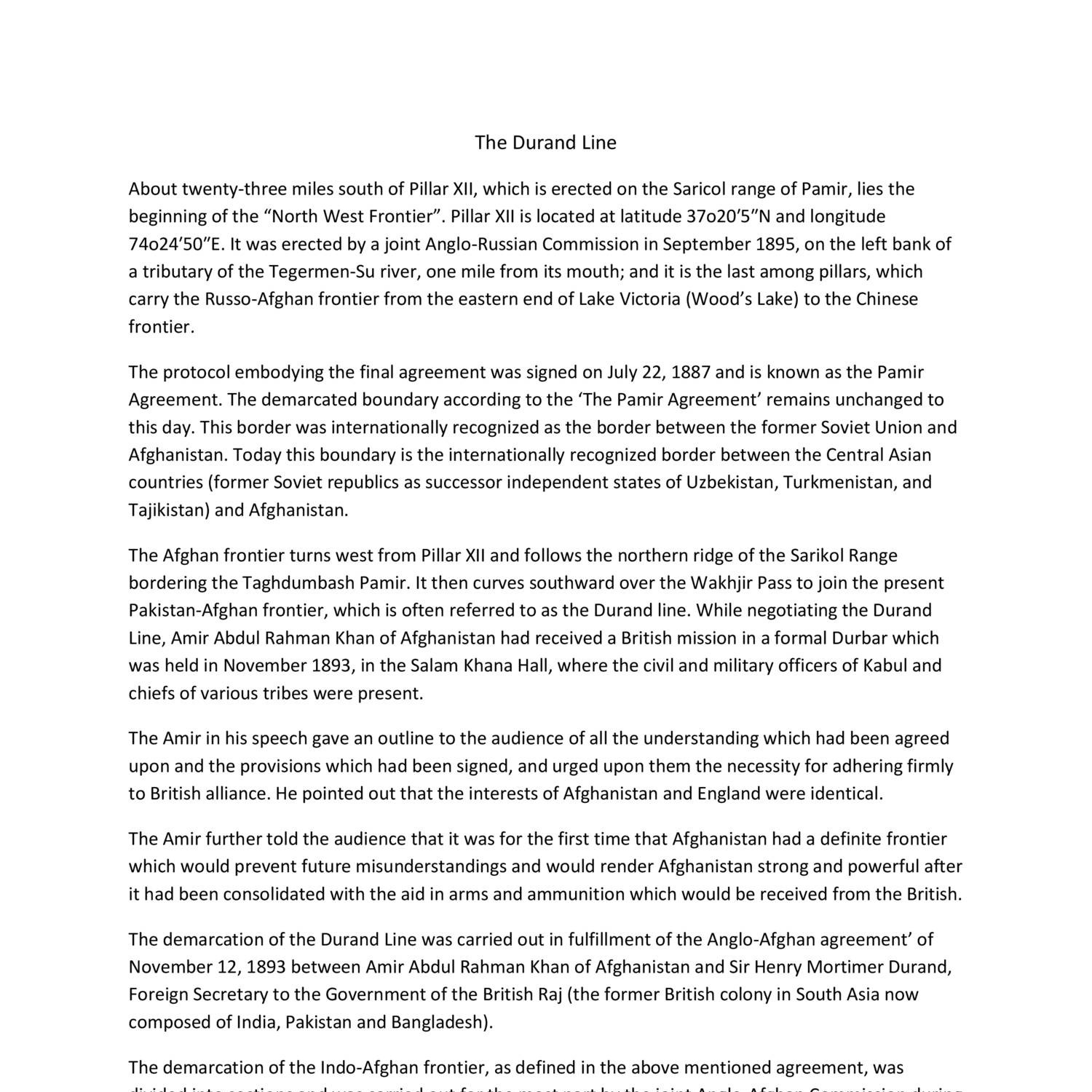
At the heart of every exchange of fire is a 2,640-kilometer line that one side recognizes and the other treats as a historical fiction. Pakistan views the Durand Line as a permanent international border. No Afghan government, including the current Taliban regime, has ever formally accepted it.
The physical manifestation of this dispute is a massive chain-link fence. Pakistan has spent years and millions of dollars trying to fence the border to control movement and stop smuggling. The Taliban have spent the last three years tearing sections of that fence down. To the Taliban, the fence is an illegal partition of Pashtun lands. To Pakistan, it is the only way to prevent the "Kalashnikov culture" from flowing back and forth across a porous frontier.
The Human Cost of High Level Spats
The tactical reality on the ground is often chaotic. Local commanders on both sides frequently act without direct orders from their capitals. A misunderstanding over a new checkpoint or a repair to a fence line can lead to a heavy machine-gun battle within minutes.
- Displaced Families: Thousands of villagers have fled their homes in the last year alone, creating a secondary humanitarian crisis in regions already struggling with famine and economic collapse.
- Trade Paralysis: Every time the border at Torkham or Chaman closes due to fighting, millions of dollars in perishable goods rot in trucks. This hits the pockets of traders who have nothing to do with the ideological battles of their leaders.
- The Radicalization Cycle: Funerals for children killed by shelling become political rallies.
Why the Current Strategy is Doomed
Islamabad is currently attempting a policy of "controlled pressure." They use air strikes and long-range artillery to punish the Taliban for failing to restrain the TTP. This assumes that the Taliban leadership in Kabul has a unified command structure capable of—and willing to—crack down on fellow ideologues for the sake of a foreign power.
It is a flawed assumption. The Taliban’s internal cohesion relies on their image as defenders of Afghan sovereignty. If they are seen as bowing to Pakistani military pressure, they risk internal fracturing or losing fighters to even more radical groups like ISIS-K. Conversely, Pakistan’s internal political instability and economic tailspin mean the military is under immense pressure to show results against domestic terrorism. They need a scapegoat, and Kabul is the easiest target.
The cycle is predictable. An attack occurs inside Pakistan. Pakistan retaliates with shelling. Afghanistan fires back. Civilians die. Both sides issue fiery statements. A few days later, a temporary truce is called, only for the entire process to repeat six weeks later. This is not a security strategy; it is a stalemate maintained by blood.
The Intelligence Gap
We must also look at the failure of intelligence sharing. In any functioning border relationship, there are hotlines and coordinated patrols. Between these two, there is only silence or shouting. The trust is so low that even basic information about criminal smuggling rings is treated as a state secret.
Pakistan’s pivot to a "Pakistan First" policy involves the mass deportation of Afghan refugees, which has only added fuel to the fire. By targeting the most vulnerable, Islamabad has signaled that it no longer views the Afghan people as "brothers," but as a demographic threat to be managed. This shift in rhetoric has been mirrored in Kabul, where the Taliban increasingly use nationalist language to distract from their inability to provide basic services.
The Shadow of Regional Players
While the focus remains on the two neighbors, the shadow of China and the Gulf states looms large. China wants stability to protect its investments in the China-Pakistan Economic Corridor (CPEC) and its potential mining interests in Afghanistan. They have attempted to mediate, but even Beijing’s deep pockets haven't been enough to bridge the ideological and territorial chasm.
If the regional heavyweights cannot force a diplomatic solution, the border will remain a friction point that threatens to pull the entire region back into a broader conflict. The international community, largely fatigued by twenty years of Afghan war, has mostly looked away. That indifference is a mistake. A hot border between a nuclear-armed state and a battle-hardened regime is a recipe for a catastrophe that won't stay contained within the mountains.
The Hard Reality for Civilians
The families in Kunar don't care about the Durand Line's history or the strategic depth of the Pakistani army. They care about the fact that their roofs are not shell-proof. The "collateral damage" cited in military reports has names, faces, and empty seats at dinner tables.
As long as the border remains a tool for political leverage rather than a point of regulated transit, the body count will rise. There is no military solution to a boundary dispute that is rooted in identity and history. Until both sides are willing to discuss the status of the frontier without the accompaniment of 155mm howitzers, the death of children will remain a routine line item in the regional news cycle.
Investigate the specific artillery batteries used in these border sectors to understand the range and intent of the strikes.