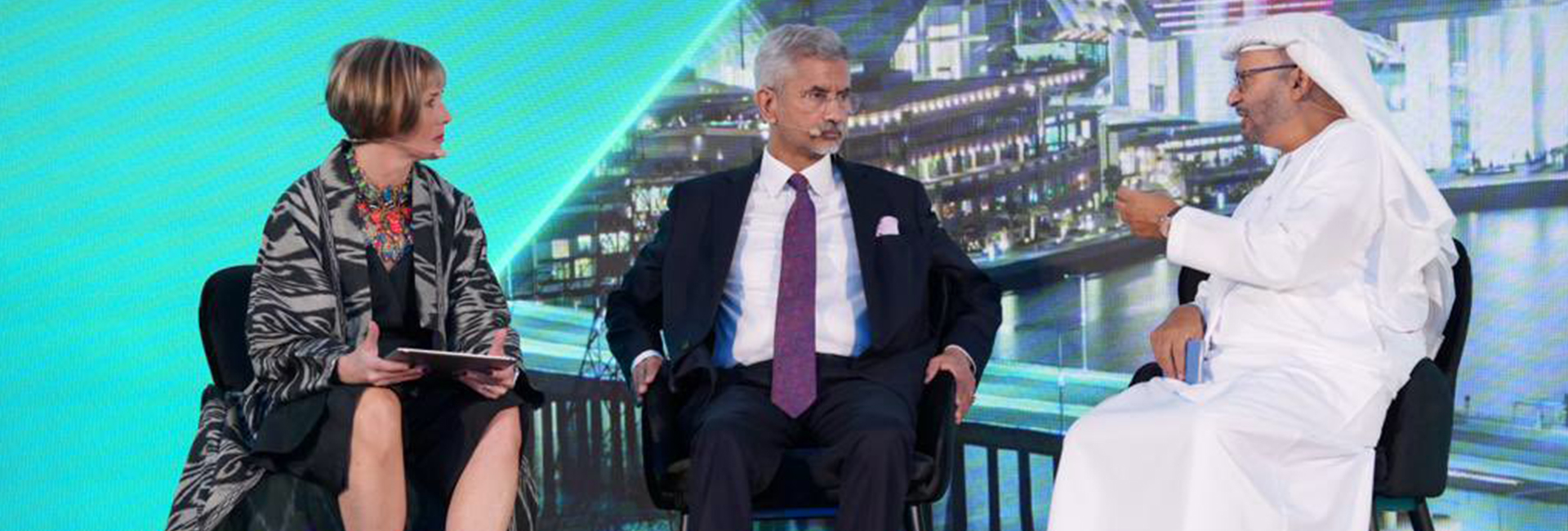
External Affairs Minister S. Jaishankar just wrapped up another high-stakes visit to Abu Dhabi. If you've been watching Indian foreign policy lately, this won't surprise you. But the depth of this specific sit-down with UAE Foreign Minister Sheikh Abdullah bin Zayed Al Nahyan goes way beyond just a routine diplomatic handshake. India and the UAE aren't just "partners" anymore. They're basically an integrated economic and security unit in a West Asia that's currently on edge.
The two met to talk about the Comprehensive Strategic Partnership, but the real elephant in the room was the regional security situation. With the Red Sea under pressure and broader West Asian tensions rising, India needs a stable, reliable anchor in the Gulf. The UAE is that anchor. They discussed everything from trade to the Gaza crisis, and honestly, the speed at which these two nations move is something other diplomatic corridors should study. Discover more on a connected topic: this related article.
West Asian security is a shared headache
When the Middle East catches a cold, India's economy starts sneezing. That's the reality. Over 3.5 million Indians live and work in the UAE, sending billions back home in remittances. Any instability in the region doesn't just affect oil prices; it hits the livelihoods of millions of families in Kerala, Uttar Pradesh, and Punjab. Jaishankar’s visit was a clear signal that India wants a say in how regional security is managed.
They spent significant time on the maritime security situation. Think about the shipping lanes. Most of India’s trade with Europe and the US passes through these waters. If those lanes aren't safe, costs go up for everyone. You're looking at higher freight rates and insurance premiums that eventually make your morning coffee or your new smartphone more expensive. Jaishankar and Sheikh Abdullah aren't just talking politics; they're talking about protecting the wallet of the average citizen. Additional journalism by Associated Press explores related perspectives on the subject.
The UAE has been a voice of moderation in a very loud neighborhood. India values that. By syncing up their positions on West Asia, they're creating a middle-ground coalition that focuses on stability rather than ideological battles. It’s a pragmatic, cold-eyed look at the world where economics dictates the moves.
The trade numbers that actually matter
Forget the vague "growing ties" rhetoric. Look at the data. Since the Comprehensive Economic Partnership Agreement (CEPA) kicked in, trade has surged. We’re talking about a trajectory towards $100 billion in non-oil trade. That’s massive. But it’s not just about selling spices and textiles anymore.
The real story is the investment in food parks and renewable energy. The UAE is helping India secure its food supply chain while India provides the UAE with a massive market for its sovereign wealth funds. It’s a perfect match. During the Abu Dhabi meetings, they checked in on the progress of these big-ticket projects. India's UPI (Unified Payments Interface) is already making waves there, allowing tourists and workers to transact without the headache of high exchange fees.
- Investment flows: The UAE is one of the top four investors in India.
- Energy security: Beyond just buying oil, they’re looking at strategic petroleum reserves.
- Technology: Collaborations in AI and space are no longer science fiction; they're on the meeting agendas.
Why the IMEC project is the real long game
You might have heard of the India-Middle East-Europe Economic Corridor (IMEC). It sounds like a mouthful of bureaucracy, but it’s actually a direct challenge to older, more rigid trade routes. The UAE is the primary gateway for this. Jaishankar’s visit reinforced that despite the regional volatility, the vision for IMEC isn't dead.
It involves rail, ship, and digital cables connecting India to Europe through the Gulf and Israel. It’s ambitious. Some say it's too ambitious given the current conflict in Gaza. But India and the UAE are playing the long game. They’re building the hardware—the ports and the tracks—now so they're ready when the political dust settles.
People often get caught up in the daily headlines of conflict. Diplomats like Jaishankar look at the map fifty years from now. They see a world where the Indo-Pacific and the Mediterranean are linked by a stable, prosperous Gulf. That’s why these meetings happen so frequently. You don't build a continental trade route with one or two Zoom calls. You do it with constant, face-to-face grinding.
Moving past the oil dependence
If you think India and the UAE are just about oil, you're living in the 1990s. The UAE is frantically trying to diversify its economy for a post-oil world. India is trying to become a global manufacturing hub. These two goals fit together like gears in a watch.
The discussions in Abu Dhabi touched on "Green Hydrogen." India wants to be a leader here, and the UAE has the capital and the solar capacity to be a massive player. They’re looking at how to co-develop tech that will power the next century. This isn't just "cooperation." It's a survival strategy for both nations.
I've seen plenty of these high-level visits, and usually, they're 90% fluff. This one felt different. There's a sense of urgency. The world is fracturing into different blocs, and India and the UAE have decided they're better off standing together than trying to navigate the chaos alone.
What happens next for the partnership
Don't expect a sudden, flashy announcement every time they meet. The real work is happening in the technical committees. They're busy ironing out customs bottlenecks, syncing digital payment systems, and figuring out how to protect Indian laborers from exploitative middlemen.
Keep an eye on the upcoming joint exercises between their militaries. That’s the real litmus test for trust. When two countries start sharing intelligence and training their air forces together, you know the relationship has moved from "business partners" to "strategic allies."
If you're an investor or a business owner, watch the logistics sector. The push for better port connectivity between Mumbai and Jebel Ali is going to create openings that didn't exist five years ago. The red tape is being cut, not with a pair of scissors, but with a chainsaw.
The takeaway is simple. India sees the UAE as its most important gateway to the West. The UAE sees India as its most reliable growth partner in the East. Everything else is just details. Stay updated on the specific MoUs regarding fintech and health-tech, as those are the sectors where the next big breakthroughs will happen. The "Strategic" part of this partnership is finally living up to its name.