The gold leaf on the chairs at Mar-a-Lago doesn’t usually tremble. It is a place designed for the heavy, static weight of power. But as the preparations for the summit between Donald Trump and Xi Jinping began, the air in the Palm Beach corridors didn’t feel like the usual humid invitation to a golf game. It felt like the pressurized cabin of a plane entering a storm that no one on the flight deck wanted to acknowledge.
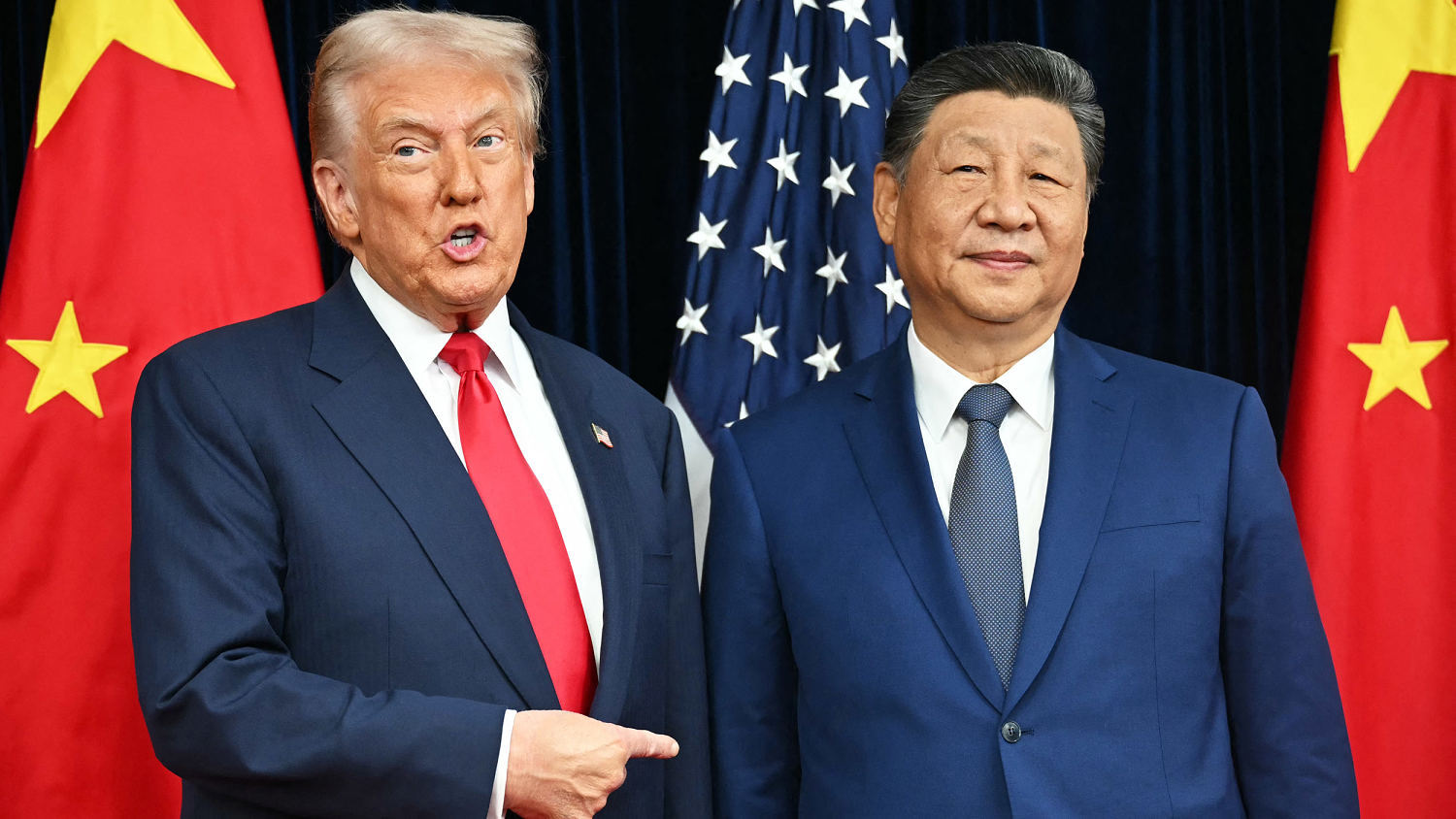
Diplomacy is often sold to us as a series of handshakes and press releases. We see the photos of men in dark suits standing before flags, their expressions carefully neutral. We are told about trade deficits, intellectual property theft, and maritime borders. These are the "cold facts." They are bloodless. They exist in spreadsheets and briefing books. But the reality of this particular meeting was never about the numbers. It was about the ego of two different worlds colliding over a dinner of pan-seared Dover sole.
The stakes weren’t just "complicated." They were becoming personal.
The Ghost at the Banquet
Imagine a mid-level logistics manager in Ohio named Gary. Gary doesn't follow the nuances of the South China Sea. He doesn't know the difference between a bilateral investment treaty and a memorandum of understanding. But Gary knows that the cost of the aluminum components for his assembly line has begun to creep upward. He knows that the "Made in China" sticker on his daughter’s birthday present represents a supply chain that is currently being used as a garrote in a high-stakes game of chicken.
Gary is the invisible guest at the Florida summit. He is the reason the atmosphere turned brittle.
When the two leaders sat down, they weren't just representing their governments. They were representing two diametrically opposed visions of the future. Trump, the quintessential disruptor, viewed the relationship as a zero-sum transaction—a deal where someone had to lose for him to win. Xi, the patient architect of a multi-generational rise, viewed the relationship as a hurdle to be cleared on the way to inevitable dominance.
Then the North Korean missile tests happened.
The news didn't just add a bullet point to the agenda. It acted like a stone thrown into a still pond, shattering the reflection of a controlled, choreographed event. Suddenly, the "complicated" nature of the summit wasn't about soy beans or steel tariffs. It was about the very real possibility of fire and fury. The dinner table in Florida was no longer just a place for polite conversation; it was a war room where the person sitting across from you might be the only one who could stop a catastrophe—or the one secretly fueling it.
The Language of the Unspoken
In the weeks leading up to the meeting, the rhetoric from Washington had been a drumbeat of "America First." The administration pointed to the $347 billion trade deficit as if it were a literal theft from the American pocketbook. To the factory worker in Pennsylvania or the farmer in Iowa, this narrative felt like a long-overdue defense of their livelihood. It felt like someone was finally noticing that the floor was rotting beneath them.
But in Beijing, that same rhetoric sounded like a declaration of economic war. The Chinese leadership doesn't respond well to being cornered in public. For them, "face" is a currency more valuable than the Yuan. To be summoned to Florida to be lectured about trade felt like an affront to a civilization that measures its history in millennia, not election cycles.
Consider the optics of the Mar-a-Lago setting. To Trump, it was a gesture of ultimate hospitality—bringing a world leader to his "Winter White House," a place of personal pride. To the Chinese delegation, it was an unpredictable environment, a gilded stage where the script could be flipped at any moment by a tweet or a casual comment over dessert. They prefer the sterile, predictable confines of the Great Hall of the People. In Florida, the humidity was high, and the predictability was low.
The complications grew because the two sides were speaking different languages, even when the translators were silent.
Trump wanted immediate, flashy concessions he could hold up to his base like a trophy. Xi wanted a stable, long-term acknowledgement of China’s sphere of influence. You cannot bridge that gap with a three-course meal. You can only manage the friction.
The Friction of Reality
The "dry facts" tell us that the U.S. urged China to do more to rein in Pyongyang. The "human story" tells us that Xi Jinping was being asked to destabilize a neighbor and a historical ally to satisfy a man who had spent the last year calling his country a currency manipulator.
The tension in those rooms wasn't just political; it was visceral. It was the feeling of two giant tectonic plates grinding against each other. When plates grind, the people living on the surface—the Garys of the world—feel the tremors.
The sudden shift toward security concerns meant that the economic grievances were pushed into a secondary, more volatile space. If China didn't help with North Korea, the trade war would escalate. If the trade war escalated, the global economy would catch a fever.
We often talk about "the market" as if it is a sentient being. It isn't. The market is just a collection of human fears and hopes expressed in digits. Those digits began to flicker with anxiety as the summit progressed. The complexity wasn't in the policy papers; it was in the realization that the world’s two most powerful men were fundamentally incompatible in their worldview.
One man believes in the art of the deal. The other believes in the inevitability of the state.
The Silent Aftermath
As the motorcades eventually pulled away from the palm-lined drive, the official statements were predictably vague. There were talks of "progress" and "candid discussions." This is diplomatic code for "we didn't solve anything, but we didn't start a war yet."
But the complication remains. It sits in the shipping containers waiting at the Port of Los Angeles. It sits in the boardrooms of tech giants in Shenzhen. It sits in the quiet anxiety of a family in the American Midwest wondering if their cost of living is about to spike because of a disagreement over a dinner table 3,000 miles away.
The summit didn't just get complicated because of new events. It was always complicated because it was an attempt to reconcile two different versions of the twenty-first century. We like to think that history is made of grand movements and inevitable shifts, but more often than not, it is made of moments like these: two men, a piece of chocolate cake, and the crushing weight of a thousand unresolved grievances hanging in the air between them.
The gold leaf didn't crack that day. But the foundation of the global order certainly felt a tremor.
We are left living in the vibration of that meeting. The trade numbers will fluctuate, and the headlines will move on to the next crisis, but the fundamental friction has not gone away. It has only become more intimate. We are all now participants in this slow-motion collision, waiting to see if the next summit will bring a resolution or simply more expensive gold leaf to cover the growing fissures in the table.
The Dover sole is gone. The chairs have been pushed back. The world is still waiting for the bill to arrive.