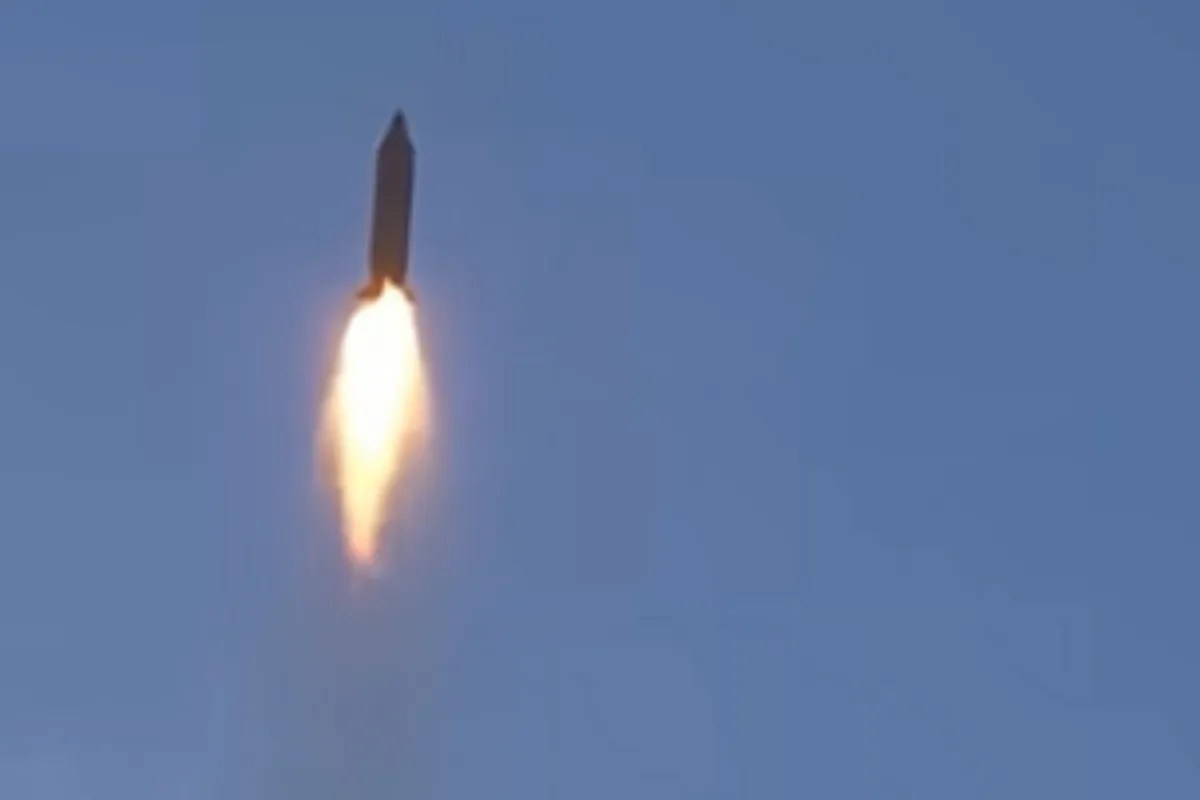
Washington is currently paralyzed by a math problem that no amount of hawks in the West Wing can solve. While the headlines often focus on the explosive rhetoric between D.C. and Tehran, the actual deterrent isn't just Iranian missiles or the threat of closed shipping lanes. It is a domestic refusal. Two-thirds of the American public have effectively signaled that they will not bankroll, staff, or emotionally support another protracted conflict in the Persian Gulf. This 66% majority creates a hard ceiling on military ambition, transforming what used to be a "commander-in-chief's prerogative" into a political suicide mission.
The American voter has spent the last two decades watching trillions of dollars vanish into the sands of Iraq and Afghanistan with little to show but a fractured veteran healthcare system and a ballooning national debt. When pollsters ask about Iran, they aren't just asking about foreign policy. They are asking if the public is ready for another "forever war." The answer is a resounding, cross-partisan no. This domestic resistance acts as a silent shadow cabinet, hovering over every situational briefing in the Situation Room.
The Ghost of 2003
Military planners always fight the last war, but voters remember the last lie. The skepticism currently gripping the American heartland is rooted in the intelligence failures of the early 2000s. There is a profound trust deficit. When officials suggest that "surgical strikes" against Iranian nuclear facilities will be quick and clean, the public hears the echoes of "Mission Accomplished."
They know better. Iran is not a desert outpost with a hollowed-out military. It is a nation of 85 million people with a sophisticated Integrated Air Defense System (IADS) and a network of proxies stretching from the Mediterranean to the Gulf of Oman.
Any kinetic action against Tehran wouldn't stay in Tehran. It would immediately spill into Iraq, Lebanon, Yemen, and Saudi Arabia. The American public senses this interconnectedness. They understand that a spark in Natanz leads to a fire at a gas station in Ohio. This isn't isolationism in the traditional sense. It is a cynical, battle-worn realism. People are tired of being told that the next intervention is the one that will finally "stabilize" the region.
The Economic Meat Grinder
The Pentagon can move carrier strike groups with the stroke of a pen, but it cannot control the price of a gallon of milk. A conflict with Iran would almost certainly involve the closure of the Strait of Hormuz. Roughly 20% of the world’s total oil consumption passes through that narrow choke point. Even a temporary disruption would send global energy markets into a vertical climb.
In a domestic environment where inflation is already the primary driver of voter anger, a war-induced energy spike would be catastrophic for any sitting administration. Political advisors know that a $7 gallon of gas is a faster way to lose an election than any diplomatic failure. This economic reality creates a paradox. The very globalized economy that the U.S. military is meant to protect has become a tether that prevents that military from acting.
The strategy of "maximum pressure" was designed to break the Iranian economy, but it has reached its logical limit. Short of actual invasion—which would require a draft that no politician would dare suggest—the U.S. has run out of non-lethal levers. The remaining options are either a climb-down disguised as diplomacy or an escalation that the American taxpayer refuses to fund.
The Fractured Consensus in the Pentagon
Inside the five-sided building, the mood is less about "if we can win" and more about "at what cost to the China pivot." For years, the strategic North Star for the U.S. military has been the Indo-Pacific. Every Tomahawk missile fired at a pro-Iranian militia in Syria is one less resource available to deter a near-peer competitor in the South China Sea.
Logistics of a Modern Siege
To truly neutralize Iran’s capability to strike back, the U.S. would need to commit assets on a scale not seen since the 1991 Gulf War. We are talking about hundreds of tankers, thousands of sorties, and a sustained naval presence that would leave other theaters dangerously exposed.
- Cyber Warfare: Iran’s offensive cyber capabilities are top-tier. A war would likely see retaliatory strikes against U.S. power grids or financial institutions.
- Asymmetric Response: Small, fast-attack boats in the Gulf can overwhelm billion-dollar destroyers through sheer numbers.
- The Proxy Trap: Groups like Hezbollah possess rocket inventories that dwarf the arsenals of many sovereign nations.
Military leaders are pragmatists. They see the 66% opposition poll not just as a political hurdle, but as a logistical one. A military cannot sustain a long-range war without a "home front" that believes in the cause. Currently, that home front is busy worried about rent and the stability of the local school board.
The Failure of the Hawk Narrative
The traditional "hawk" wing of the American political establishment has lost its ability to frame the narrative. For decades, they relied on the idea of the "indispensable nation." They argued that if the U.S. didn't act, a vacuum would be created for worse actors to fill. While that may be true in a vacuum of theory, it fails in the reality of the 2020s.
The public has seen the "vacuum" filled regardless of U.S. intervention. They see Russia and China expanding their influence through trade and infrastructure while the U.S. spends its blood and treasure on kinetic solutions that don't stick. The argument for war with Iran is being sold as a necessity for "regional stability," yet the public now views U.S. intervention as the primary driver of instability.
This shift is permanent. It is not a temporary whim of the current polling cycle. It represents a generational hand-off. Younger voters, who have never known a time when their country wasn't at war somewhere in the Middle East, are the most vehemently opposed to escalation. They are the ones who would be asked to fight it, and they are the ones most likely to punish any leader who initiates it.
The Diplomatic Dead End
If war is off the table because of domestic pressure, and "maximum pressure" has failed to change the regime's behavior, where does that leave Washington? It leaves the U.S. in a period of strategic drift. The current policy is a holding pattern. We are waiting for something to change inside Iran while the Iranian government waits for the U.S. to lose interest.
This stalemate is dangerous. History is full of wars that nobody wanted but everyone stumbled into because of a lack of a clear exit ramp. A miscalculation by a drone operator or a stray missile from a proxy group could force a hand that the public doesn't want forced. The 66% opposition is a shield, but it is a brittle one. It prevents the initiation of war, but it doesn't necessarily prevent the accidental slide into one.
The real investigative story here isn't that Americans hate war. It’s that the American political machinery is no longer calibrated to the will of its people when it comes to foreign entanglements. There is a massive decoupling between the think tanks in D.C. and the coffee shops in the Midwest. One side sees a board game of geopolitical maneuvers; the other sees a bottomless pit of grief and debt.
The next time a spokesperson stands behind a podium and talks about "red lines" in the sand, look at the polling numbers instead of the map. The red line isn't in the Persian Gulf. It is drawn across the American electorate, and it is a line that no modern president can afford to cross without risking the total collapse of their domestic mandate. Washington is learning, painfully and slowly, that you cannot lead a crusade if the infantry has already gone home.