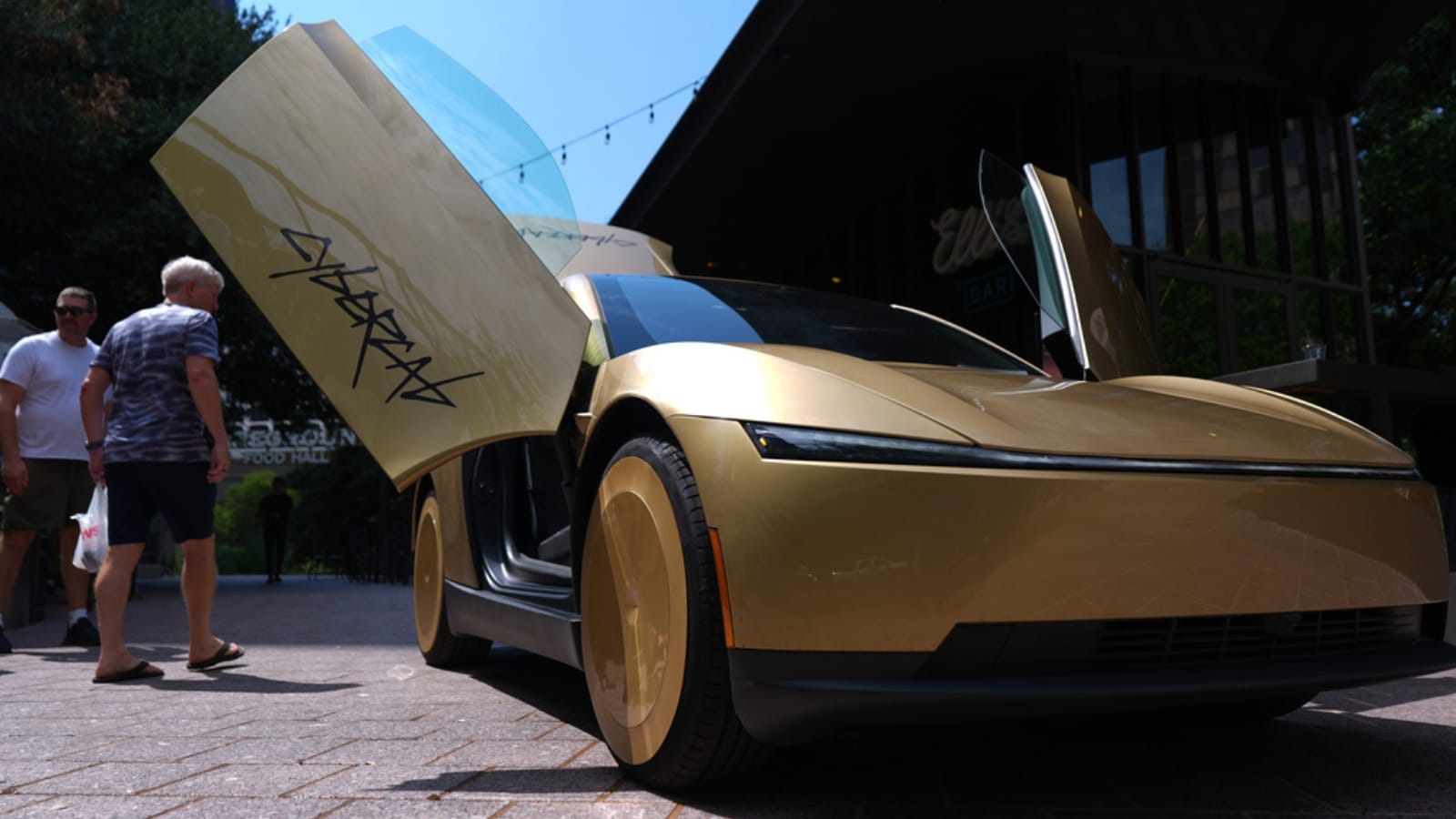
Tesla deployed dozens of its gold-colored, steering-wheel-free Cybercabs onto the public streets of Austin, Texas, marking a dramatic and contentious escalation in the commercial autonomous vehicle race. These two-seater pods feature zero manual controls—no steering wheel, no brake pedals, and no mechanical fallback option for a passenger panicked by an errant lane change or a phantom braking event. Chief Executive Elon Musk is betting that the general public will overcome deep-seated anxieties regarding complete technological surrender and willingly step into automated transit cabins. Yet, underneath the corporate pageantry of the launch event lies a high-stakes collision between aggressive timelines, regulatory gray areas, and structural engineering choices that set Tesla apart from every major competitor in the autonomy sector.
The Hardware Disconnect
The engineering philosophy governing the Cybercab represents a fundamental bet against industry consensus. While incumbent operators like Alphabet’s Waymo and Amazon’s Zoox rely on a heavily redundant sensor suite combining high-resolution cameras, commercial radar, and active laser-based lidar mapping, Tesla clings exclusively to an optical neural-network architecture. Proponents argue that human beings navigate complex urban environments using only biological eyes and neural processing, meaning computer vision should theoretically suffice. Critics and safety researchers point out a critical flaw in that analogy. Human eyes are paired with sophisticated spatial intuition and adaptive biological reasoning, whereas camera arrays remain vulnerable to environmental phenomena such as blinding sun glare, torrential downpours, fog, and accumulated road grime over sensor lenses.
By stripping away the steering wheel entirely, Tesla has eliminated the ultimate failsafe. In older autonomous testing models, safety drivers sat ready to torque the wheel or stomp the floorboards when neural net logic frayed. In the Austin deployment, if the onboard AI4 computer encounters an ambiguous construction zone or an erratic pedestrian, the vehicle possesses no mechanical alternative to interpret human hand signals or navigate unexpected lane closures outside its training dataset. Passengers must rely entirely on remote center operators or automated pull-over maneuvers triggered via touchscreens.
Regulatory Realities and Federal Scrutiny
The timing of the Austin deployment highlights a widening gap between corporate ambition and regulatory oversight. Federal safety agencies have immediately ramped up evaluations of the steering-wheel-free fleet, examining how vehicles lacking manual override capabilities fit within existing Motor Vehicle Safety Standards. Current federal rules strictly cap the number of non-standard vehicles a manufacturer can deploy without formal exemptions, meaning Tesla's scaling capacity remains legally constrained unless federal regulators grant broad relief.
State-level discrepancies further complicate expansion plans. While Texas maintains a permissive regulatory environment that has allowed autonomous testing with minimal friction, other critical jurisdictions take a sharply adversarial stance. In California, for instance, Tesla currently lacks the necessary permits to operate a commercial driverless ride-hailing service or test vehicles without safety drivers.
Federal investigators are concurrently scrutinizing Tesla's partial self-driving software following a series of high-profile incidents, including collisions during low-visibility conditions, unintended lane excursions, and alleged red-light violations. Introducing a vehicle with zero driver controls into public fleets while these safety probes remain active places immense pressure on the company to prove flawless execution from day one. Any high-profile operational failure in Austin risks triggering immediate federal crackdowns that could stall deployment nationwide.
The Adoption Chasm
Beyond software performance and regulatory compliance, Tesla faces an uphill battle in public psychology. Independent polling data reveals a profound trust deficit regarding driverless technology. Surveys conducted by the Pew Research Center indicate that roughly seven in ten U.S. adults feel uncomfortable riding in an entirely driverless vehicle, a sentiment that has hardened rather than softened as autonomous trials expand across American cities.
Skepticism extends directly to the leadership of the company itself. Public perception of Elon Musk remains deeply polarized, creating a unique brand friction for a service that requires consumers to place absolute physical safety in the hands of a machine bearing his company's insignia. When a consumer steps into a Waymo vehicle in San Francisco or Phoenix, they are boarding an anonymous utility pod backed by Alphabet. When a consumer steps into a gold Cybercab in Austin, they are participating in a very public referendum on Musk's vision for the future of transport.
Operational realities on the ground also reveal minor friction points that affect user experience. Early deployment data from similar robotaxi pushes in Texas and Florida indicate that riders occasionally experience extended wait times or logistical mismatches, such as drop-off points located blocks away from exact urban destinations due to geofencing boundaries or narrow street limitations. Scaling a localized pilot into a dense, metropolitan transit network requires ironing out these granular mapping errors before mass adoption can occur.
Market Pressures and the Road Ahead
Tesla's push into autonomous ride-hailing is not merely an experimental side project; it is the core pillar supporting the company's valuation. With core electric vehicle sales facing intense downward pressure, shrinking profit margins, and aggressive competition from foreign manufacturers dominating global EV production, Wall Street has increasingly pinned Tesla's long-term financial health on the successful monetization of a robotaxi fleet.
The long-term economic model depends on transitioning from selling physical passenger cars to operating a continuous, software-driven mobility network where individual vehicle owners can theoretically dispatch their own Teslas into the fleet for passive income generation. Yet, realizing that grand economic blueprint requires millions of flawless, unsupervised miles driven across diverse climates and unpredictable urban grids.
Austin is now the testing ground where theory meets asphalt. The gold-colored pods circling the Texas capital are no longer digital mock-ups or locked-circuit demonstrations at company factories. They are navigating real traffic, carrying real passengers, and operating without a safety net. Whether this bold bet on pure vision software and minimalist cabin design sparks a structural revolution in urban mobility or collides with the harsh limits of unproven technology will be decided on these streets block by block.