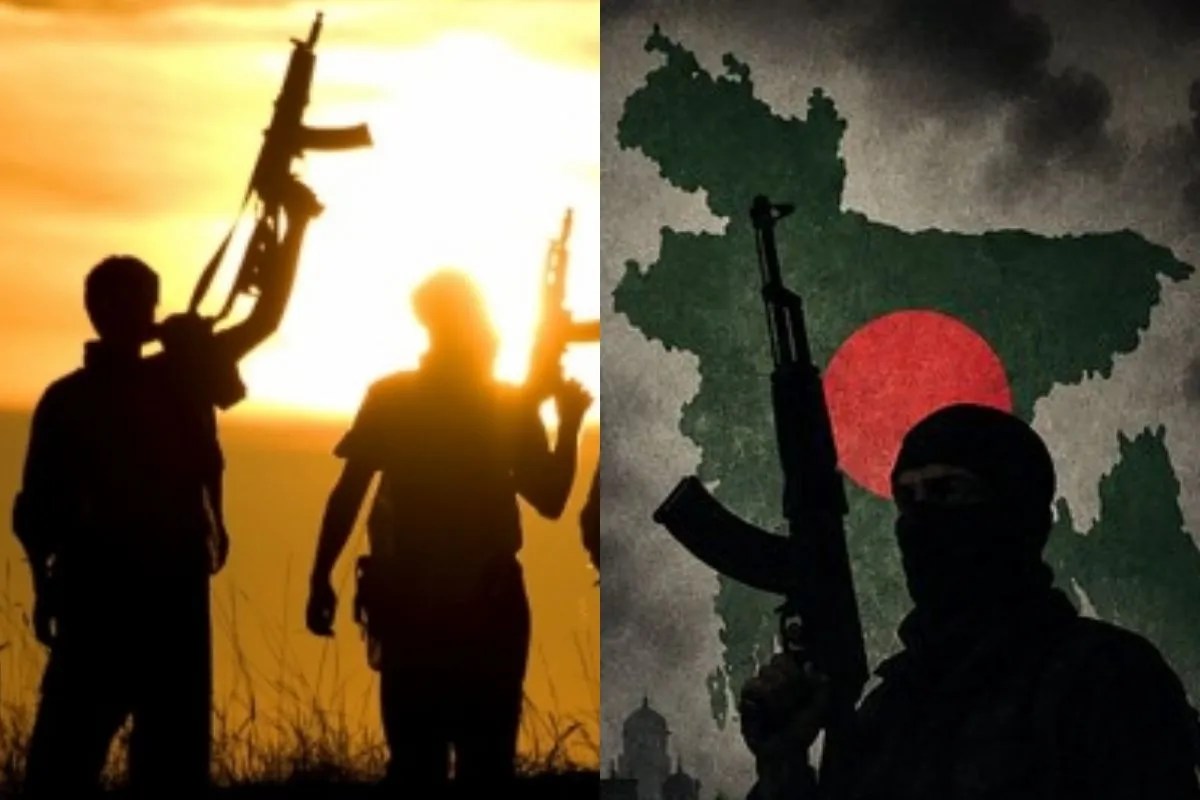
The recent string of anti-terror arrests across Bangladesh is not a temporary spike in law enforcement activity. It is the stark, undeniable proof that Jamaat-ul-Mujahideen Bangladesh (JMB) has successfully rebuilt its operational network. On August 11, 2026, authorities arrested suspected JMB operative Mohammad Arif in the Savar area of Dhaka, recovering bomb-making materials and weaponry. A single day later, a pressure cooker improvised explosive device was found abandoned near a local mosque in the same district. These incidents, coupled with the alarming arrest of a 16-year-old operative and the reported involvement of former military personnel, confirm that the banned organization is actively recruiting, arming, and preparing for a new wave of violence.
The threat is no longer theoretical. It is active, armed, and deeply embedded in the current political vacuum.
To understand the gravity of JMB’s resurgence, one must look past the isolated arrests and examine how the organization historically operates. Founded in 1998, JMB announced its terrifying capability in August 2005 by detonating 500 small bombs across 300 locations in Bangladesh within an hour. A decade later, a splinter faction known as Neo-JMB orchestrated the 2016 Holey Artisan Bakery massacre in Dhaka, specifically targeting foreigners and secular activists.
But the JMB of 2026 operates differently. The leadership has abandoned the grand, immediate spectacles of violence that invite overwhelming state crackdowns. Instead, they are playing a long, agonizingly patient game. They are decentralizing. Intelligence indicates a deliberate shift away from large cellular structures toward isolated, self-sustaining micro-modules. This makes them incredibly difficult to track. When one cell falls, the others remain entirely blind to the loss, preserving the wider network.
The Ghost of Bangla Bhai
The ideological foundation of JMB remains virtually unchanged since the days of its most notorious operational commander, Siddique ul-Islam, known infamously as Bangla Bhai. In the early 2000s, Bangla Bhai terrorized northwestern Bangladesh, hunting down suspected left-wing extremists and enforcing a brutal, localized interpretation of Sharia law. His reign of terror was loud, performative, and openly challenging to the state authority.
The state eventually responded with overwhelming force, capturing and executing Bangla Bhai and JMB founder Shaykh Abdur Rahman in 2007. For a brief period, the government believed the snake had been decapitated. But ideological insurgencies rarely die with their leaders.
The remnants fractured and evolved. The Neo-JMB faction emerged years later with a distinct Salafist-jihadist alignment, borrowing heavily from the operational playbook of global terror franchises. The 2016 Holey Artisan attack was their masterstroke—a calculated slaughter designed to gain international media attention and prove their allegiance to the global jihadist movement.
The current iteration of JMB is a terrifying synthesis of these two historical phases. They possess the grassroots rural penetration of Bangla Bhai’s era, coupled with the sophisticated digital security and global ambitions of Neo-JMB. They are no longer interested in holding physical territory or staging immediate hostage crises. They are interested in institutional rot. They want to exhaust the state's security apparatus through thousands of micro-threats until the system simply collapses under its own weight.
The New Recruitment Playbook
The most alarming detail from the recent arrests is not the hardware recovered, but the human capital involved. In April 2026, security forces in the Habiganj Sadar sub-district arrested a 16-year-old boy. His phone data revealed deep, active ties to JMB handlers, indicating a troubling shift in how the organization secures its future.
Terror organizations target minors for a very specific tactical reason. Adolescents fly beneath the radar of traditional intelligence profiling. They do not have financial footprints, travel histories, or established criminal records. JMB handlers manipulate these teenagers through encrypted social media channels, weaponizing their search for identity into rigid radicalization. Once indoctrinated, a minor is highly expendable to the leadership, perfect for planting an explosive device or carrying messages between disconnected cells.
Simultaneously, the involvement of former military personnel provides the network with something much more dangerous than pure ideology. It gives them tradecraft. A terror cell composed entirely of radicalized youth often makes fatal operational mistakes. They communicate on open networks, purchase suspicious quantities of chemicals, or fail to secure their perimeters. The introduction of ex-servicemen into the JMB hierarchy instantly elevates the group's tactical discipline. These veterans teach the recruits how to evade surveillance, construct stable explosives, and maintain operational security under pressure. This hybrid model of highly malleable youth guided by trained military veterans creates a terrifyingly effective insurgency structure.
The Price of Political Instability
Terrorism does not grow in a vacuum. It requires a permissive environment. The current revival of JMB is directly tied to the political upheaval that has rocked Bangladesh in recent years. Following the collapse of Sheikh Hasina's administration in 2024, the state's security apparatus underwent massive, chaotic restructuring.
During this transition, the focus of law enforcement shifted toward managing civil unrest and political opponents. Counter-terrorism became a secondary priority. More disastrously, in the ensuing political chaos, several high-profile extremists were quietly released from prison or managed to slip through the cracks of a disorganized judicial system.
Current data from the Specialized Anti-Terrorism Unit (ATU) paints a grim picture of the fallout. At least 311 suspected terrorist cadres are currently missing or actively evading capture. This roster includes 185 members of JMB, 83 from Ansar al-Islam, and 16 from Harkat-ul-Jihad al-Islami Bangladesh (HuJI-B). These are not low-level sympathizers. Many of these individuals are hardened operatives with extensive training in explosives and assassination. Their sudden freedom injects massive operational capacity back into the underground networks.
Furthermore, the Rapid Action Battalion (RAB), the elite counter-terrorism force that previously decimated JMB's core leadership, has faced severe operational limitations amid domestic political changes. Without the continuous, aggressive pressure from specialized units, JMB has found the breathing room it desperately needed to reorganize, fundraise, and plot.
The Failure of Deradicalization
Arresting bomb makers is a tactical victory, but it represents a strategic failure. By the time a 16-year-old is assembling a pressure cooker bomb in a field in Savar, multiple layers of societal and governmental intervention have already failed.
Bangladesh, like many nations fighting insurgencies, has heavily prioritized kinetic military responses over ideological dismantling. When the ATU raids a safe house, they eliminate the immediate physical threat. But they do not erase the militant literature distributed in underground networks. They do not shut down the encrypted forums where clerics preach violence to disenfranchised youth.
The state has repeatedly failed to offer a compelling counter-narrative to the hardline extremism pushed by JMB. When political instability ruins economic prospects, and when the justice system is perceived as corrupt or biased, extremist recruiters find fertile ground. They offer a simple, brutal solution to complex systemic problems. Until the government addresses the root causes of radicalization—poverty, political disenfranchisement, and the lack of critical education—they will be trapped in an endless cycle of arresting the foot soldiers while the generals remain untouchable.
A Staging Ground for Global Ambitions
The resurgence of JMB is not solely a domestic crisis for Dhaka. It is rapidly deteriorating the security architecture of the entire Indian subcontinent. Recent United Nations Security Council reports explicitly warn that Al-Qaeda in the Indian Subcontinent (AQIS) is using Bangladesh as a safe haven to rebuild its regional network.
JMB has historically functioned as a willing local facilitator for transnational jihadist groups. By providing logistical support, safe houses, and local knowledge, JMB allows groups like AQIS and ISIS-affiliated factions to operate within the region. Intelligence sources suggest that high-ranking terrorists, including AQIS second-in-command Ikramul Haq, have been able to maneuver through Bangladesh with alarming ease in recent months.
The immediate casualty of this porous environment is India's eastern frontier. States like West Bengal, Assam, and Tripura share a highly complex and often loosely guarded border with Bangladesh. Indian intelligence agencies have repeatedly flagged JMB’s efforts to establish sleeper cells in these border states. Operatives do not simply hide across the border. They establish "sleeper villages" where local sympathizers provide housing, fake identities, and logistical support to operatives on the run.
Once embedded, they begin the slow, methodical work of radicalizing local youth, creating entirely new, indigenous terror modules that answer to handlers in Dhaka. They blend in completely as day laborers, agricultural workers, or small-time traders, carrying USB drives containing encrypted communication software instead of physical weapons.
The Shadow Economy Funding the Terror
A terrorist organization cannot sustain itself on ideology alone. It requires constant, untraceable liquidity. In the past, authorities could track militant groups by following large bank transfers or intercepting foreign funding destined for suspicious front organizations.
JMB has adapted. The leadership has intentionally severed ties with the formal financial sector. Today, their operations are funded almost entirely through shadow economies. The reliance on hawala networks allows millions to move across borders without a single digital record. A sympathizer abroad can hand cash to a broker, and within hours, the equivalent value is delivered in untraceable cash to a JMB handler in Dhaka or Rajshahi.
Beyond hawala, the organization has diversified its revenue streams through organized crime. They heavily rely on the smuggling of Fake Indian Currency Notes (FICN) to fund their operations. A recent seizure of roughly 20 million rupees in counterfeit notes in Siliguri was directly traced back to JMB-affiliated smuggling routes. By flooding the border regions with fake currency and narcotics, the organization finances its domestic terrorism while simultaneously destabilizing a neighboring economic power. You cannot freeze a bank account that does not exist. You cannot sanction a cartel operating purely in cash and contraband.
The August arrests in Savar are not the final chapters of Jamaat-ul-Mujahideen Bangladesh. They are the prologue to a much darker phase of regional conflict. With hundreds of trained operatives currently unaccounted for and a political establishment distracted by its own survival, the conditions are perfect for a massive escalation in violence. Security agencies are celebrating the capture of pressure cooker bombs and teenage foot soldiers. Meanwhile, the architects of the next major attack are quietly sitting in border safe houses, watching the political chaos unfold, and waiting for the exact right moment to strike. The countdown has already started.