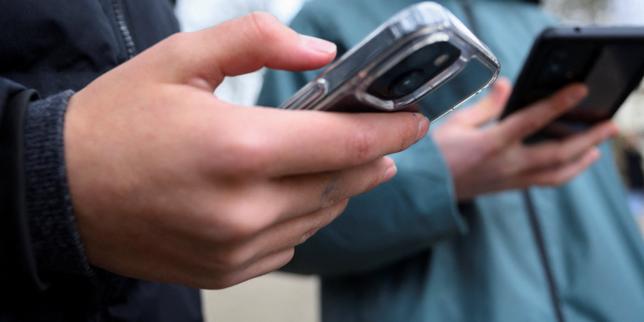
Indonesia just pulled the plug. They aren't asking nicely anymore. The government officially moved to ban anyone under 16 from using social media. It’s a massive, sweeping gamble that has parents cheering and tech giants sweating. If you think this is just another distant regulation, you're wrong. This is the first domino in a global shift toward digital protectionism.
The Indonesian Ministry of Communication and Digital Affairs isn't playing around. They’ve cited skyrocketing rates of cyberbullying, predatory grooming, and a mental health crisis that’s gutting a generation. They saw the data. They saw the damage. Then they hit the kill switch.
The end of the digital Wild West in Southeast Asia
For years, Jakarta was the social media capital of the world. TikTok, Instagram, and WhatsApp are the lifeblood of Indonesian commerce and culture. But that open-door policy came with a heavy price tag.
I’ve watched how these platforms operate in emerging markets. They push engagement at any cost. For a 13-year-old in Surabaya, that means an endless loop of algorithmic content that their brain isn't wired to handle yet. The new law requires platforms to implement "strict and verifiable" age verification. No more clicking a box that says "I am 18." We're talking biometric checks or government ID integration.
It sounds extreme because it is. President Prabowo Subianto's administration is signaling that national human capital is more important than Silicon Valley’s quarterly growth. They’re betting that by removing the screen, they'll get back a more focused, resilient workforce.
Why age verification is a nightmare for Big Tech
Platforms like Meta and ByteDance are terrified. It isn't just about losing users. It’s about the precedent. If Indonesia can prove that a nation of 280 million people can successfully lock out minors, the UK, Australia, and the US will follow suit within months.
The technical hurdle is a mess. How do you verify the age of a child in a rural province without a formal bank account? The government is leaning on the "IKD" (Identitas Kependudukan Digital), their national digital ID system. This isn't just a policy change; it’s a massive infrastructure project.
Critics say this creates a surveillance state. Maybe. But ask any parent who has dealt with a teenager's "TikTok brain" or a victim of deepfake extortion. They'll tell you the trade-off is worth it. Tech companies have had a decade to self-regulate. They failed. Now the grownups are taking the toys away.
Breaking the dopamine loop
Social media is designed to be addictive. That’s not a conspiracy; it’s a business model. $Dopamine$ is the currency. By cutting off access at 16, Indonesia is effectively saying that the adolescent brain is a protected zone.
Studies from the University of Indonesia show a direct correlation between screen time and declining literacy rates among middle schoolers. We're seeing kids who can edit a viral reel but can't read a complex paragraph. This ban tries to force a pivot back to traditional education and physical social interaction.
What the ban actually covers
- Algorithmic feeds: TikTok and Instagram reels are the primary targets.
- Direct Messaging: Cutting off the "dark alleys" where predators lurk.
- Data Harvesting: Stopping the collection of behavioral data on minors.
It’s not just about safety. It’s about cognitive sovereignty. Indonesia wants its youth to think for themselves, not for an algorithm designed in Menlo Park or Beijing.
Enforcement is the real test
Passing a law is easy. Enforcing it in a country with thousands of islands and a massive VPN-savvy population is another story. The Indonesian government has threatened to fine tech companies billions of rupiah or even block their entire service if they don't comply.
We've seen this movie before with the "Garda Sakti" monitoring initiatives. This time feels different. The rhetoric is sharper. The public support is higher.
Expect a cat-and-mouse game. Kids will find workarounds. They always do. But by making it difficult—by moving social media from a "default" state to a "restricted" state—the government wins 80% of the battle. Friction is a powerful tool. Most 14-year-olds won't jump through five hoops and a biometric scan just to see a dance trend.
The global ripple effect
Australia is already testing similar waters with their "Age Limit" proposals. The US Surgeon General has called for warning labels on social media. Indonesia just skipped the warnings and went straight to the ban.
This move reframes social media as a regulated utility, like alcohol or tobacco. You wouldn't let a 12-year-old walk into a bar and buy a whiskey. Why do we let them walk into a digital space filled with gambling-like mechanics and adult content?
The "freedom of speech" argument is losing its teeth when it comes to minors. Protecting children is the one thing that can unite a polarized electorate. Indonesia knows this. They're leading the charge, and the world is watching to see if the sky falls. It won't. Life will just get a little bit quieter for Indonesian teens, and that might be exactly what they need.
Practical steps for the digital transition
If you're a parent or an educator looking at this shift, don't wait for your local government to act. You can start implementing these barriers today.
- Audit your hardware: Use router-level blocks to limit social media access on home Wi-Fi. It's more effective than phone-based apps that kids easily bypass.
- Demand Digital ID transparency: If your country moves toward age verification, stay informed on how that data is stored. Security shouldn't come at the cost of total privacy.
- Bridge the gap: If you take away the screen, you have to provide an alternative. Community sports, local clubs, and physical hobbies aren't "old school"—they're the essential replacement for the digital void.
Indonesia's move is a wake-up call. The era of "move fast and break things" is over when it comes to our kids. The new era is about slowing down and fixing what's already broken.