Every few years, Washington discovers Greenland the way a tourist discovers a dive bar: loudly, late at night, and with zero understanding of the local culture. The latest media cycle breathlessly packages a resurrected political talking point about a security deal designed to lock out foreign adversaries, starring Beijing and Moscow as the villains at the gate.
It is a neat, digestible narrative. It is also fundamentally bankrupt. If you found value in this article, you might want to look at: this related article.
I have spent the better part of a decade watching defense analysts, state department lifers, and cable news pundits trip over themselves trying to explain Arctic geopolitics through a twentieth-century lens. They treat the world’s largest island like an unsinkable aircraft carrier or a piece of high-stakes real estate waiting for a title transfer. They warn that Chinese state-owned enterprises are buying up critical infrastructure to subvert Western supply chains. They suggest a stroke of a pen in a bilateral security accord will magically bulletproof the North Atlantic.
They are missing the plot entirely. For another perspective on this event, refer to the latest update from The New York Times.
The threat to Western security in the Arctic is not a sudden Chinese naval invasion or a clandestine listening post built on an ice sheet. The real danger is our own systemic inability to separate geopolitical paranoia from economic reality. By framing Greenland purely as a defensive chessboard against adversaries, Washington is alienating the very people whose consent actually dictates who controls the Arctic.
Let us dismantle the fiction piece by piece.
The Geography of Impossibility
To understand why the obsession with Chinese encroachment in Greenland is largely a phantom panic, you have to look at a map that isn't distorted by Mercator projections, and then you have to look at a balance sheet.
Pundits love to point to aborted proposals from a decade ago—such as Chinese firms bidding on abandoned American military airstrips in Greenland—as proof of an imminent yellow peril creeping down from the pole. What they omit is the brutal math of Arctic infrastructure. Building a deep-water port or an operational base in Greenland is not like pouring concrete in Shenzhen or Rotterdam. It requires battling multi-year pack ice, permafrost thaw, extreme isolation, and a total lack of supporting heavy industry.
When a Chinese mining consortium tried to secure a foothold in southern Greenland years ago, they did not run aground because the Pentagon deployed the Marines. They ran aground because the project economics were a disaster. The grade of the ore, the cost of labor, the environmental remediation mandates imposed by the local government, and the sheer hostility of the environment made the venture an accountant's nightmare.
Beijing does not need to freeze billions of dollars into granite and ice to secure rare earth elements or shipping lanes. Global commodity markets and existing processing monopolies in China already give them the chokehold they want. Pretending that a piece of paper signed in Washington stops a supply chain dependency that took thirty years to build is magical thinking for policymakers who refuse to do hard industrial policy at home.
The Nuuk Factor Nobody Mentions
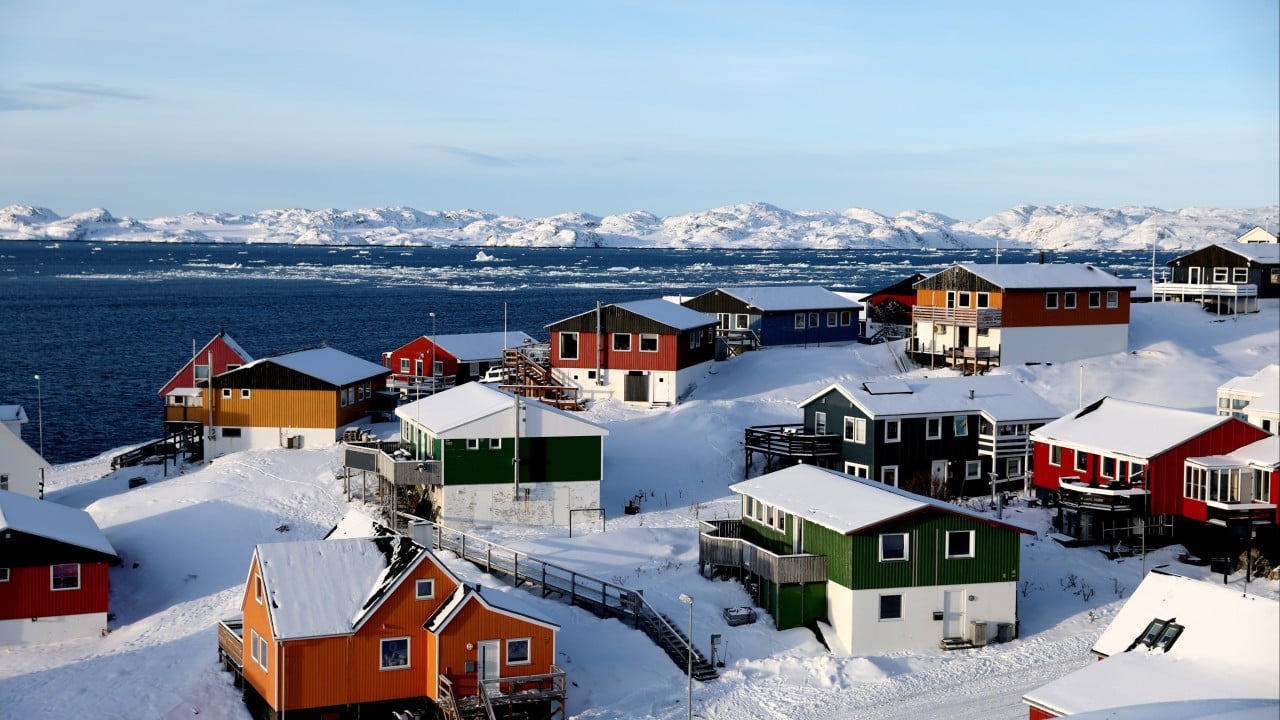
Here is the dirty secret that Washington strategists whisper behind closed doors: Greenland is not a passive playground for superpowers. It is an emerging nation actively trying to divorce its colonial landlord, Denmark, and it views every American and Chinese advance through the lens of a bargaining chip for full independence.
When politicians talk about striking a security deal with Greenland, they usually mean striking a deal about Greenland over the heads of the people living there. The government in Nuuk watches these geopolitical dramas with a mixture of amusement and exhaustion. They do not want to trade Danish oversight for American paternalism. They want a sovereign economy.
An independent Greenland requires cash. Lots of it. Right now, Denmark subsidizes the Greenlandic economy to the tune of hundreds of millions of dollars annually via the block grant. To break that umbilical cord, Greenland needs revenue from mining, fishing, and tourism.
Here is where the Western narrative collapses into rank hypocrisy. Washington screams about Chinese capital entering Greenlandic mines, yet Western mining companies routinely balk at investing there because of stringent environmental rules, local labor laws, and political instability. If Western governments refuse to finance Greenlandic industrial development on competitive terms, and simultaneously block non-Western capital, they are effectively trapping Greenland in a state of permanent economic dependency.
You cannot preach national security to a population whose primary political goal is escaping poverty and fiscal subservience. If you starve a country of economic oxygen, do not act surprised when they look for air wherever they can find it.
The Defense Bureaucracy Racket
Why does the media keep reviving these overcooked security narratives? Follow the incentives.
The defense and intelligence complex thrives on threat inflation. A quiet, stable Arctic where shipping routes occasionally open up and local populations negotiate resource contracts doesn't secure budget increases. An Arctic framed as a zero-sum death match between the United States and a coalition of Eastern adversaries? That unlocks billions in procurement contracts, new regional commands, and endless consulting fees.
I have watched defense contractors brief congressional committees on hypothetical Arctic scenarios that require equipment lists straight out of a science fiction novel. They talk about hardened subterranean facilities and ice-class frigates as if the United States Navy has an infinite pool of qualified Arctic sailors who want to spend six months in pitch darkness eating freeze-dried rations.
The physical presence of the United States military in Greenland is already anchored by Thule Air Base, now officially designated Pituffik Space Base. It is a critical node in the missile warning architecture. It does not need a new security treaty to function; it needs basic maintenance, modern communications infrastructure, and a diplomatic corps that treats Greenlandic leadership with professional respect rather than treating the island like a strategic staging ground to be rented out.
When politicians trot out grand announcements about keeping adversaries out of Greenland, they are selling a domestic political product. It plays well to voters who want to hear that America is drawing a hard line in the snow. It provides a dopamine hit of geopolitical toughness. But it does zero to solve the actual vulnerabilities of the region.
The Real Vulnerabilities We Ignore
If you want to know what a genuine security strategy in the Arctic looks like, stop looking at naval battle groups and start looking at satellite communications, ice-breaking capabilities, and local maritime rescue.
As the ice recedes, the Arctic Ocean is transforming from a frozen wasteland into a congested maritime highway. The risks are not hostile incursions; they are oil spills in unmapped waters, commercial vessels losing power hundreds of miles from the nearest deep-water port, and undersea fiber-optic cables snapping under shifting shelf ice.
Russia maintains a vast network of heavily armed Arctic bases not because they plan to launch a ground invasion of North America over the pole, but because they border half the Arctic coastline and need to protect their northern maritime economic corridor. China calls itself a near-Arctic state not to plant a flag on the ice cap, but to secure shipping shortcuts that shave days off transit times between Asian manufacturing hubs and European ports.
Our response to these commercial and logistical realities has been pathetic. The United States Coast Guard operates a tiny handful of heavy icebreakers, many of which are decades old, while Russia boasts a nuclear-powered fleet that dwarfs ours. If a container ship runs aground off the coast of Greenland tomorrow, Washington does not have the maritime assets within a thousand miles to mount a proper rescue operation.
Signing a flashy security pact doesn't build an icebreaker. Passing a resolution warning adversaries away doesn't lay fiber-optic cables or map the ocean floor.
The Uncomfortable Truth About Capital
Let us address the elephant in the room that free-market fundamentalists and nationalist politicians alike refuse to acknowledge. You cannot beat state-directed capitalism with press releases.
China’s long game in the Arctic and across the global mineral supply chain succeeds because Beijing deploys patient capital with a thirty-year horizon. They fund infrastructure upfront, absorb losses, lock up off-take agreements, and embed themselves into local economies before anyone in the West even finishes drafting a committee report.
The Western model relies on quarterly earnings reports, risk-averse private equity, and environmental impact assessments that take a decade to clear legal hurdles. When a rare earth deposit in Greenland sits untouched for fifteen years because Western investors demand impossible returns and zero regulatory friction, the problem is not Chinese espionage. The problem is structural sclerosis.
If Western nations want adversaries kept out of Greenland, the solution is astonishingly simple and painfully difficult: write bigger checks, shoulder the capital risk, partner with local industries on their terms, and build the infrastructure ourselves.
Stop treating Greenland like an insurance policy against Beijing. Treat it like a sovereign partner whose economic vitality is the strongest firewall you could ever build.
The next time a politician stands behind a podium and boasts about locking down the Arctic with a stroke of a pen, check their credentials. They are selling you a fairy tale because reality is too expensive.
Build the ships. Fund the mines. Respect the locals. The rest is just noise.