The asphalt of Interstate 80 stretches through Wyoming like a scar carved out of the dark. At two in the morning, the world belongs to the wind, the low hum of a Detroit Diesel engine, and the orange glow of dashboard instruments. For thousands of drivers across America, this isolation is not a threat; it is an office. It is peace.
Until the parking lot at the truck stop grows quiet, and the headlights sweep across a stranger walking toward the cab with malice in his stride.
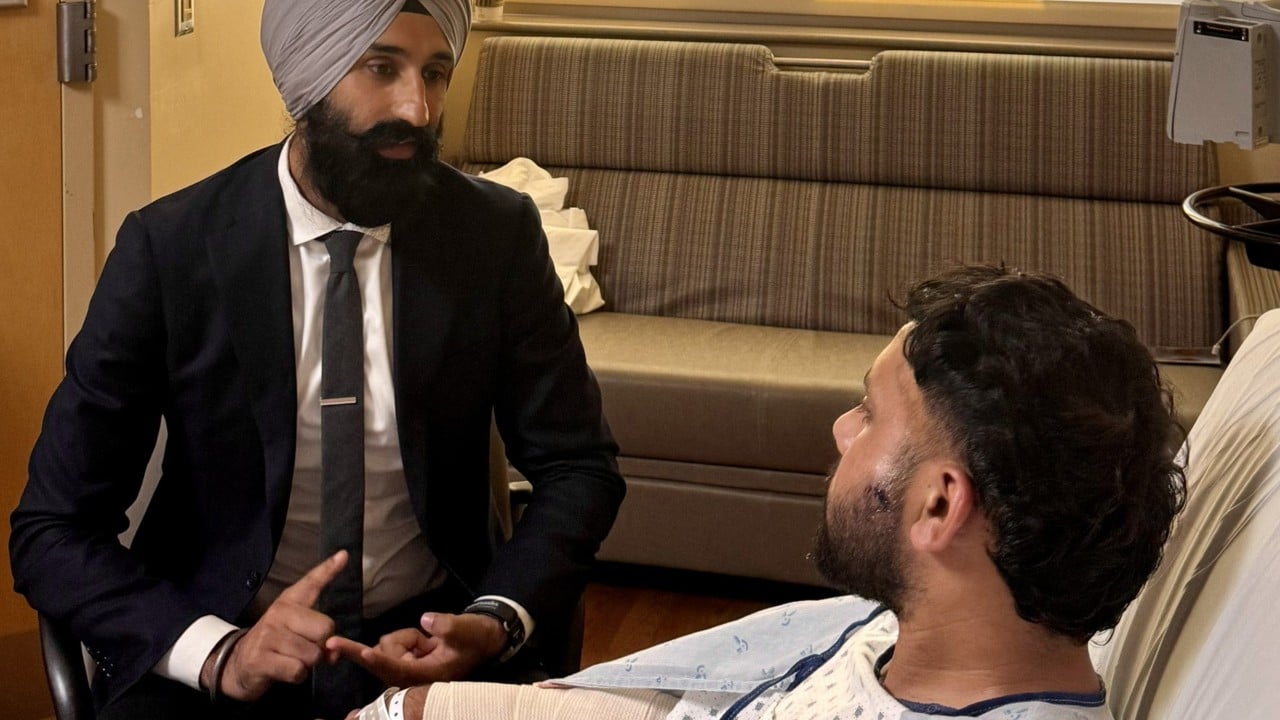
On a freezing night in Wyoming, a Sikh truck worker pulled his rig over to rest. He was miles from home, thousands of miles from the fertile fields of Punjab where his grandfather once farmed under an endless sun. He wore the duster and the unshorn hair of his faith, a visible commitment to a heritage rooted in service, community, and resilience. He thought he was simply parking for the night. Instead, he became the latest target in a terrifying resurgence of violence that haunts America’s long-haul corridors.
Stabbed in a sudden, unprovoked assault, he survived the physical wounds. But the invisible injury—the one carved into the psyche of an entire diasporic community—runs infinitely deeper.
Fear travels fast along the CB radios and WhatsApp group chats that connect the brotherhood of the road.
Consider what happens next in thousands of living rooms from California to New Jersey. A wife hears the ping of a notification. Her breath catches. Her husband is out there right now, pushing through a snowstorm in Wyoming or crossing the lonely deserts of Nevada. Every time the phone rings late at night, the silence in the room stretches until it becomes physical.
This is the hidden cost of the highway. For decades, Sikh immigrants have stepped into the grueling, essential work of American logistics. They keep the grocery store shelves stocked, the hospital supplies moving, and the supply chain from collapsing. They are the invisible engine of commerce. Yet, behind the steering wheel, many carry a heavy, silent burden: the constant, calculating gaze of suspicion from strangers who see a turban and a beard, and choose to see an enemy rather than a neighbor.
To understand why a knife attack in a remote Wyoming truck stop sends shockwaves through communities thousands of miles away, you have to look at the math of vulnerability.
A semi-truck is a fortress of steel on the outside, but inside, it is a glass house. Drivers sleep in cramped bunks just inches from public rest areas, dark service plazas, and desolate off-ramps. They are isolated by design. When a crime occurs in these spaces, help is often thirty minutes away by cruiser, which is an eternity when someone is bleeding in the gravel.
Hate does not need a reason. It feeds on ignorance and borrows its courage from the shadows. When an assailant strikes a Sikh American simply for existing in public view, the message is intended to terrify everyone who shares that identity. It says: You do not belong here.
History whispers a warning we refuse to hear. After the tragedy of September 11, 2001, Sikh Americans across the United States faced an immediate, devastating wave of backlash. Mistaken identity turned turbans into targets. Balbir Singh Sodhi, a gas station owner in Mesa, Arizona, was murdered just days after the attacks by a gunman who wanted to exact vengeance on anyone who looked like the television news footage.
Decades have passed since that dark September, yet the underlying current of xenophobia has never truly dried up. It merely waits for a match.
When a trucker is attacked in Wyoming, it is not an isolated incident. It is a continuation of a generational struggle for dignity and safety. It forces families to have conversations no parent should ever have to initiate: how to talk to your children about why people stare, how to report a threat, and whether it is safer to alter your appearance to blend into the background.
Yet, melting into the background is an impossible choice for those whose faith is an unyielding part of their identity. The articles of faith worn by observant Sikhs—the turban (dastar) and the steel bracelet (kara)—are declarations of honor, equality, and a commitment to protect the vulnerable. They are meant to be seen. They are symbols of pride, not invitations for violence.
To strip away those symbols out of fear would be a quiet surrender to the very darkness the attackers hope to foster.
Walk into any truck stop diner from Omaha to Sacramento at dawn, and you will see the reality of this workforce. You will see men sharing a pot of tea, speaking Punjabi over the hum of the coffee grinder, comparing notes on weather patterns over the Rockies, and swapping tips on the best diesel prices. They are working twelve-hour shifts, navigating treacherous mountain passes in whiteout conditions, and missing their children's birthdays so that families they will never meet can unwrap gifts on Christmas morning.
They are woven into the very fabric of American survival. When the pandemic locked the country indoors, it was these drivers who kept the supply chains breathing. They slept in their cabs while rest stops closed their restrooms. They pushed through the fear of contamination to deliver toilet paper, fresh produce, and vaccines.
And yet, vulnerability follows them into the dark.
Law enforcement agencies often struggle to track the true prevalence of bias-motivated crimes against religious and ethnic minorities, particularly in rural, transient areas where jurisdiction spans vast, empty miles. A crime committed at a remote interstate exit in Wyoming can easily become a statistical footnote unless communities organize, demand accountability, and refuse to let the silence swallow the story.
Silence is the ultimate weapon of the bigot. It tells the victim that their pain does not matter, that their safety is negotiable, and that they are entirely alone in the dark.
Break that silence, and the entire dynamic shifts.
Across the country, community coalitions, interfaith alliances, and trucking associations are beginning to organize safety workshops, mental health support networks, and legal advocacy funds specifically tailored to protect vulnerable drivers. Truckers are sharing real-time alerts through encrypted channels, watching out for one another across company lines and state borders. The brotherhood of the road is proving to be wider and more resilient than the hatred directed at it.
When the sun finally crests the horizon over the Wyoming plains, the shadows retreat. The frost on the windshield melts under the morning light.
Inside his cab, the driver finishes his morning prayer, wraps his turban with steady, practiced hands, and turns the key in the ignition. The engine roars to life—a deep, rhythmic vibration that shakes the metal frame. He releases the air brakes, shifts into gear, and pulls back onto the highway.
The road ahead is long, uncertain, and filled with miles of empty dark. But he moves forward anyway, carrying the weight of an invisible community, the burden of history, and the quiet, stubborn courage of a man who refuses to be driven off the map.


