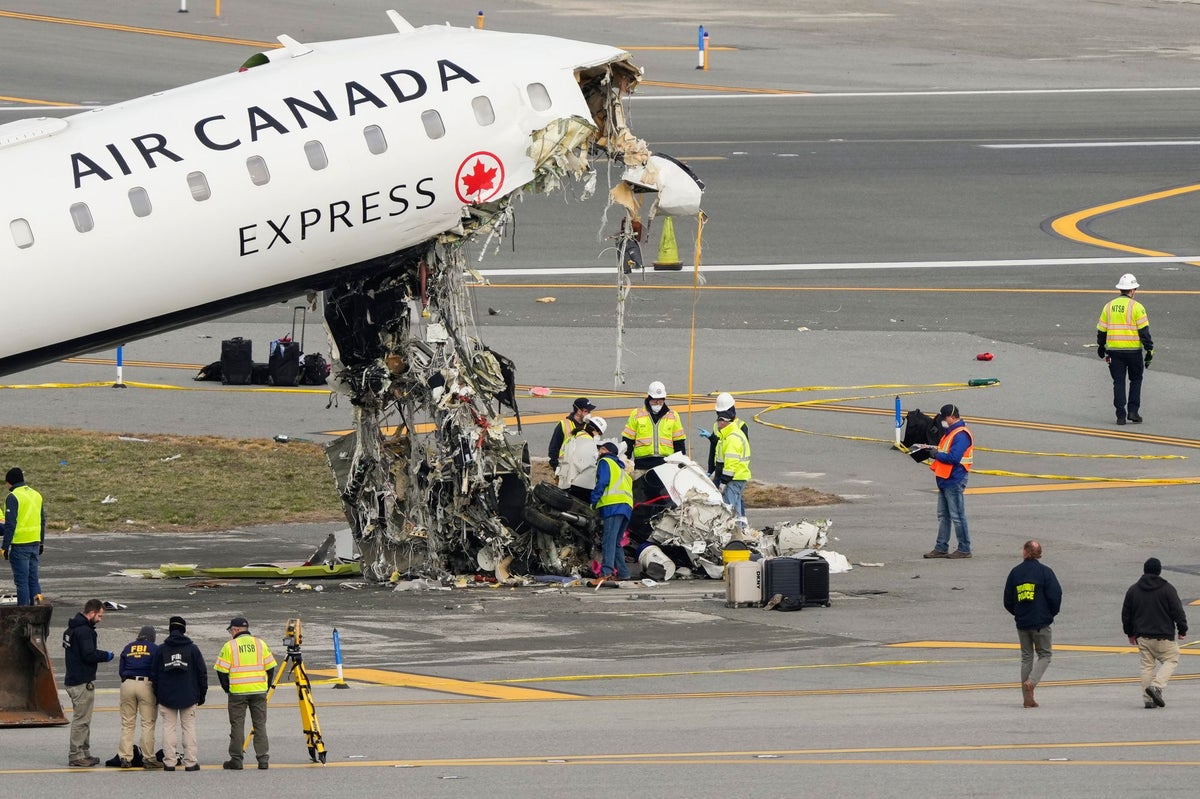
The regulatory establishment is losing its collective mind over a handful of air traffic controllers who walked off their shifts at LaGuardia right before a near-tragedy on the tarmac. The standard media narrative writes itself: reckless employees abandoning their posts, endangering hundreds of lives, deserving immediate termination and professional exile.
It is a clean story. It is also entirely backwards.
Focusing on the operational staff who packed up and left misses the structural rot eating the aviation system from the inside out. I have watched organizations pin systemic failures on frontline scapegoats while executives duck accountability behind policy shields. The real crisis at LaGuardia is not a lack of employee obedience. It is an unsustainable, chronically understaffed system where walking away is sometimes the only rational safety valve left.
The Lazy Consensus of Obedience
The mainstream argument rests on a comfortable illusion: that sticking to a post, no matter how compromised the conditions, represents the peak of professional duty. Anyone demanding that a fatigued, psychologically overwhelmed controller stay plugged into a radar scope for an extra shift under the banner of civic obligation is advocating for a disaster.
Fatigue is a math problem, not a moral failing. When controllers pull mandatory six-day weeks and rotating shifts that wreck circadian rhythms, human cognition degrades predictably. Reaction times slow. Spatial awareness narrows. Pretending that willpower overrides biology is how hulls end up strewn across runways.
When those controllers walked out, they committed a breach of protocol. They also issued a stark, undeniable audit of a broken workplace. Punishing them with termination does not fix the radar screens. It simply deters the next whistleblower from signaling that the room is on fire until the roof actually caves in.
Systemic Collapse Disguised as HR Violations
To understand why controllers are walking, look at the baseline metrics of the Federal Aviation Administration workforce. The agency has operated below minimum staffing thresholds for years. Mandatory overtime is not an exception; it is the core operating model.
Management treats human beings like peripheral hardware—run them until they fail, then swap them out. When an incident occurs, the institutional reflex is to isolate the individual, extract a confession, and sacrifice them to the public relations machine. This protects the bureaucracy from admitting that its scheduling algorithms and staffing caps are fundamentally unsafe.
+---------------------------+-----------------------------------+
| Institutional Response    | Operational Reality               |
+---------------------------+-----------------------------------+
| Fire the scapegoat        | Staffing deficit remains at 20%   |
| Issue stern warnings      | Mandatory 6-day weeks continue    |
| Blame human error         | Shift-work fatigue goes unaddressed|
+---------------------------+-----------------------------------+
Imagine a scenario where a surgeon walks out of an operating room because they have been awake for thirty hours and their hands are shaking. The hospital administrator would scream about insubordination. Every seasoned physician in the country would back the surgeon. Aviation operates on identical margins of error, yet the public expects controllers to function like unfeeling automata.
The Cost of Compliance
Obedience in a broken system is complicity. If an air traffic controller stays on position while critically impaired by exhaustion, they participate in a slow-motion lottery where every departure is a ticket.
The agency wants a workforce that values procedural compliance over critical thinking. But managing airspace requires real-time risk assessment, not blind adherence to a rulebook written by bureaucrats who have not worked an active position in a decade. If a controller determines that their cognitive state compromises safety, walking away is arguably the most conservative safety decision available to them.
Of course, abandoning an active sector without relief introduces immediate tactical risk. That is the undeniable downside of the walkout. It creates a vacuum. It forces supervisors into positions they may not be qualified to hold. But focusing exclusively on that tactical failure while ignoring the strategic neglect that forced the hand of the staff is intellectually dishonest.
What Real Accountability Looks Like
If the Federal Aviation Administration genuinely cared about preventing runway incursions and mid-air collisions, the termination letters would target the executive suite first.
Accountability starts with acknowledging that the current volume of air traffic cannot safely clear the nation's major hubs with a depleted, sleep-deprived workforce. It requires capping flight operations to match actual staffing levels, rather than forcing controllers to absorb infinite traffic spikes to satisfy airline lobbying groups.
Instead, the agency reaches for the guillotine. Firing these controllers sends a clear, chilling message to every tower and center across the country: keep your mouth shut, keep your hands on the scope, and if you collapse, do it quietly.
That is not safety management. That is a hostile work environment backed by federal authority. Until the industry stops punishing the symptoms of burnout and starts dismantling the structural causes of exhaustion, tarmac collisions will remain an inevitability rather than an accident. Stop firing the people sounding the alarm and start fixing the factory.



