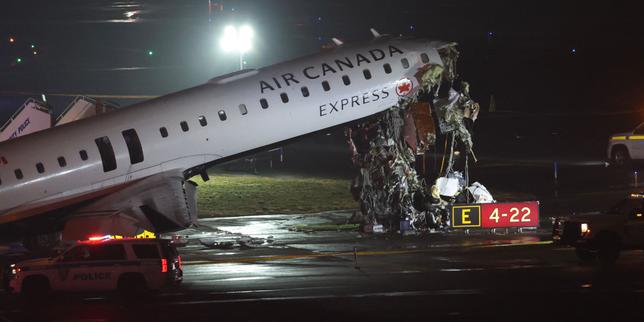
The total grounding of LaGuardia Airport following a fatal collision between a commercial aircraft and an emergency response vehicle isn't just a logistical nightmare for Delta or American Airlines. It is a systemic indictment of ground-level traffic management at one of the most cramped aviation hubs in the Western Hemisphere. While initial reports focus on the tragic loss of life and the immediate chaos of a shuttered runway, the real story lies in the terrifying frequency of "runway incursions" and the aging technology used to prevent them.
LaGuardia is a postage stamp in a city of skyscrapers. With two intersecting runways squeezed into 680 acres, there is no margin for error. When a multi-ton jet traveling at takeoff speeds meets a rescue truck, the physics are as predictable as they are devastating. The airport remained paralyzed for hours as federal investigators picked through the wreckage, but for those of us who have spent decades tracking FAA safety protocols, this was a disaster decades in the making.
The Geometry of a Crash
To understand why a rescue vehicle ended up in the path of a moving aircraft, you have to look at the tarmac layout. Unlike modern airports built on expansive plains, LaGuardia is a masterpiece of spatial compromise. Pilots often describe it as landing on a carrier deck.
Ground controllers are tasked with a high-stakes game of Tetris. They must coordinate the movements of hundreds of aircraft with a fleet of fuel trucks, baggage tugs, and Airport Rescue and Firefighting (ARFF) units. The ARFF units are required by federal law to reach any point on the airfield within three minutes. This mandate creates a culture of speed. When a drill or a secondary alert is called, these massive trucks move with urgent priority.
The collision occurred at a high-speed taxiway intersection. Early data suggests a breakdown in "situational awareness"—a clinical term for a pilot or driver simply not seeing the other until it was too late. But "human error" is a lazy explanation. The infrastructure itself failed to provide the necessary fail-safes.
ASDE-X and the Tech Gap
The primary defense against these collisions is the Airport Surface Detection Equipment, Model X (ASDE-X). This system integrates data from surface radar, sensors, and aircraft transponders to alert controllers to potential conflicts.
However, ASDE-X has a known history of "blind spots" caused by terminal buildings or heavy rain. At LaGuardia, the density of the gate areas can create signal clutter. If the rescue vehicle’s transponder was shielded by a hangar or if the radar refresh rate lagged by even two seconds, the controller's screen might have shown a clear path where a lethal obstacle actually stood.
We are currently seeing a push for "Standardized Surface Surveillance," but the rollout is slow. Smaller vehicles often lack the sophisticated GPS broadcasting units found on aircraft. This creates an environment where the "big players" (the planes) are visible, but the "small players" (the service trucks) are ghosts in the machine.
The Cost of a Shuttered Hub
When LaGuardia stops, the East Coast bleeds. This isn't just about frustrated travelers in Terminal B.
The immediate closure triggered a ripple effect through the "Golden Triangle" of New York, Chicago, and Washington D.C. Within ninety minutes of the crash, diversions to Newark and JFK had already backed up those runways to three-hour delays. For the airlines, the cost is measured in millions per hour:
- Fuel Burn: Planes circling in holding patterns.
- Crew Timing: Pilots hitting their legal flight-hour limits and being forced to "timeout," leaving planes stranded even when the airport reopens.
- Repositioning: The logistical headache of getting aircraft back to where they are needed for the morning push.
Industry analysts know that a single fatal incursion at a major hub can shift insurance premiums for the entire sector. If the National Transportation Safety Board (NTSB) finds that LaGuardia’s ground control lighting or signage was substandard, every major airport in the country will be looking at mandatory, multi-million dollar retrofits by next quarter.
The Personnel Problem
We cannot ignore the human element behind the headset. Air traffic controllers are currently facing a national staffing crisis. Forced overtime and six-day work weeks are the norm, not the exception.
A tired controller is more likely to miss a flickering icon on a radar screen. A tired driver is more likely to misinterpret a "hold short" instruction. While the NTSB will examine toxicology reports and maintenance logs, the investigative community is increasingly looking at "fatigue science."
The ARFF driver involved was a veteran, not a rookie. This suggests the failure wasn't a lack of knowledge, but a failure of the system's ability to alert the operator to an imminent threat. If a veteran can make this mistake, the system is fundamentally flawed.
A History of Close Calls
This fatal event is the culmination of a series of "near misses" that have plagued US runways over the last 24 months. We have seen planes crossing active runways at JFK and Austin, usually averted by a pilot's quick reflexes. This time, the luck ran out.
The industry has been warning the FAA that the increase in flight volume post-pandemic is outstripping the capacity of our ground-safety tech. We are flying more missions with 1990s-era spatial management tools.
The Regulatory Fallout
Expect the NTSB to issue an "Urgent Safety Recommendation" regarding vehicle-to-everything (V2X) communication. This would require all airport ground vehicles to be equipped with tech that talks directly to the cockpit, bypassing the middleman of the control tower.
The technology exists. It is used in high-end consumer cars to prevent lane-departure accidents. Why it isn't mandatory for a truck driving on an active runway in the busiest airspace in the world is a question that Congress will likely be asking the FAA Administrator in the coming weeks.
The investigation will take months, but the takeaway for the industry is immediate. LaGuardia’s cramped geography makes it the "canary in the coal mine." If we cannot keep a runway clear in Queens, we have no hope of managing the projected 20% increase in air traffic over the next decade.
The closure of LaGuardia is a temporary inconvenience for passengers, but for the aviation industry, it is a permanent mark on a safety record that was already starting to fray at the edges.
Check the NTSB’s preliminary docket for the FDR (Flight Data Recorder) readouts to see if the aircraft received a "TCAS" alert before impact.