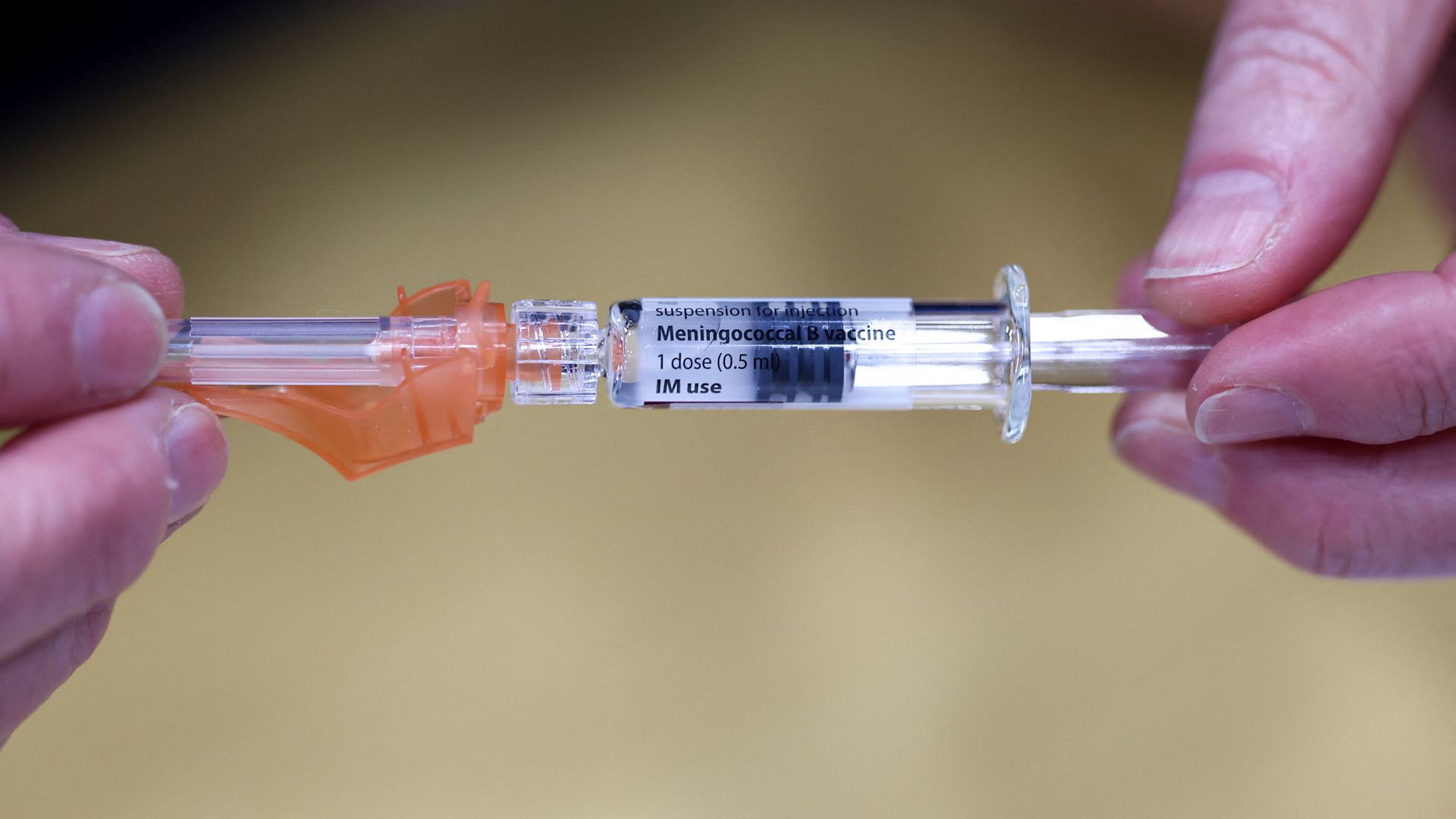
The death of a student following a meningitis outbreak in the Home Counties reveals a recurring breakdown in localized health surveillance and rapid-response protocols. While media coverage focuses on the tragedy of the individual loss, an analytical deconstruction of the event exposes three systemic vulnerabilities: delayed symptom-to-intervention intervals, the failure of university-integrated prophylactic distribution, and the biological latency of the Neisseria meningitidis bacteria within high-density residential cohorts.
The Biological Latency and Transmission Framework
To understand why outbreaks persist in academic environments, one must analyze the transmission mechanics of Neisseria meningitidis. This bacterium colonizes the nasopharynx. In general populations, carriage rates are often stable, but in the specific micro-economy of a university campus, variables shift. Building on this topic, you can find more in: Epidemiological Mechanics and Containment Dynamics of Neisseria Meningitidis in Berkshire.
- The Density Variable: Student housing represents a high-occupancy, shared-air environment. The probability of transmission increases linearly with the frequency of close-contact interactions.
- The Carriage-to-Invasion Pivot: Most carriers are asymptomatic. The transition from carriage (bacteria sitting in the throat) to invasive disease (bacteria entering the bloodstream or cerebrospinal fluid) is the critical failure point.
- The Immuno-Temporal Gap: Students often experience disrupted circadian rhythms and high stress levels, which modulate immune response. This creates a physiological window where the body’s innate defenses are suppressed, allowing the bacteria to cross the mucosal barrier.
[Image of Neisseria meningitidis bacteria structure]
The Three Pillars of Outbreak Mismanagement
The Home Counties incident serves as a case study in the friction between medical urgency and administrative bureaucracy. The failure to contain the spread can be categorized into three distinct operational silos. Analysts at Mayo Clinic have also weighed in on this matter.
Information Asymmetry in Symptom Recognition
There is a persistent gap between clinical symptoms and student perception. Early-stage meningitis often mimics severe influenza or a hangover—conditions that are normalized in student populations. This normalization leads to "self-selection out" of medical care. By the time the classic triad of stiff neck, photophobia, and non-blanching rash appears, the patient is often entering septicaemia or advanced meningitis, where the mortality rate climbs sharply.
Prophylactic Distribution Bottlenecks
Once a case is confirmed, the window for administering post-exposure prophylaxis (PEP) to close contacts is narrow. The objective is to eliminate carriage in the immediate social circle to break the chain of transmission. In the Home Counties outbreak, the delay in identifying the "primary circle" of the deceased student suggests a lack of pre-mapped social data. Universities rarely have the infrastructure to instantly identify every person who shared a confined space with an index case over a 72-hour period.
Pathogen Strain Variation and Vaccine Efficacy
Meningitis is not a monolithic threat. It is a composite of different serogroups (A, B, C, W, Y). The UK vaccination program has successfully targeted MenACWY, but MenB remains a significant variable. If the outbreak involves a strain not covered by the standard adolescent vaccine schedule, the "herd immunity" assumes a false sense of security. Public health data must be interrogated to determine if the specific strain in the Home Counties was a vaccine-escape variant or a result of low uptake in specific demographics.
The Cost Function of Delayed Intervention
The progression of invasive meningococcal disease (IMD) is measured in hours, not days. The biological cost function is steep: for every hour that antibiotics are delayed following the onset of purpura (the rash), the risk of permanent neurological damage or death increases.
$$Mortality Rate \propto \int_{t_0}^{t_{final}} P(t) dt$$
Where $t_0$ is the onset of systemic inflammation and $P(t)$ represents the bacterial load over time.
The systemic failure in the Home Counties was likely a $t_{0}$ identification error. When medical services rely on a "call-back" system or remote triaging (such as 111 services), they introduce a time-lag that the pathology of meningitis does not permit. A digital-first triage system that fails to prioritize high-risk age groups in high-density housing effectively ignores the statistical reality of meningitis hotspots.
Structural Vulnerabilities in Home Counties Public Health
The Home Counties present a unique logistical challenge. These areas often feature high-commuter populations and sprawling suburban-academic interfaces. Unlike concentrated urban centers with dedicated infectious disease units, the healthcare response here is often fragmented across multiple local authorities and NHS trusts.
This fragmentation creates "Boundary Friction":
- Data Silos: Health records for students may be registered at their home address rather than their term-time residence, slowing the retrieval of vaccination history.
- Resource Dilution: Small regional hospitals may not see meningitis cases frequently enough to maintain the "high-index of suspicion" required for instant diagnosis.
- Contact Tracing Lag: The movement of students between the Home Counties and London or other nearby hubs complicates the geographical containment of the strain.
The MenB Blind Spot
While the MenACWY vaccine is standard for UK teenagers, the MenB vaccine (Bexsero) was only introduced to the routine infant schedule in 2015. This means a significant portion of the current university population—those born before 2015 who did not receive it as infants—may only be protected against MenB if they sought it privately or via specific catch-up programs.
This creates a "Protective Gap." If the Home Counties outbreak is confirmed as Serogroup B, the university's reliance on "up-to-date vaccinations" as a metric is fundamentally flawed. They are measuring for one set of threats while leaving the door open for another.
Immediate Operational Reconfigurations
To prevent the next fatality, the strategy must shift from reactive containment to predictive intervention.
- Mandatory Serotype Auditing: Universities must move beyond "encouraging" vaccination. They require a real-time database of which students are protected against which specific serogroups. This allows for targeted PEP during an outbreak.
- Hyper-Local Triage Protocols: Student health services in the Home Counties must bypass standard non-urgent triaging. Any student presenting with a fever and headache in a high-density dorm environment must be treated as a meningitis-suspect until proven otherwise.
- Prophylactic Pre-Loading: Public health authorities should maintain "Rapid Strike Kits" on campus—pre-packaged doses of Ciprofloxacin or Rifampicin. Waiting for a pharmacy to fill a script or a hospital to authorize a release costs lives.
The death of a student is not merely a medical failure; it is a logistical breakdown. The current model assumes the student will find the system. To stop meningitis, the system must be designed to find the student before the bacteria crosses the blood-brain barrier. The strategic priority is the elimination of the time-gap between the first non-specific symptom and the first dose of intravenous ceftriaxone. Any other metric is secondary.