The humidity in Manhattan doesn't just sit; it vibrates. If you stand on the corner of 34th Street during rush hour, the sound of the city is a physical weight. It is the rhythmic thrum of idling delivery trucks, the screech of subway brakes echoing through sidewalk grates, and the persistent, jagged wail of sirens. We have accepted this noise as the tax we pay for ambition. We’ve traded silence for speed, and yet, we aren't even moving that fast.
Sarah is a hypothetical commuter, but you know her. She is every professional trapped in the amber of a Friday afternoon crawl to JFK Airport. She watches the digital clock on the dashboard tick past the point of no return. Her flight leaves in an hour. The bumper of the car in front of her is exactly three feet away, just as it has been for twenty minutes. This is the friction of modern life. It’s the invisible tax on our time, our blood pressure, and our environment.
The solution isn't another lane on the Van Wyck. We’ve tried that. It doesn't work. The solution is currently sitting in a hangar in Santa Clara, humming with the quiet confidence of a revolution.
The Quiet Hummingbird
The FAA just gave a nod that changed the physics of the American morning. For years, the idea of an "electric air taxi" felt like a storyboard for a movie that would never be filmed. It was too expensive, too loud, too dangerous, or too sci-fi. But the approval of the first pilot projects in the US has moved these machines from the realm of the "someday" into the "Monday."
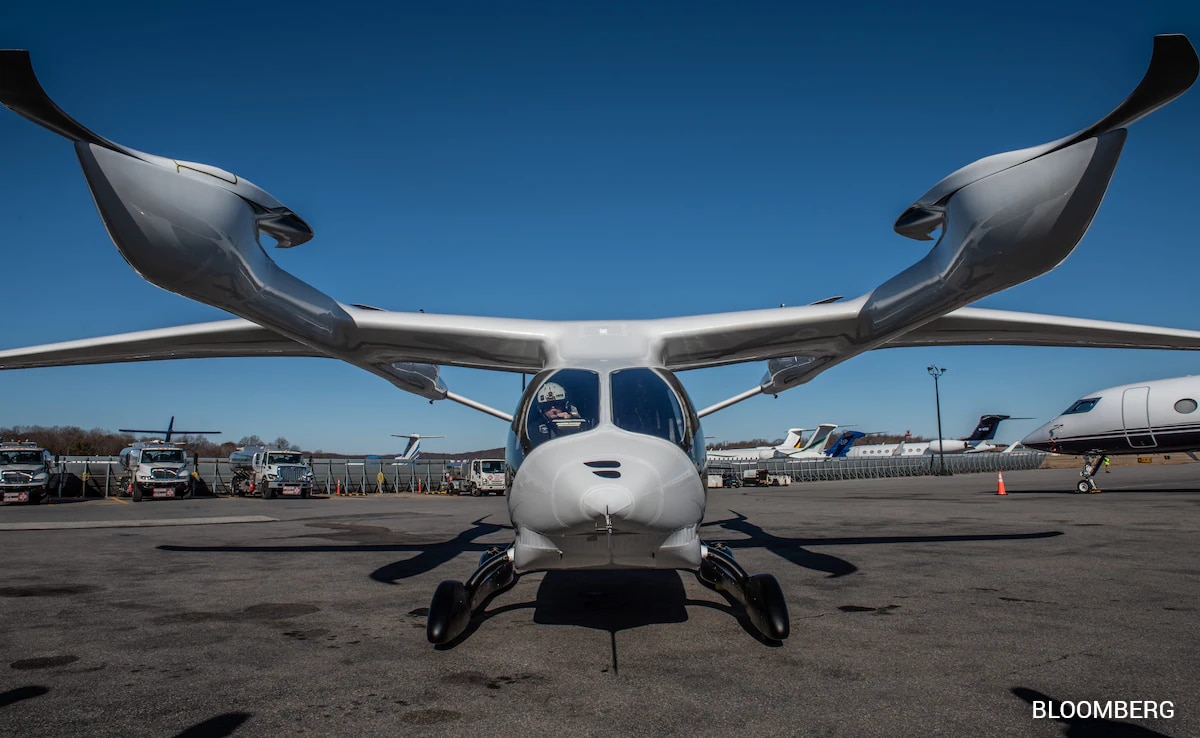
These aren't helicopters. That’s the first thing you have to understand. If a traditional helicopter is a heavy, screaming lawnmower in the sky, an eVTOL—Electric Vertical Take-Off and Landing vehicle—is a hummingbird.
Think about the mechanics. A helicopter relies on a single, massive rotor. If that rotor fails, you are a brick. It requires a combustion engine that produces a deafening, low-frequency throb that shakes your ribcage from three blocks away. An eVTOL, like those being pioneered by Joby Aviation or Archer, uses distributed electric propulsion. Instead of one giant blade, they have six or eight smaller ones.
The sound profile drops from a roar to a whisper. At 1,500 feet, you wouldn't even know it’s there. You could be sitting in your backyard, sipping coffee, while a dozen commuters zip overhead toward the city center, and the only thing you’d hear is the wind in the trees.
This isn't just about luxury. It’s about the democratization of the sky.
The Physics of the Pivot
Gravity is a stubborn adversary. To lift a human being off the ground without the help of a runway requires a massive amount of energy delivered in a very short burst. For decades, batteries simply weren't dense enough to do it. You’d need so much battery to get off the ground that the weight of the battery itself would keep you stuck there.
$E = \frac{1}{2}mv^2$
The kinetic energy required was always the hurdle. But we’ve hit a tipping point in energy density. The same lithium-ion breakthroughs that made your phone last all day and your Tesla drive 300 miles have finally reached the power-to-weight ratio needed for flight.
The FAA’s recent certification of "Special Class" airworthiness means we aren't just testing batteries; we are testing the infrastructure of the future. These pilot programs are designed to prove that these vehicles can integrate into the most crowded airspace on earth without causing a pile-up in the clouds.
Imagine the logistical dance. You have thousands of commercial flights, private jets, and news helicopters already occupying the invisible highways of the air. Now, add a fleet of electric taxis. The software required to manage this isn't just "good"—it has to be infallible. It’s a mesh network of sensors and AI-driven traffic control that makes a traditional air traffic control tower look like a game of Pong.
The Cost of the Human Minute
Why does this matter to someone who isn't a billionaire?
The early adopters will be the "Sarahs" of the world—the people who can justify the $100 or $200 price tag to save two hours of their life. Initially, it will feel like a premium service. But look at the history of the ride-share app. Ten years ago, the idea of summoning a stranger’s car with a pocket computer was a novelty. Now, it’s the backbone of urban transport.
The cost of operating an electric engine is fundamentally lower than a combustion one. Fewer moving parts. No expensive aviation fuel. No complex transmissions. Once the infrastructure of "vertiports"—small landing pads atop parking garages and office buildings—is in place, the price per seat begins to plummet.
We are looking at a future where a trip from Manhattan to JFK takes seven minutes and costs about the same as a premium Uber.
Consider the impact on the city itself. If we can move 20% of our high-speed traffic to the air, the streets below start to breathe again. We can reclaim the asphalt. We can turn parking lots into parks. The "invisible stakes" here aren't just about getting to the airport faster; they are about dismantling the car-centric urban design that has stifled our cities for a century.
The Fear of the Fall
It’s okay to be nervous. In fact, it’s rational.
When you look at a small, glass-encased pod with six rotors, your lizard brain screams that it shouldn't be up there. We’ve been conditioned to think that flight is a high-stakes endeavor reserved for pilots with 2,000 hours of experience and massive jet engines.
But the eVTOL is designed for simplicity. In a traditional plane, the pilot is managing a dozen variables at once. In these new electric crafts, much of the flight is fly-by-wire. The computer handles the stability. If one motor fails, the others compensate instantly. If three motors fail, many of these designs have ballistic parachutes that can bring the entire craft down safely.
The FAA is notoriously conservative. Their "crawl, walk, run" approach to these pilot projects is the reason the US has the safest airspace in the history of aviation. They aren't letting these things fly over New York and Los Angeles because they’re "cool." They’re letting them fly because the data says they are ready.
Still, the first time you step into one, your heart will race. You’ll feel the lift—not the gut-wrenching jerk of a helicopter, but a smooth, elevator-like ascent. You’ll look out the window and see the gridlock below, a river of red taillights that looks like a slow-motion disaster. And you will be above it.
The Architecture of the Air
The pilot programs are starting in the places where the pain is greatest. New York. Los Angeles. Chicago. These are the cities where "distance" isn't measured in miles, but in minutes. Five miles in LA can be a forty-minute odyssey.
The real test isn't the machine; it’s the vertiport. Where do these things land? We can't just have them dropping into the middle of Broadway.
The business model relies on "multi-modal" travel. You take a scooter or a short walk to a nearby vertiport, hop in the air taxi, and land at another hub close to your destination. It’s a relay race where the air taxi is the middle-distance sprinter.
This requires a massive investment in the electrical grid. Charging a fleet of these vehicles simultaneously is like trying to run ten thousand hair dryers at once. The cities that win this race will be the ones that upgrade their substations and embrace the "quiet sky" policy.
The Sound of 2026
The quietness is the thing that will haunt you.
When the first commercial routes open, the most striking thing won't be the sight of the vehicles. It will be the lack of noise. We have spent our lives shouting over the world we built. We have grown used to the "city roar" that never sleeps.
The electric air taxi represents more than a new way to get to work. It represents a pivot toward a world that is less violent on our senses. It’s a technology that respects the person on the ground as much as the person in the air.
Next year, Sarah won't be watching the clock in the back of a yellow cab. She’ll be at the vertiport. She’ll feel the slight hum of the cabin, see the skyline tilt as the craft banks toward the coast, and reach the terminal before her coffee has even gone cold.
She’ll walk to her gate, not stressed or sweating, but with a sense of wonder that we haven't felt about travel since the early days of the Jet Age. She will have bought back the most precious commodity in the universe: her time.
The sky is no longer a ceiling. It’s a hallway.
And for the first time in a long time, the way forward is up.
The era of the engine scream is ending, and in its place, a low, electric hum is beginning to rise.