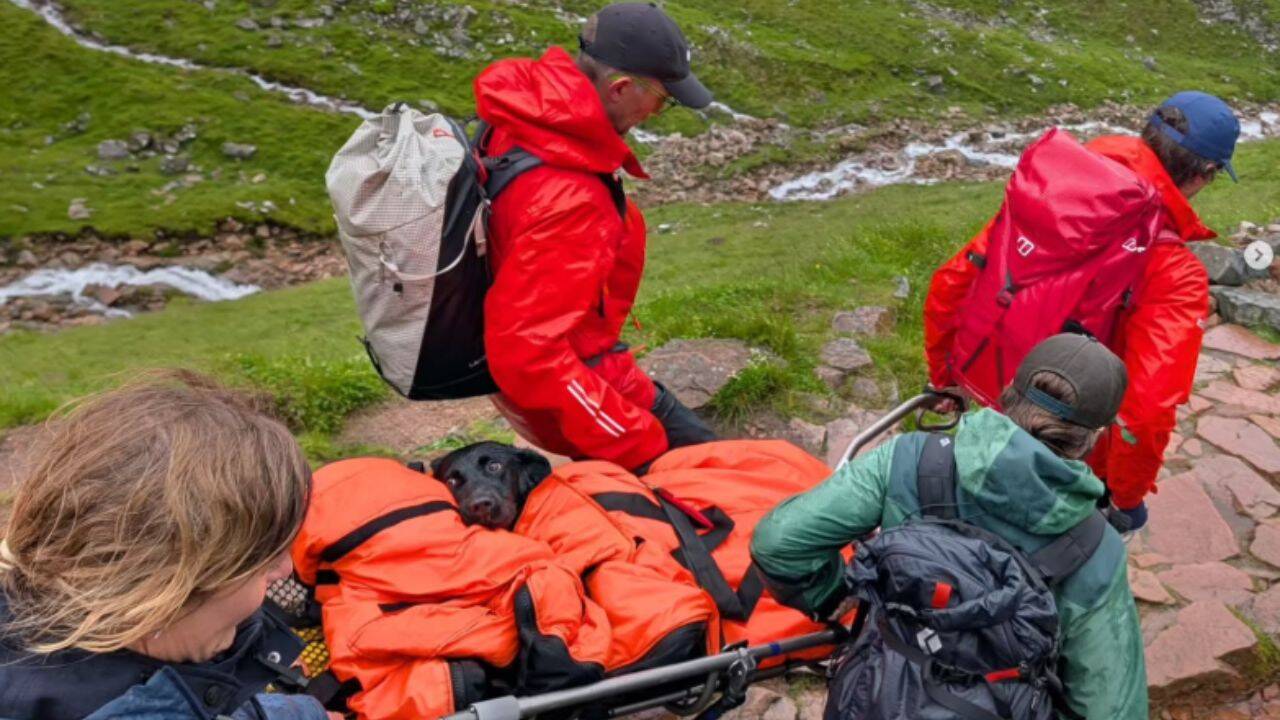
A crisp hike up Britain’s highest peak, Ben Nevis, sounds like the perfect weekend escape for an active dog. For Surrey-based professional dog trainer Christina Bluhme and her five-year-old black Labrador, Tokyo, a trip to the Scottish Highlands in early July 2026 was supposed to be exactly that.
Tokyo, a fit and active working dog, was happily crushing the climb. She was drinking water, eating treats, and showing her usual high-energy drive. But about an hour from the 1,345-meter summit, everything went completely wrong.
Tokyo began to sway. Her back legs buckled. Within minutes, the 25-kilogram dog was entirely unable to stand and began drifting in and out of consciousness.
Standing on a steep, rain-slicked mountain trail with temperatures dropping, Bluhme realized she was facing every dog owner's absolute worst nightmare. She couldn't carry her dog down alone. What followed was a dramatic rescue operation and a shocking medical diagnosis that every outdoor enthusiast needs to hear.
The Rescue on Ben Nevis
As Tokyo’s condition deteriorated, Bluhme initially suspected a severe spinal issue, like a slipped disc triggered by the steep ascent. The reality, as they would soon find out, was much stranger and entirely preventable.
Unable to move the unresponsive Labrador, and with the Scottish weather closing in, Bluhme called for help. Fortunately, volunteers from the Lochaber Mountain Rescue Team had just wrapped up another incident nearby. They quickly reached the family, secured Tokyo onto a specialized rescue stretcher, and began the arduous trek down the steep mountain terrain.
It took the team an hour to safely navigate Tokyo off the mountain and get her to Crown Vets in Fort William.
"Carrying a 25kg Labrador down Ben Nevis was impossible on my own, and their kindness, professionalism and calm support meant everything during one of the most frightening days I've ever experienced," Bluhme later shared.
At the clinic, veterinarians quickly ruled out physical trauma or a spinal injury. Instead, Tokyo’s glossy eyes, severe lethargy, and neurological struggles pointed directly to a neurotoxin. After consulting with a poison control center, the veterinary team confirmed a diagnosis: cannabis intoxication.
Tokyo had eaten discarded cannabis or a cannabis-infused edible left behind on the mountain trail by a careless hiker.
The High Toxicity of Cannabis in Dogs
A lot of people assume cannabis is relatively harmless because of its legalization and widespread use in human medicine. That’s a massive mistake.
For dogs, tetrahydrocannabinol (THC)—the primary psychoactive compound in cannabis—is incredibly toxic. Dogs have a significantly higher concentration of cannabinoid receptors in their brains compared to humans. This means they are extraordinarily sensitive to the drug. Even a tiny crumb of an edible, a discarded joint butt, or human feces containing THC can trigger severe poisoning.
Because Tokyo is a working dog with a natural drive to sniff and forage, she likely gulped down the discarded substance before her owner even noticed.
Symptoms of Cannabis Poisoning in Dogs
Symptoms usually start showing up anywhere from 30 minutes to three hours after ingestion. Look out for these telltale signs:
- Ataxia: The classic "drunken" sway, wobbling, or total loss of coordination in the hind legs.
- Urinary Incontinence: Dogs frequently dribble urine uncontrollably when intoxicated by cannabis.
- Depression or Lethargy: Drifting in and out of consciousness or falling into a deep sleep.
- Hyperesthesia: Extreme sensitivity to sound or touch—your dog might flinch violently if you pet them.
- Slow Heart Rate and Dilated Pupils: Glassy, wide eyes and a dangerously low heart rate.
In severe cases, ingestion of high-potency THC products (like medical-grade marijuana or homemade edibles) can lead to seizures, coma, or even death.
At Crown Vets, Tokyo was treated aggressively with intravenous fluids and activated charcoal, which helps bind to toxins in the stomach and prevents them from being further absorbed into the bloodstream. Thanks to the rapid response, Tokyo made a full recovery by the next morning. But not every dog is so lucky.
How to Protect Your Dog on the Trail
You shouldn't have to stop taking your dog on beautiful hikes, but you do need to change how you monitor them in popular outdoor spots. Trail litter isn't just an eyesore anymore; it can be lethal.
Teach a Bulletproof "Leave It" Command
This is your single best line of defense. As a professional dog trainer, Bluhme knows the value of this command, but even the best-trained dogs can slip up if they find something highly appetizing. Practice "leave it" in high-distraction environments using high-value rewards. If your dog doesn't drop a piece of food instantly on command, they shouldn't be off-leash in heavily trafficked areas.
Watch for Scavenging Hotspots
Hiker rest stops, summit viewpoints, and trailside benches are prime areas where people drop food, trash, or drugs. Keep your dog on a tight leash when passing through these high-traffic zones. If your dog is an obsessive scavenger, consider using a lightweight basket muzzle. It still allows them to pant and drink water but physically blocks them from vacuuming up dangerous trail litter.
Know Your Local Emergency Vet
Before you set off on a remote hike, check where the nearest emergency veterinary clinic is located. Save their number and address in your phone. In Tokyo’s case, being near Fort William meant they could access Crown Vets quickly. If you are deep in a national park or remote wilderness, you need a plan for how you will transport your dog if they suddenly collapse.
If you suspect your dog has eaten something toxic, do not wait for symptoms to appear. Head to a vet immediately. Getting activated charcoal into their system early can make the difference between a quick recovery and a life-threatening crisis.


