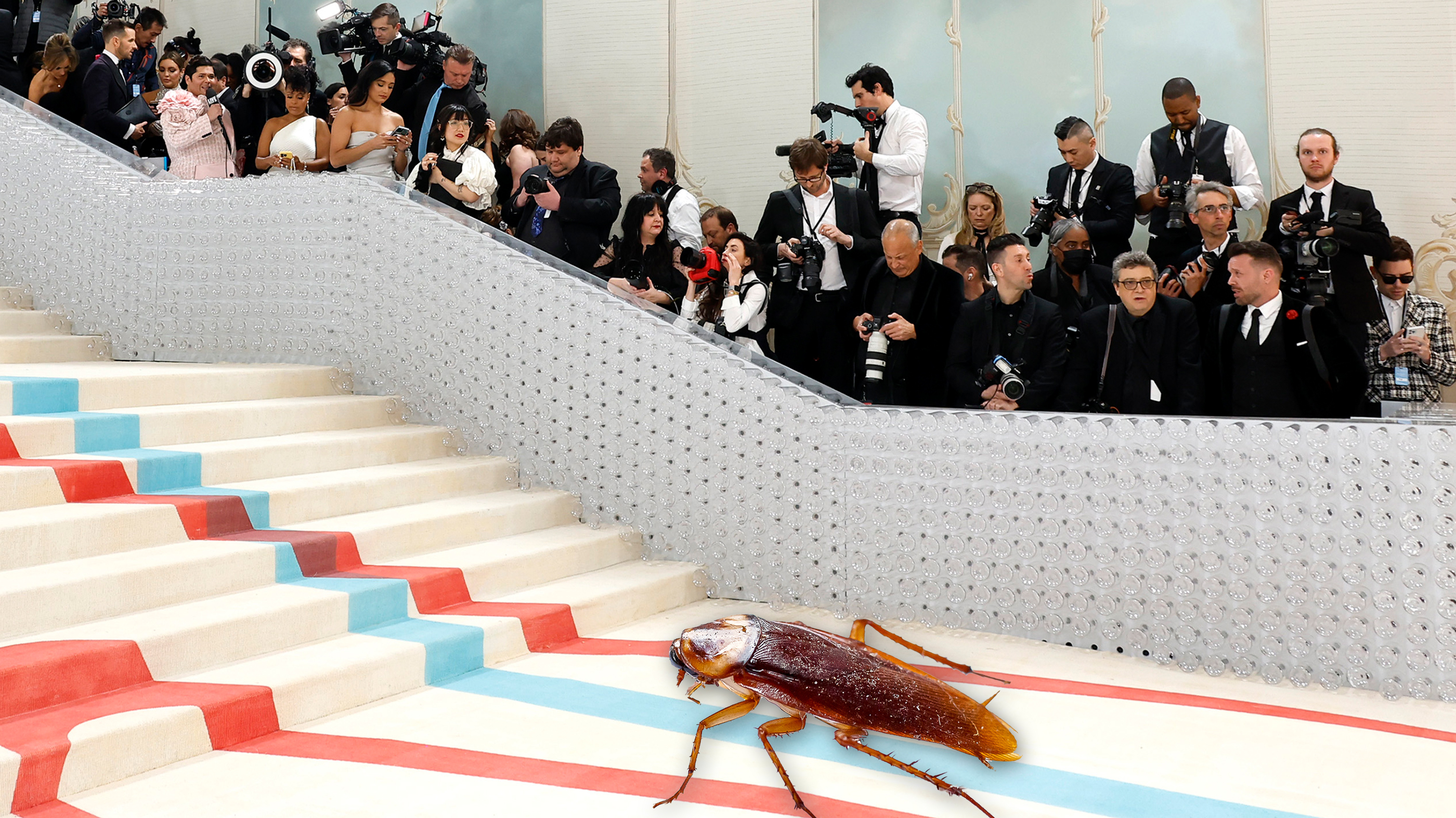
The question isn't whether the Costume Institute can survive without the Met Gala. The real question is how much longer the Costume Institute can survive the Gala itself.
For decades, the fashion media has clung to the "lazy consensus" that the first Monday in May is the lifeblood of fashion preservation. They point to the $20 million plus raised in a single night as if it’s a divine miracle. They argue that without the red carpet, the archives would crumble into moth-eaten dust.
They are wrong.
The Met Gala has become a parasitic twin. It provides the nutrients, sure, but it’s strangling the host. By tethering the serious study of sartorial history to a circus of influencer thirst-traps and brand-sponsored stunts, the Metropolitan Museum of Art has traded its academic soul for a viral hashtag.
The $50,000 Ticket To Irrelevance
Critics love to harp on the exclusivity of the guest list. That’s a distraction. The real issue is the financial distortion of the department’s mission.
When a single event accounts for the vast majority of your annual budget, you no longer serve the history of dress. You serve the donors of the event. I’ve watched institutional priorities shift in real-time across the museum world; when the money comes from a party, the curatorial choices start looking like party favors.
The Costume Institute is the only one of the Met’s 17 departments that has to fund itself. This "self-sufficiency" is praised as a business model, but it’s actually a trap. It forces curators to select themes based on meme-ability rather than historical significance.
- The Camp Year: Pure aesthetics over substance.
- The Gilded Glamour Year: A tone-deaf display that missed the sociopolitical nuance of the era entirely.
- The Lagerfeld Year: A safe, corporate-approved retrospective that avoided the designer’s messy, complicated reality.
We are seeing the Disney-fication of fashion history. If an exhibit doesn't have a hook that a Kardashian can wear to a red carpet, does the board even care?
The Preservation Paradox
The Gala enthusiasts argue that the money goes toward conservation. Let’s look at the math of modern textiles.
Synthetic fibers, plastics, and high-tech materials used in contemporary "Gala-worthy" couture are a nightmare to preserve. We are spending millions to save garments that were literally designed to last for one night on a celebrity.
The resource drain is staggering. While the museum focuses on the "blockbuster" pieces from the 21st century to keep the donors happy, thousands of historically significant items from the 18th and 19th centuries—the pieces that actually tell us how humans lived—sit in the basement, waiting for a fraction of that attention.
Imagine a scenario where the Met Gala didn't exist. The department would be forced to reintegrate with the museum's general fund. Yes, the budget would shrink. But the integrity would skyrocket. We would see exhibits about the evolution of the loom, the chemistry of dyes, or the labor politics of the 1920s garment district.
Instead, we get "Sleeping Beauties: Reawakening Fashion"—an exhibit designed specifically to be "Instagrammable." It’s fashion as a funeral parlor, where we dress up the corpse of creativity and charge $30 a ticket to take a selfie with it.
The Myth of the "Public Interest"
"But the Gala brings fashion to the masses!"
No, it doesn't. It brings a caricature of fashion to the masses.
When the general public thinks of the Costume Institute, they don't think of the intricate construction of a 1950s Balenciaga cocoon coat. They think of Jared Leto carrying a replica of his own head. The Gala has conditioned the public to view fashion as a costume party rather than a serious discipline of anthropology and art history.
This creates a feedback loop of stupidity. The public wants spectacle, the sponsors provide spectacle, and the curators are forced to frame their research around that spectacle.
The High Cost of Celebrity Validation
The dependence on Anna Wintour and Vogue has created a monoculture.
I’ve been in the rooms where these decisions happen. The fear of offending a major brand or a powerful editor is palpable. When your department’s survival hinges on the approval of the fashion industry’s elite, you cannot be a critical voice.
True scholarship requires distance. It requires the ability to say, "This designer was a genius, but their impact was destructive," or "This trend was a symptom of a failing economy." You can’t do that when the CEO of the brand you’re critiquing is sitting at Table 4 pays for your assistant’s salary.
The Costume Institute has become a marketing arm for the LVMH and Kering conglomerates. The museum provides the "prestige" and the "legacy," and the brands provide the cash. It’s a transaction, not a curation.
How to Actually Save Fashion History
If we actually cared about the "Costume" in the Costume Institute, we would stop the Gala tomorrow.
- Abolish the Departmental Silo: Integrate fashion back into the Art of the Americas, the European Paintings, and the Islamic Art wings. Stop treating clothes like a freak show that needs its own special party to survive.
- End the Vogue Monopoly: The museum needs to stop being a satellite office for Condé Nast. Diversify the funding. Go to tech philanthropists, go to climate funds (textile waste is a massive environmental issue), go to the general public.
- Focus on Technique, Not Celebrity: The most successful small-scale fashion museums—like the Museum at FIT—often do more with $500,000 than the Met does with $50 million because they focus on the how and the why instead of the who.
The downside? The red carpet would vanish. The celebrities would go to the Oscars or a private party in the Hamptons. The Met would lose its "cool" factor.
Good.
Museums shouldn't be "cool." They should be essential. They should be challenging. They should be uncomfortable.
The Met Gala is a gilded cage. It’s time to unlock the door and see if the clothes can stand on their own two legs without a supermodel holding them up.
Fashion is a record of human existence. It’s how we mark time, gender, status, and rebellion. It’s too important to be reduced to a fundraiser theme. The Costume Institute doesn't need the Gala; it needs an exorcism.
Burn the guest list and save the silk.


