A man opens his front door wearing pajama pants. He is greeted by three people in bright t-shirts holding flyers, offering him a chance to participate in a marketing taste test for a new brand of chewing gum. He smiles, takes a piece, and enthusiastically chews it. A few moments later, he spits the used wad into a small ramekin held out by one of the marketers.
That enthusiastic volunteer was Mitchell Gaff, a 68-year-old registered sex offender living under an assumed name in Everett, Washington. The "marketers" were actually undercover detectives. And that single, saliva-soaked wad of gum just ended a 46-year run from justice.
In May 2026, a Snohomish County Superior Court judge handed Gaff a sentence of 50 years to life in prison. He had finally confessed to the brutal, separate 1980s murders of Susan Vesey and Judith "Judy" Weaver.
For decades, these families lived with agonizing silence and misplaced suspicion. If you think cold cases stay cold forever, you aren't paying attention to how forensic science has fundamentally shifted. The technology didn't just evolve. It caught up to monsters who thought they got away with it.
The Flaw in the Perfect Crime
Back in the early 1980s, criminals had a massive advantage. DNA profiling wasn't a standard law enforcement tool. If a killer didn't leave a clear fingerprint, didn't know the victim, and didn't brag about the crime, the odds of beating the system were terrifyingly high.
Mitchell Gaff knew this, or at least he counted on it.
On July 11, 1980, Gaff slipped through an unlocked front door into the apartment of 21-year-old Susan Vesey. She was a young, married mother. Her two children, both under two years old, were asleep in the next room. Gaff grabbed a knife from her own kitchen, hid in a closet, and waited. When he attacked, it was random, sexually motivated, and devastatingly violent. He left her dead while her babies slept nearby.
Four years later, in June 1984, Gaff struck again. He targeted Judith Weaver inside her own Everett home. After sexually assaulting and murdering her, Gaff set fire to her bedroom, intending to incinerate every shred of physical evidence.
For 40 years, the cases sat in filing cabinets. Investigators had theories and persons of interest, but no proof. In fact, for decades, the Vesey family lived under a cloud of internal suspicion, wondering if a relative had committed the atrocity. The emotional damage metastasized through generations like a physical disease.
How the Tech Flipped the Script
What Gaff didn't realize when he lit that fire in 1984 was that Everett police officers had the foresight to call the state crime lab immediately. They preserved vaginal swabs from Weaver's body and kept the ligatures used to bind her wrists and neck. They packed them away in evidence storage, waiting for a future that hadn't been invented yet.
That future arrived via two major breakthroughs in forensic science.
- Advanced Extraction Software: Modern software can now pull clean, usable DNA profiles from tiny, degraded, or mixed samples that would have been completely useless ten years ago. It can separate a victim's genetic material from a killer's, even on clothing that was burned or exposed to extreme heat.
- Investigative Genetic Genealogy (IGG): This is the real hammer. Forensic scientists take an unknown DNA profile from an old crime scene and upload it to public databases. By mapping out distant cousins and family trees, they can narrow down a suspect list from millions of people to a single family branch.
In late 2023, a forensic scientist named Lisa Collins with the Washington State Patrol used new testing methods on the ligature marks from Judy Weaver's wrists. She found a clean male profile and uploaded it to CODIS, the national database of convicted offenders.
It hit instantly.
Gaff's profile was already in the system. He had been convicted in 1985 for the brutal rape of two teenage sisters, an attack carried out just three months after he killed Weaver. He served 11.5 years for that crime and was released in 1994, flying completely under the murder radar while legally changing his name to Sam Price.
The Gum Ruse and the Final Trap
Knowing a name isn't enough to make an arrest stick in court. Prosecutors need an absolute, unassailable match. They needed a fresh, direct sample of Gaff's DNA without tipping him off that the police were closing in.
Enter the chewing gum scheme.
Undercover detectives built a highly elaborate, fake marketing study. When Gaff spit that first piece of gum into the dish in January 2024, Detective Susan Logothetti later recalled how difficult it was to hide her excitement. The saliva on that wad matched the crime scene evidence perfectly.
Once cornered with the DNA evidence from the Weaver case, the dominoes fell fast. Investigators pushed further, linking the signature characteristics of the Weaver homicide to the unsolved 1980 murder of Susan Vesey. Faced with irrefutable science, Gaff cracked. On April 16, he pleaded guilty to two counts of premeditated first-degree murder.
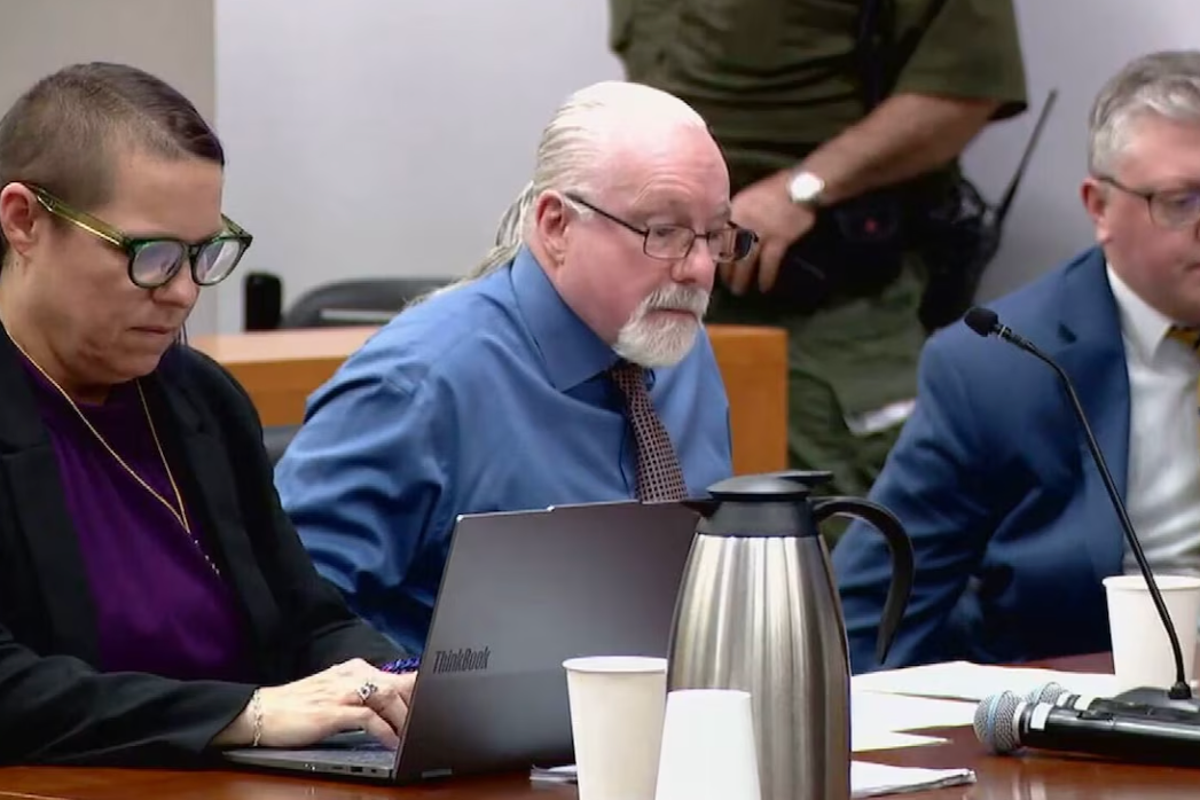
During his sentencing, Gaff tried the classic pivot. He claimed he had spent his decades of freedom studying Buddhism, finding religion, and staying sober. He apologized, calling himself a "runaway train" driven by anger.
But Superior Court Judge Edirin Okoloko didn't buy the late-life transformation. The judge pointed out that Gaff had continued to lie and actively deceive investigators as recently as two years prior. He sentenced Gaff to a minimum of 50 years—one year for every year the victims' families were forced to wait for answers.
The Reality of Modern Cold Cases
If you are following true crime or legal policy, this case proves a massive point. The statue of limitations on murder doesn't exist, and the technological window for getting away with it is slamming shut.
Old evidence sitting in local police departments across the country isn't just garbage taking up space. It's a ticking time bomb for people who thought their secrets died in the 20th century. Police departments are aggressively re-testing old biological materials using modern extraction protocols.
The immediate takeaway here is clear. If your local law enforcement agency has an underfunded cold case unit, community advocacy and shifting budget priorities toward forensic testing work. DNA databases aren't just for tracking active criminals anymore. They are actively clearing the backlogs of the dead, providing answers to families who assumed they would go to their graves never knowing the truth.
This comprehensive breakdown explains the exact forensic methodologies and undercover tactics used by Washington State law enforcement to secure the historic conviction of Mitchell Gaff: Everett Police Cold Case Breakthrough Video