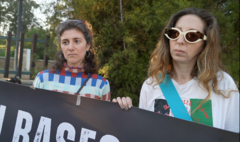
The prevailing narrative regarding the British Sovereign Base Areas (SBAs) in Cyprus is a tired relic of 1960s decolonization theory. Critics and local activists point to the RAF Akrotiri and Dhekelia bases as "colonial scars" or, more recently, as dangerous magnets for regional retaliation following strikes in the Middle East. They argue these 98 square miles of British soil infringe on Cypriot sovereignty and turn the island into a target.
They are wrong.
The "sovereignty" argument is a convenient political distraction. In reality, the SBAs are the ultimate geopolitical insurance policy that Nicosia didn't have to pay for. While activists burn effigies outside the gates of Akrotiri, the Cypriot government is quietly banking the stability, intelligence, and hard currency that these "scars" provide. The debate isn't about colonialism; it’s about a massive, subsidized security umbrella that the Republic of Cyprus could never afford on its own.
The Myth of the Vulnerable Target
The loudest grievance is that the British presence invites attacks from regional actors like Hezbollah or Houthi rebels. This logic assumes that if the British packed up and left, Cyprus would suddenly become a neutral, invisible paradise.
It wouldn't.
Cyprus sits roughly 100 miles from the Syrian coast. It is the easternmost outpost of the West. In a world without the SBAs, Cyprus would be a security vacuum. History—and modern geography—abhors a vacuum. If the British left, the resulting scramble for influence between Turkey, Russia, and regional power players would make the current "risk" look like a picnic.
The bases don't make Cyprus a target; they make it a fortress. The sophisticated signals intelligence (SIGINT) capabilities at Ayios Nikolaos provide a data canopy that covers the entire Eastern Mediterranean. This isn't just for British interests. The intelligence gathered here trickles into the broader Western security apparatus, which, by extension, protects the stability of the very Republic that complains about its presence. You don't get to enjoy the shade of the tree and then complain that its roots are messy.
The Economic Hypocrisy
Let’s talk about the money. Critics love to ignore the balance sheet.
The SBAs employ thousands of Cypriots. They pump hundreds of millions of Euros into the local economy through construction contracts, services, and the personal spending of thousands of British personnel and their families. If the bases were handed back tomorrow, the Republic would inherit a massive infrastructure liability and a workforce in crisis.
Beyond the direct cash flow, there is the "Stability Premium." International investors don't flock to Cyprus because of its proximity to war zones; they come because the island is anchored by a permanent Western military presence. That presence guarantees that the sea lanes remain open and the airspace remains regulated by high-tier standards.
I’ve seen governments blow billions trying to manufacture the kind of investor confidence that a permanent RAF runway provides for free. Nicosia gets a "Triple-A" security rating by proxy. To dismantle the bases would be an act of economic self-harm.
Sovereignty is a Slogan, Not a Strategy
The Republic of Cyprus often uses the bases as a rhetorical punching bag to satisfy domestic populist sentiment. It’s an easy win for any politician: blame the "British occupiers" for whatever goes wrong.
But look at the actual legal framework. The 1960 Treaty of Establishment isn't just a dusty piece of paper; it’s a functional agreement where the UK pays for the upkeep of infrastructure that serves both the bases and the surrounding Cypriot villages. The SBAs operate under a unique legal "gray zone" that actually benefits the locals. Cypriots living within the SBAs enjoy the protection of British administrative standards while remaining culturally and legally tied to the Republic.
It is a hybrid model that works, despite the optical friction.
The Intelligence Dividend
Most people don't understand the scale of what happens at GCHQ's listening posts in Cyprus. We aren't just talking about listening to radio chatter. We are talking about the "bridge" between the Middle East and the West.
- Fiber Optic Hubs: Cyprus is a landing point for massive undersea cables.
- Satellite Surveillance: The geographic location allows for a "look" into territories that are otherwise blind spots for Western sensors.
- Counter-Terrorism: The speed of response from Akrotiri has historically been the difference between a contained threat and a regional disaster.
If the UK withdrew, who fills the gap? Does the Republic of Cyprus have the $50 billion required to maintain a global-tier SIGINT network? No. Does it want Turkey or Russia to set up shop in the vacancy? Absolutely not.
The status quo is a masterpiece of geopolitical "outsourcing." Cyprus has outsourced its most expensive and dangerous security needs to a third party that is legally obligated to stay and pay for the privilege.
The Mediterranean’s Best Kept Secret
The real irony of the "War fuels debate" headline is that the war actually proves the necessity of the bases. When the region catches fire, the SBAs act as a firebreak. They provide a staging ground for humanitarian evacuations—like we saw during the Lebanon crises—and a deterrent against any actor thinking about expanding the conflict to the West.
The "debate" isn't a sign of instability; it's a luxury of the protected. You only have the freedom to argue about the removal of a military base when that base is doing its job so well that you feel safe enough to complain.
The British bases are not a relic of the past. They are the scaffolding of the Cypriot future. Without them, the Republic is just a small, vulnerable island in a very dangerous neighborhood.
Stop asking when the British will leave. Start asking what happens to the Cypriot economy and security the moment they do. You won't like the answer.
Would you like me to analyze the specific economic impact of the SBA's transition to Euro-based transactions on local businesses?