Wall Street is having an existential panic attack over software valuations while quietly backing up the truck for silicon.
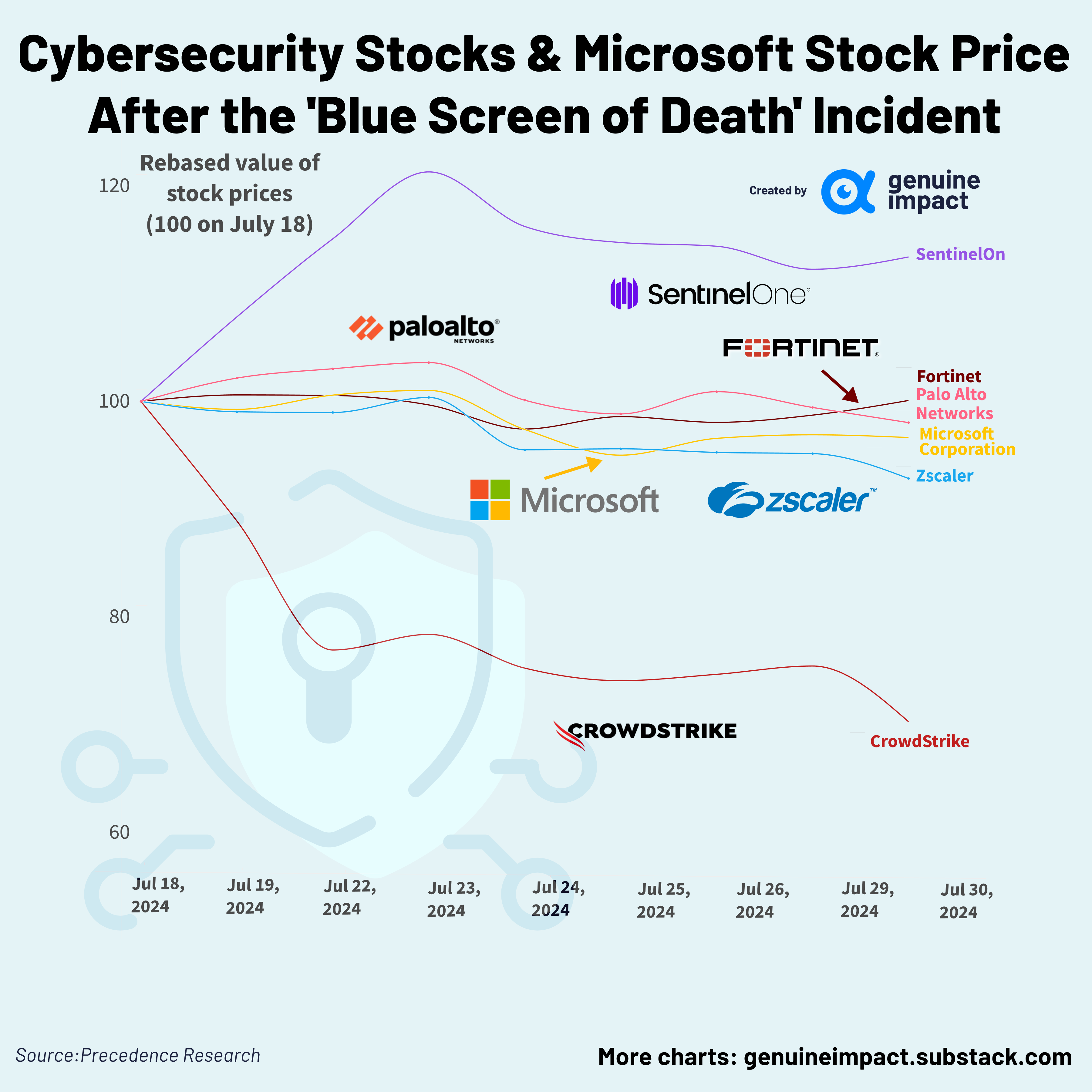
Look at the terminal screens. Cybersecurity darlings are bleeding value, shedding multiples like a snake in August. Meanwhile, commodity memory stocks are rallying past resistance levels that analysts called permanent ceilings six months ago. The consensus narrative on the financial networks is predictable: software is dead money because IT budgets are tightening, and memory is the ultimate cyclical comeback kid riding an artificial intelligence infrastructure boom.
That consensus is lazy, dangerous, and fundamentally backwards.
I have watched enterprise procurement officers slash their discretionary line items while simultaneously writing blank checks for physical compute infrastructure. I have seen companies blow millions on security subscriptions they do not know how to operate, only to rip them out the moment renewal time hits. The market is not punishing cyber stocks because software is failing. The market is punishing them because the entire subscription-software business model is breaking down under the weight of its own bloat.
At the same time, memory is not rallying because of some magical cyclical recovery. It is rallying because artificial intelligence has transformed memory from a disposable commodity into a primary operational bottleneck.
To understand why your portfolio is bleeding in one sector and printing in the other, you have to stop listening to Wall Street analysts who have never configured a firewall or provisioned a high-bandwidth memory stack. You have to look at how capital actually flows through enterprise technology right now.
The Software Subscription Trap Is Finally Snapping Shut
For a decade, the software-as-a-service playbook was foolproof. You built a point solution, slapped an annual recurring revenue metric on it, raised capital at fifty times forward sales, and convinced Chief Information Officers that subscribing to thirty different dashboard tools was modern risk management.
Cybersecurity became the ultimate beneficiary of this grift. Every time a board of directors got nervous about a data breach, they threw money at another point solution. Endpoint detection here, identity access management there, vulnerability scanners stacked on top of cloud posture management tools.
It was a perpetual motion machine of fear-based spending.
Then reality arrived. CFOs finally started auditing their software stacks. They discovered they were paying for overlapping seat licenses across twenty different security vendors, none of which talked to each other without a custom API that broke every time a vendor pushed an update. Worse, they realized that despite spending millions on these subscriptions, their breach risk hadn't dropped proportionately.
When enterprise buyers experience subscription fatigue, they do not optimize. They slash.
This is why cybersecurity stocks are dropping. It is not a cyclical downturn or a temporary macro headwind. It is a structural correction. The market is realizing that point-solution security fatigue is real. Enterprises are consolidating their tooling onto platform players or, increasingly, relying on the native security controls baked directly into hyperscale cloud infrastructure.
If you are a standalone security vendor that does one thing moderately well, your days of commanding enterprise software multiples are over. You are no longer a growth stock. You are an acquisition target for a private equity firm looking to strip costs and milk the maintenance revenue.
Why Memory Became the Only Game in Town
While software companies are sweating over churn rates and net retention metrics, the memory market is experiencing a structural rewrite that most analysts refuse to acknowledge.
Let us define terms clearly. For years, dynamic random-access memory and flash storage were treated like agricultural commodities. Prices crashed, factories overproduced, margins evaporated, and cyclical investors timed the bottom to ride the upswing. It was a mug's game of capacity management.
Artificial intelligence broke that cycle entirely.
High-bandwidth memory is not standard DRAM. It is a vertically stacked marvel of semiconductor engineering that sits directly next to graphics processing units on an interposer. Without it, your million-dollar AI accelerators are expensive doorstops sitting idle while waiting for data to process.
Imagine a scenario where you build a ten-lane superhighway for data computation, but the off-ramp into storage is a dirt road with a toll booth. That was the AI memory bottleneck in late 2023. High-bandwidth memory solved that bottleneck, and it cannot be manufactured using legacy equipment or standard assembly lines. It requires cleanroom precision, massive capital expenditure, and advanced packaging techniques that only a handful of global manufacturers can execute at scale.
This is why the memory play is rallying while cyber stocks drop. Memory has ceased to be a cyclical commodity. It has become the limiting factor of global intelligence infrastructure.
When a hyperscaler like Microsoft, Google, or Meta commits billions to building out server clusters, they do not care about the spot price of standard memory chips. They care about supply allocation. They need every stack of advanced memory they can get their hands on, regardless of cost, because every week their data centers sit under-provisioned is a week they lose ground in the infrastructure race.
The Fallacy of the IT Budget Pie
The most common pushback I hear from traditional portfolio managers is that enterprise IT budgets are a zero-sum pie. If money is flowing into hardware and memory, it must be coming out of software and security.
That view ignores how corporate finance actually operates in an era of technological transition.
Enterprise spending is bifurcated into two entirely distinct buckets: capital expenditure and operating expense.
Capital expenditure is what goes into physical infrastructure, data center buildouts, servers, networking gear, and advanced silicon. This is where the memory rally is being funded. It is board-level, multi-year strategic investment driven by the fear of obsolescence in an AI-driven economy.
Operating expense is where software subscriptions, including cybersecurity, live. This is discretionary, department-level spending that gets scrutinized every single quarter by ruthless operational controllers.
When a company decides to build out an internal machine learning capability, they do not reallocate money from their CrowdStrike budget to buy memory chips. They pull capital from the balance sheet or debt markets to fund the physical infrastructure buildout, while simultaneously conducting a ruthless trim of their software vendor list to offset inflation elsewhere.
You are not watching a rotation from software to hardware. You are watching a market revaluation based on where real economic value is generated. Software promised to automate the world without physical friction. Hardware is proving that you cannot run artificial intelligence on good intentions and dashboard notifications.
What the Street Misses About the Next Twelve Months
If you want to survive the current market regime, you have to throw out the playbook that worked from 2010 to 2021.
Stop buying cybersecurity stocks simply because they have high growth rates and impressive gross margins. Gross margins mean nothing if your customer acquisition cost exceeds the lifetime value of the contract due to mounting churn. Look instead at platform dominance, native cloud integration, and sticky infrastructure positioning. If a security vendor cannot prove they are indispensable to core infrastructure, dump them.
Conversely, do not treat the memory rally as a standard cyclical pop that you should short at the first sign of a flat quarter. The transition to accelerated computing has permanently altered the demand profile for advanced silicon. The barriers to entry for high-bandwidth memory are higher than they have ever been in the history of the semiconductor industry.
The market is rewarding physical scarcity and punishing digital bloat.
Software promised to eat the world. Instead, it choked on its own subscription fees. Meanwhile, silicon is doing the heavy lifting, and the companies manufacturing the memory infrastructure powering the next computing revolution are just getting started.
Stop mourning your software portfolio and look at the physical reality of where the compute actually lives.