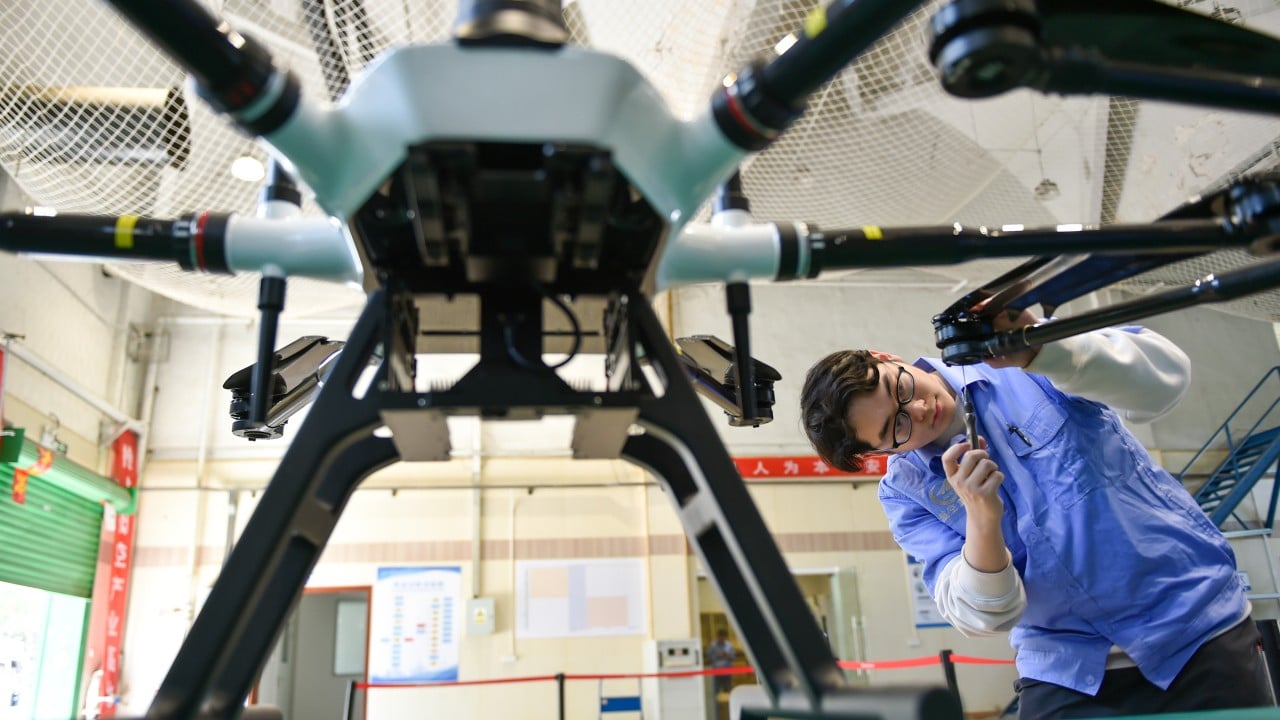
Beijing wants Washington to walk back its sweeping drone tariffs immediately. The diplomatic push is framed around global supply chain stability, but the underlying mechanics are far more contentious than a simple trade dispute.
Washington imposed these barriers to secure critical infrastructure and domestic manufacturing lines against perceived foreign espionage. Trade officials argued that unchecked reliance on imported aerial platforms created unacceptable national security vulnerabilities.
Yet the friction extends far beyond political posturing. The restrictions target a commercial ecosystem that has spent over a decade building an almost insurmountable manufacturing advantage.
The Anatomy of a Monopolized Supply Chain
Commercial aerial technology relies on specialized components that cannot be easily sourced outside East Asia. Carbon fiber frames, custom brushless motors, specialized thermal sensors, and high-frequency transmission chips are concentrated within tightly integrated industrial clusters. When tariffs hit these specific inputs, American enterprise does not magically pivot to local suppliers. Instead, assembly lines stall, R&D budgets drain into customs penalties, and deployment timelines stretch indefinitely.
For years, industrial operators in agriculture, infrastructure inspection, and public safety integrated these platforms because cost and capability aligned cleanly. A municipal utility company inspecting high-voltage transmission lines or a search-and-rescue team mapping wildfire perimeters operates on tight public budgets. They cannot simply absorb a thirty or forty percent price hike without cutting operational hours.
Trade restrictions treat hardware as a standalone commodity. That perspective ignores how software integration dictates hardware utility. Flight control firmware, obstacle avoidance algorithms, and fleet management dashboards are often locked into proprietary ecosystems. Forcing a sudden hardware switch requires rewriting operational protocols from the ground up.
National Security Versus Economic Reality
Proponents of the tariff regime point to espionage risks and data telemetry concerns. Those anxieties are entirely valid. Connected devices transmit telemetry back to home servers, and foreign-built systems present telemetry routing questions that defense analysts take seriously.
The strategy behind the trade barrier assumes economic pressure will force a rapid domestic renaissance in aerospace manufacturing. That assumption misunderstands the timeline of industrial engineering.
Building a competitive microelectronics and aerospace supply chain requires more than tax policy adjustments. It demands rare earth mineral processing capacity, precision manufacturing talent, and years of iterative prototyping. None of these elements can be manufactured by executive order or tariff enforcement.
By erecting trade walls before domestic alternatives exist, policymakers have effectively penalized the very domestic industries they intended to protect. A local mapping startup cannot wait five years for a subsidized domestic motor factory to spin up. They need functional, affordable hardware today to fulfill existing contracts.
The Global Rebound Effect
Beijing understands this dependency well. When foreign ministries issue warnings regarding supply chain fallout, they are not just engaging in standard diplomatic theater. They are highlighting a structural reality. If export controls and import levies continue to escalate, the fallout will hit secondary markets across Europe, Latin America, and Southeast Asia.
Manufacturers caught in the crossfire are already exploring workarounds. Some companies are establishing shell assembly hubs in neutral third-party nations to bypass direct country-of-origin rules. Others are stockpiling critical inventories, tying up working capital that should be deployed toward innovation. This behavior does not strengthen national security. It introduces market inefficiencies, drives up consumer costs, and rewards regulatory arbitrage.
The Department of Commerce faces a narrow corridor. If they yield to diplomatic pressure and roll back the tariffs, critics will accuse them of caving to foreign industrial policy and compromising critical infrastructure. If they double down on protectionist measures without accelerating genuine domestic manufacturing alternatives, they risk strangling the very commercial sectors that rely on these aerial tools for economic growth.
Washington chose to pull the tariff lever because it offered immediate political visibility. Fixing the resulting industrial vacuum requires patience, heavy capital investment, and an honest assessment of what domestic manufacturing can realistically achieve in this decade.
The tariffs remain active, supply chains remain fractured, and the race for dominance over the skies has only grown more expensive for everyone involved.