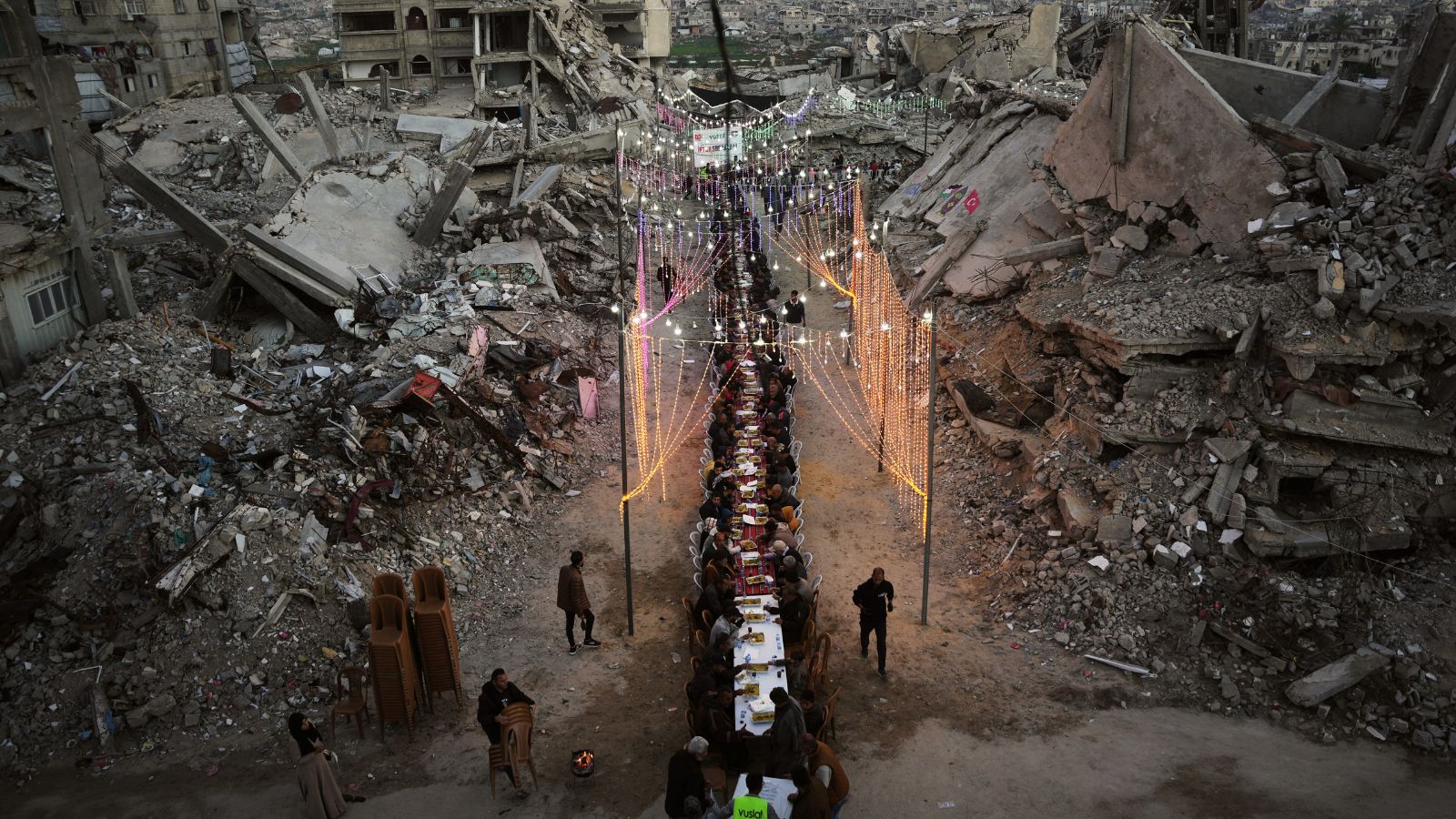
The $7 billion pledged at the inaugural Board of Peace meeting on February 19, 2026, represents a fundamental shift in the capitalization of Middle Eastern reconstruction. By bypassing traditional multilateral frameworks like the United Nations, the Trump administration has established a private-public hybrid model for conflict stabilization. However, the delta between the current $17 billion total commitment—including a $10 billion U.S. pledge—and the estimated $70 billion required for full-scale reconstruction indicates a significant capital shortfall that the current board structure is not yet equipped to bridge.
The Tri-Pillar Model of the Board of Peace
The Board of Peace operates under a structural logic that departs from the "aid-for-access" model typical of Western diplomacy. Instead, it utilizes three specific pillars to enforce a transition from active conflict to economic redevelopment.
1. The Membership Fee as a Barrier to Entry
Unlike the UN General Assembly, where membership is based on sovereign recognition, the Board of Peace utilizes a "pay-to-play" mechanism. Several permanent members reportedly paid a $1 billion entrance fee to secure a seat on the executive council. This creates a self-selecting cohort of wealthy, often non-Western, stakeholders including Saudi Arabia, the UAE, and Qatar. This capital serves as a liquidity pool for immediate stabilization efforts, specifically the mobilization of the International Stabilization Force (ISF).
2. The International Stabilization Force (ISF)
The ISF is the enforcement arm of the Board. While traditional UN peacekeeping forces are often hampered by restrictive Rules of Engagement (ROE), the ISF is structured as a 20,000-strong military and 12,000-strong police force.
- Troop Contributors: Indonesia, Morocco, Kazakhstan, Kosovo, and Albania.
- Training and Logistics: Egypt and Jordan (police training focus).
- Strategic Positioning: Initial deployments are centered on the Rafah corridor to secure the primary logistics artery for incoming aid and construction materials.
3. The Technocratic Administration (NCAG)
The National Committee for the Administration of Gaza (NCAG), led by Dr. Ali Sha’ath, functions as the board's local implementing partner. By utilizing a 12-member panel of technocrats rather than political representatives, the board intends to "depoliticize" the reconstruction process. The NCAG’s primary function is the restoration of the "Gaza Executive Board" portfolios: governance, infrastructure, and capital mobilization.
Quantifying the Capital Gap
The $7 billion in pledges from nine nations—Azerbaijan, Saudi Arabia, UAE, Morocco, Bahrain, Qatar, Uzbekistan, Kuwait, and Kazakhstan—is a baseline, not a ceiling. When combined with the $10 billion U.S. pledge, the total available capital is $17 billion.
| Funding Metric | Value (USD) |
|---|---|
| Current Total Pledges | $17 Billion |
| Estimated Reconstruction Cost | $70 Billion |
| Capital Shortfall | $53 Billion |
| US Unpaid UN Dues | $4 Billion |
The $53 billion shortfall creates a bottleneck for the "Mediterranean Riviera" master plan presented by Jared Kushner and Yakir Gabay. The plan envisions high-tech industry hubs and a tourism-centric coastline with 200 hotels. This level of development requires private equity participation that has yet to materialize. The current $17 billion is effectively "seed capital" intended to secure the environment (via the ISF) to a degree that makes Gaza an investable asset for institutional capital.
The Mechanism of Disruption: Replacing the UN
The Board of Peace is a direct competitor to the UN Security Council. This is evidenced by the systematic diversion of funds. While the U.S. recently paid $160 million toward its $4 billion in UN arrears, the simultaneous $10 billion pledge to the Board of Peace signals a relocation of influence.
The "Sharm el-Sheikh Agreement" and the subsequent UN Resolution 2803 (2025) provided the Board of Peace with international legal personality, but the actual operations remain under the personal control of the Board's Chairman. This creates an "Office of the High Representative" model where the U.S. Executive Branch exerts direct oversight over Gaza’s fiscal and security policy, bypassing the bureaucracy of the UN Relief and Works Agency (UNRWA).
Structural Risks and Operational Bottlenecks
The transition from Phase One (hostage exchange and withdrawal) to Phase Two (reconstruction) faces three critical points of failure:
- The Disarmament Paradox: The reconstruction plan hinges on the total disarmament of Hamas. However, the ISF’s ability to enforce disarmament without engaging in high-intensity urban combat remains unproven. If the security environment remains kinetic, the $7 billion relief package will be consumed by insurance premiums and security overhead rather than physical infrastructure.
- Congressional Authorization: The $10 billion U.S. commitment has been pledged by the President but not yet authorized by Congress. Without a formal appropriation, the Board of Peace remains dependent on foreign member fees to maintain the ISF.
- The "Yellow Line" Occupation: Currently, the Israeli military maintains a presence behind a designated "yellow line," occupying approximately 53% of the territory. The friction between the ISF and the IDF at these border interfaces creates a secondary layer of geopolitical risk that may deter the very "Riviera" investors the Board seeks to attract.
The strategic play for stakeholders is to treat the $7 billion as a security deposit for the stabilization of the Rafah-to-Gaza City corridor. Success will not be measured by the total amount spent, but by the speed at which the ISF can transition from a combat-capable force to a civilian policing unit. For the "Master Plan" to move from a 3D-rendered video to a physical reality, the Board must secure a secondary round of funding—likely through a sovereign wealth fund consortium—within the next 18 months to close the $53 billion infrastructure gap.
Would you like me to analyze the specific procurement contracts being offered to international firms for the ISF base construction in southern Gaza?