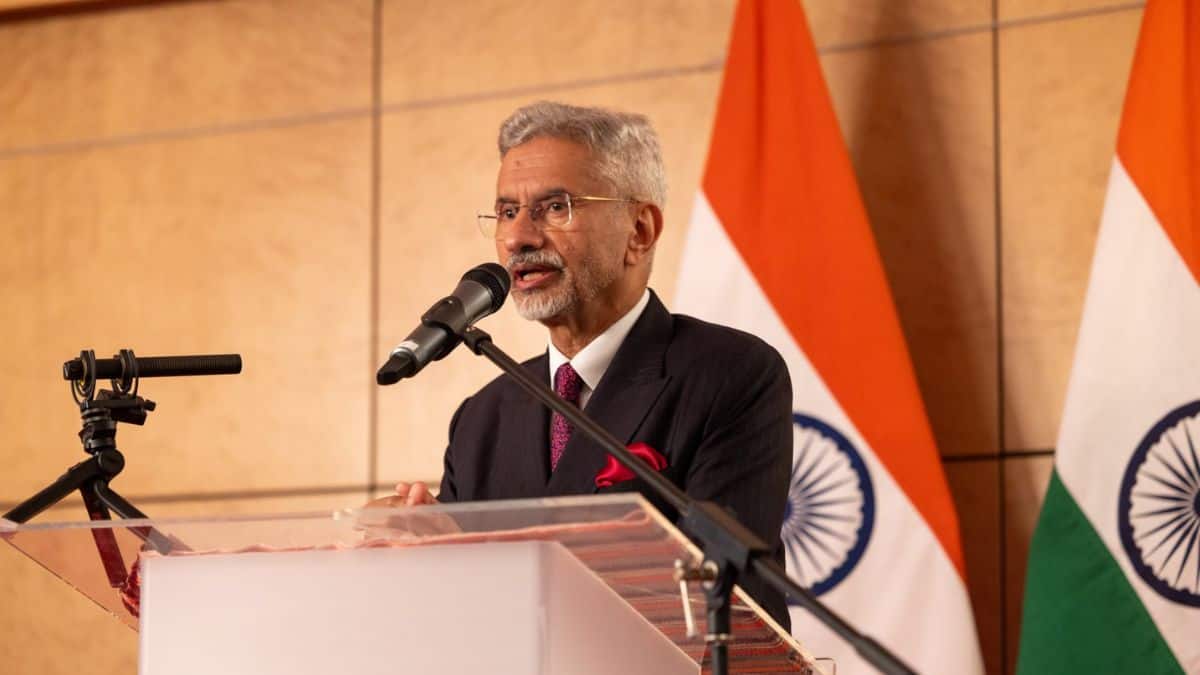
New Delhi has signaled a permanent shift in its global strategy by demanding a zero-tolerance policy on terrorism at the United Nations Human Rights Council. This is not just another stump speech or a routine diplomatic exercise. It represents a fundamental rejection of the "good terrorist vs. bad terrorist" narrative that has paralyzed international security frameworks for decades. By forcing this issue in a forum traditionally obsessed with domestic civil liberties, India is effectively weaponizing the concept of human rights to argue that the right to life—threatened primarily by non-state actors—must take precedence over the procedural protections often afforded to those who fund or harbor militants.
For years, the UN Human Rights Council (UNHRC) has been a battleground of selective morality. Western nations often use it to critique the internal governance of developing states, while those same developing states use it to shield themselves from scrutiny. India’s latest intervention disrupts this stale rhythm. It suggests that the greatest violator of human rights in the modern era is not the overreaching state, but the organized terror cell and the sovereign entities that provide them with "diplomatic and moral support." This is a direct hit at the institutional inertia in Geneva and New York.
The Weaponization of Sovereign Accountability
The core of India’s argument rests on a simple, brutal logic. If a state cannot or will not control the violent actors operating within its borders, it forfeits its right to be viewed as a responsible member of the international community. This is a significant escalation from previous years where the rhetoric was confined to bilateral disputes. Now, India is pushing for a global standard where the financial and political sponsors of terror are held as legally liable as the individuals pulling the triggers.
The infrastructure of global terror does not exist in a vacuum. It requires banking systems, communication networks, and physical territory. When India calls for "zero tolerance," it is specifically targeting the grey zones where international law remains vague. Currently, the UN's Counter-Terrorism Committee and the UNHRC operate in silos. India is attempting to bridge that gap, insisting that the Council acknowledge terrorism as a systemic human rights violation. This move puts countries that utilize proxy warfare in a difficult position, as they can no longer hide behind the veil of "insurgency" or "freedom fighting" without directly contradicting the Council’s mandate.
The Financial Action Task Force and the Shadow War
To understand the weight of this demand, one must look at the mechanics of the Financial Action Task Force (FATF). India’s diplomatic push at the UN is timed to coincide with a broader effort to tighten the noose around the funding mechanisms of regional adversaries. By establishing a "zero tolerance" precedent at the UNHRC, New Delhi creates a moral and legal baseline that the FATF can use to justify blacklisting non-compliant nations.
Money is the lifeblood of these operations. It moves through hawala channels, shell companies, and sometimes through legitimate charities. India’s veteran analysts know that speeches at the UN do not stop bullets, but they do shape the environment in which those bullets are purchased. If the UNHRC adopts a more aggressive stance, it adds a layer of international legitimacy to any unilateral or multilateral sanctions India chooses to pursue. It turns a local security concern into a global human rights imperative.
The Hypocrisy of Global Human Rights Forums
The UNHRC has often been criticized for its membership, which frequently includes some of the world’s most notorious human rights offenders. India’s insistence on addressing terrorism is a calculated move to expose this irony. While the Council debates the nuances of freedom of expression in the digital age, it often ignores the mass casualty events that erase the most basic right of all—the right to exist.
India’s diplomats are tired of the double standards. They see a world where a riot in a developing nation triggers an immediate UN probe, yet a cross-border terror attack that kills hundreds is met with "calls for restraint from both sides." The "zero tolerance" rhetoric is a demand for an end to this false equivalence. It is an assertion that there is no grievance, historical or political, that justifies the intentional targeting of civilians.
Breaking the Stalemate on the CCIT
For nearly three decades, the Comprehensive Convention on International Terrorism (CCIT) has gathered dust in the hallways of the UN. The primary sticking point has always been the definition of "terrorism." Some nations want to exempt "national liberation movements." India’s recent hardline stance at the UNHRC is a strategic attempt to bypass this semantic stalemate. By reframing the issue as an absolute human rights violation, New Delhi is trying to make the definition of the perpetrator irrelevant. The act itself becomes the focus.
- The Act: Indiscriminate violence against non-combatants.
- The Consequence: Immediate international pariah status.
- The Accountability: Full liability for the host state.
This approach treats terrorism like piracy or slavery—crimes so heinous that they fall under universal jurisdiction. If India succeeds in shifting the UN’s perspective, it would mean that any country harboring a known terrorist would be in direct violation of the UN Charter, regardless of the political "justification" offered.
The Strategic Shift Toward Proactive Diplomacy
This is not the India of the 1990s, which pleaded for the world to notice its plight. This is an India that recognizes its position as a major economic power and is willing to use that clout to reshape international norms. The shift from a defensive posture to an offensive one in diplomatic forums reflects a broader change in New Delhi’s security doctrine.
We are seeing the diplomatic equivalent of the "surgical strike." Instead of waiting for the Council to draft a report on India’s internal affairs, India is setting the agenda, forcing the Council to reckon with the external threats that destabilize the entire region. It is a sophisticated form of "active defense" that seeks to neutralize threats in the committee rooms of Geneva before they manifest on the streets of Mumbai or Srinagar.
Beyond the Rhetoric: The Implementation Gap
Despite the strength of the message, the path forward is fraught with institutional resistance. The UN is a massive, slow-moving bureaucracy that thrives on consensus, and consensus is the enemy of "zero tolerance." To truly implement this vision, India will need to build a coalition that transcends its traditional allies. This means engaging with nations in Africa, Southeast Asia, and South America that are also suffering from the rise of decentralized, violent extremist groups.
The real test will be whether this rhetoric translates into a change in how the UN allocates its resources. Will we see more funding for counter-terrorism human rights monitors? Will the UNHRC start issuing reports on the culpability of states that provide safe havens? Or will this remain a powerful, yet isolated, moment of diplomatic theater?
The New Standard of International Relations
India is betting that the world is finally exhausted by the cycle of radicalization and violence. By positioning itself as the voice of reason and the champion of "zero tolerance," New Delhi is carving out a leadership role that is both moral and pragmatic. It is telling the world that human rights cannot exist in a vacuum of security.
The era of "quiet diplomacy" on the issue of cross-border violence is over. India has made it clear that it will no longer accept a global order that treats the sponsors of terror as legitimate political actors. The message to the UN is simple: either the Council evolves to address the primary threat to human life, or it risks becoming an expensive, irrelevant relic of a bygone century.
Nations can no longer claim to support human rights while providing a platform, a passport, or a bank account to those who systematically destroy them.