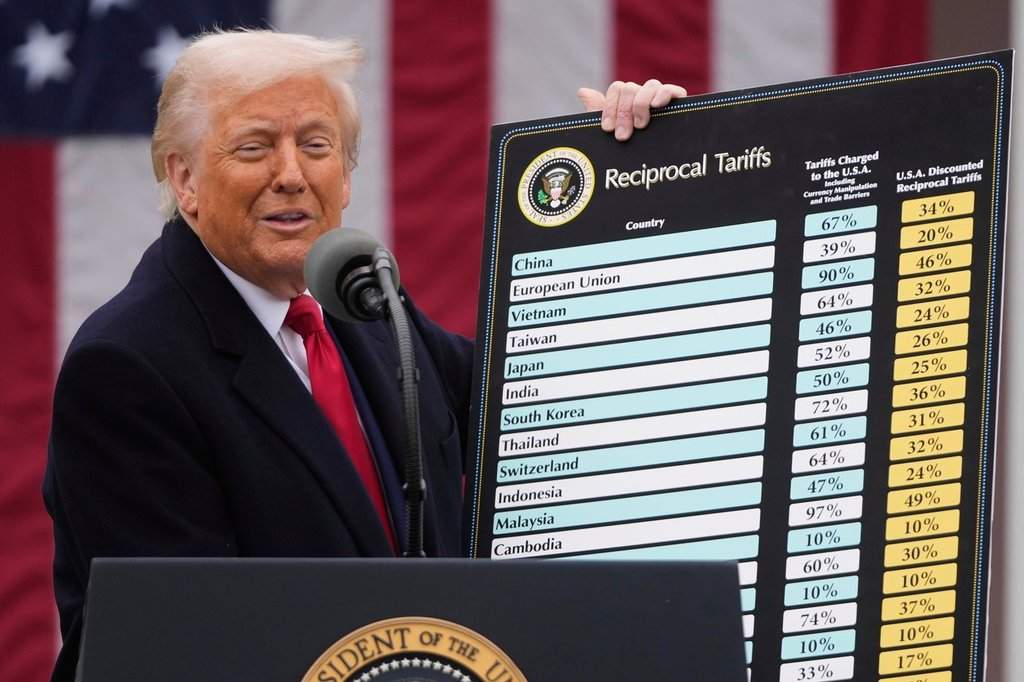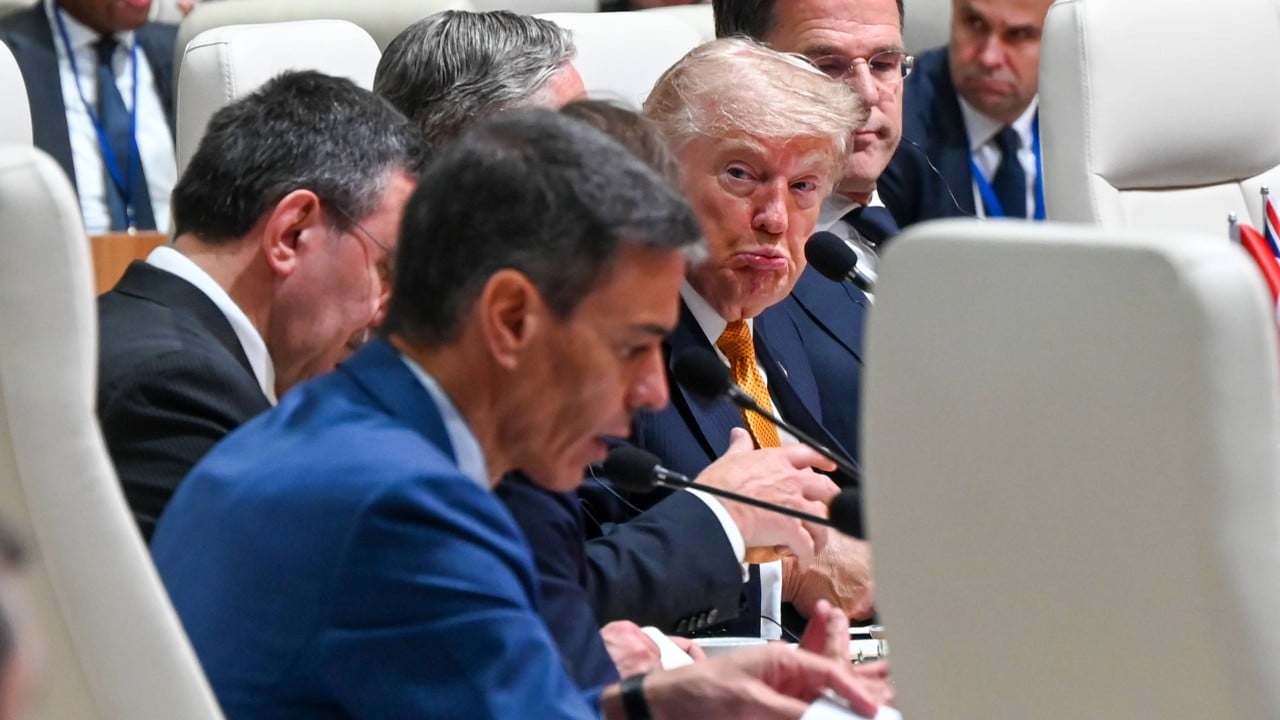
The declaration by the United States executive branch ordering an immediate cessation of trade with Spain exposes a structural misunderstanding of international trade frameworks and supranational legal architecture. While public markets reacted with immediate volatility—the IBEX 35 dropping 2.6% and Spanish 10-year Bono yields climbing 9 basis points to 3.565%—the execution of a unilateral trade embargo against a single European Union member state faces insurmountable systemic bottlenecks.
Geopolitical grandstanding cannot override institutional insulation. To understand why a targeted economic blockade of Spain is structurally unviable, one must dissect the three core pillars that govern modern transatlantic commerce: supranational trade exclusivity, macro-economic transactional symmetry, and the statutory limits of domestic emergency powers.
The Friction of Supranational Competence
The fundamental systemic bottleneck preventing a targeted U.S. trade embargo against Madrid is the legal structure of the European Single Market. Under Article 3 of the Treaty on the Functioning of the European Union (TFEU), the European Commission possesses exclusive competence over common commercial policy. Individual member states do not maintain autonomous trade regimes; they operate under a unified external customs perimeter.
This structure yields a critical operational reality:
[U.S. Unilateral Sanction] ──> [Hits Spanish Port] ──> [Triggers Collective EU Customs Defense] ──> [Transatlantic Trade War]
A trade restriction levied explicitly against Spanish goods is legally defined as a restriction against the European Union as a unitary actor. Under the European Commission’s newly fortified anti-coercion instruments, any targeted economic sanction directed at a single member state triggers an automatic collective defense mechanism. The regulatory apparatus in Brussels is legally bound to respond not with localized mediation, but with bloc-wide retaliatory tariffs affecting the entirety of U.S.-EU commerce.
Consequently, the U.S. executive branch cannot surgically sever economic ties with Madrid without executing a full-scale transatlantic trade war against a $1.3 trillion commercial relationship. The institutional machinery of the EU removes the option of localized economic bullying, forcing Washington into a binary choice: tolerate Spain's strategic autonomy or decoupling from the entire European continent.
The Transactional Symmetry of U.S.-Spain Capital Flows
The political rhetoric framing Spain as an economic dependent that "makes so much money with the U.S." collapses under empirical macro-economic auditing. Bureau of Economic Analysis data reveals that the bilateral trade relationship is characterized by a structural U.S. surplus, alongside deeply integrated capital expenditure.
The Trade Balance Matrix (2025 Data)
| Metric | Valuation / Scope | Structural Imperative |
|---|---|---|
| U.S. Exports to Spain | $26.60 Billion | Dominated by liquefied natural gas (LNG), aerospace components, and advanced machinery. |
| U.S. Imports from Spain | $21.35 Billion | Concentrated in agricultural products, refined petroleum, and pharmaceuticals. |
| Net Trade Balance | $5.25 Billion (U.S. Surplus) | A total trade halt inflicts direct, asymmetric revenue damage on American exporters. |
| Spanish FDI in the U.S. | Top-tier Foreign Investor | Spanish multinationals control critical infrastructure, renewable energy portfolios, and banking assets. |
| U.S. Employment by Spanish Firms | ~200,000 American Jobs | Domestic corporate subsidiaries act as hostages to fortune within U.S. borders. |
A total embargo would require the U.S. Treasury to deliberately dismantle a commercial apparatus where domestic American businesses net a multi-billion-dollar positive balance. Furthermore, commercial transactions are executed by private corporate entities navigating contract law, not by decree. Forcing the termination of mid-term supply agreements—particularly in energy and defense infrastructure—would trigger extensive litigation within U.S. federal courts, disrupting domestic supply chains far more rapidly than it would degrade the Spanish domestic economy.
Statutory Overreach and Domestic Legal Bottlenecks
To legally enforce a total economic cutoff, the executive branch relies on the International Emergency Economic Powers Act (IEEPA). However, invoking IEEPA requires the formal declaration of a national emergency, predicated on an "unusual and extraordinary threat" to the national security, foreign policy, or economy of the United States.
Sovereign policy divergence within a military alliance does not meet this statutory threshold. Spain's refusal to grant access to the Rota and Morón military bases for strikes against Iran, alongside its resistance to the proposed 5% NATO defense spending target, constitutes standard diplomatic friction rather than an existential security emergency.
Alternative regulatory mechanisms suffer from similar mismatches in scope:
- Section 232 of the Trade Expansion Act: Restricts imports based entirely on national security vulnerabilities. It cannot legally justify a blanket embargo on non-defense, commercial goods like textiles or food.
- Section 301 of the Trade Act of 1974: Designed to penalize unfair trade practices or intellectual property theft. It cannot be legally deployed as a punitive tool for unrelated foreign policy disagreements.
The previous administration's use of targeted measures—such as the 30% anti-dumping tariff on Spanish black olives—demonstrates that targeted protectionism is legally permissible. However, scaling those specialized tariffs into a total embargo on all goods and visits represents a qualitative leap that lacks statutory backing and would likely face immediate injunctions from federal courts.
Strategic Realignment: The Cost Function of Divergent Foreign Policies
The underlying driver of this economic friction is not commercial; it is the decoupling of strategic military objectives. The Spanish administration under Pedro Sánchez has calculated that the domestic political utility of resisting U.S. military mandates outweighs the projected costs of Washington's rhetorical hostility.
Spain’s defense expenditures reached 2.1% of GDP in 2025. While this satisfies the baseline 2% NATO commitment negotiated during previous summits, it intentionally falls short of the aggressive 5% target pushed by the current U.S. administration. By aligning its defense spending with the European median and anchoring its trade policy firmly within the institutional fortress of Brussels, Madrid has effectively hedged against unilateral economic vulnerability.
The primary risk to Spain is not a sudden collapse in trade volume, but rather a persistent risk premium priced into its sovereign debt by public markets. As long as the U.S. executive branch weaponizes commercial access to enforce military compliance, international bond markets will demand higher yields on Spanish debt to account for structural geopolitical volatility. This dynamic explains the widening of the Spanish-German 10-year bond spread to nearly 50 basis points following the NATO summit in Ankara.
The Strategic Play
The optimal strategy for corporate entities and institutional investors navigating this friction requires disregarding the political theatre of total embargoes and focus entirely on micro-targeted regulatory risks. The U.S. executive branch cannot legally or structurally execute a full trade halt, but it can deploy bureaucratic sand in the gears of specific industries.
Compliance officers and supply chain architects must immediately audit exposure to products vulnerable to administrative protectionism. This means diversifying supply chains away from single-source Spanish agricultural exports or specialized manufacturing components that could be subjected to sudden Section 301 or anti-dumping investigations.
Concurrently, capital allocators should view the artificial depression of the IBEX 35 and the widening of Spanish sovereign bond spreads as a temporary mispricing driven by political rhetoric rather than macroeconomic fundamentals. Position sizing should be adjusted to absorb short-term volatility, capitalizing on the structural reality that the European Single Market’s collective defense architecture guarantees the continuity of Spanish commercial operations.