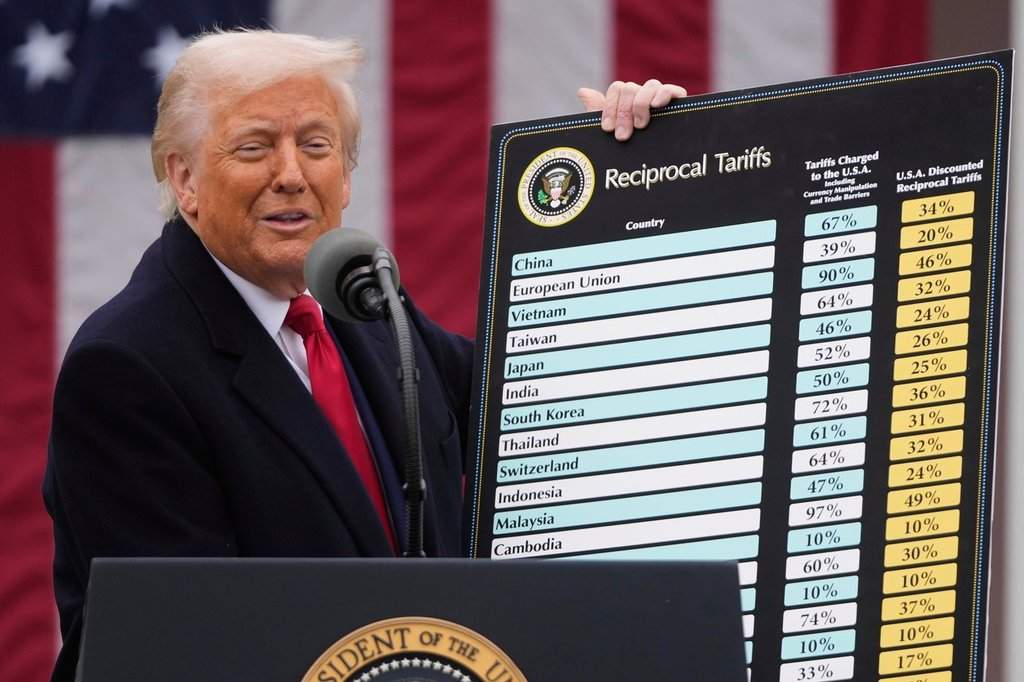
The Canadian government insists that Donald Trump's threatened 10 percent tariffs on Canadian imports have absolutely no legal or factual basis. In a sprawling 1,500-page collection of diplomatic protests and corporate submissions delivered to the United States Trade Representative this week, Ottawa argued that its newly proposed supply chain legislation, Bill C-35, should serve as a total shield against Washington's economic aggression. Yet behind the polite, bureaucratic phrasing of Canada's formal objection lies a much darker reality. This trade conflict is not actually about global human rights violations or supply chain transparency. It is a calculated, aggressive strategy by the Trump administration to rebuild a broad protectionist tariff wall around the United States after a devastating legal defeat in the American courts.
For months, United States Trade Representative Jamieson Greer has hammered Canada, Mexico, the United Kingdom, and a dozen other nations for supposedly failing to police their own borders against products made with forced labour. Washington's official argument is simple. The U.S. claims Canada acts as a weak link, allowing goods produced through modern slavery to slip into the integrated North American market before being shipped across the border.
But an investigation into the actual trade flows and domestic policies reveals that Washington is weaponizing humanitarian concerns to accomplish a pure protectionist goal.
The Real Weapon Behind the Supply Chain Threat
In March, the office of the United States Trade Representative blindsided global markets by launching a massive trade investigation under Section 301 of the Trade Act of 1974. The probe targets 60 countries. U.S. trade officials quickly sorted their economic partners into two distinct categories of punishment. Nations with complete or partial bans on forced labour, such as Canada and the United Kingdom, face a flat 10 percent import duty. Meanwhile, dozens of other nations with weaker legal protections face an even higher 12.5 percent penalty.
American officials point to stark data to justify this aggressive posture. According to the U.S. government, Canada's historical record on intercepting slave-made goods is nearly non-existent. Since Ottawa first banned the import of forced labour products in 2020 to satisfy its obligations under the Canada-United States-Mexico Agreement, the results have been microscopic. Over a six-year period, Canadian border authorities intercepted just 50 shipments. Out of those 50, exactly two shipments were actually blocked from entering the country.
Compare that to the United States. In 2024 alone, U.S. Customs and Border Protection denied entry to more than 6,000 shipments under the Uyghur Forced Labor Prevention Act and related enforcement mechanisms.
To the economic hawks in the White House, this statistical disparity is the only proof required to slap Canada with blanket duties. They view Ottawa's enforcement as a paper tiger. Canadian officials, however, argue that this comparison completely ignores how different their domestic legal system is from the American model. Until recently, Canadian border guards possessed very little legal authority to seize goods based on anonymous tips or broad regional suspicions. They required ironclad, specific proof before disrupting commercial cargo.
By demanding that Canada match its hyper-aggressive border enforcement overnight, the Trump administration has backed Ottawa into a corner.
Inside Canada Minimalist Enforcement Record
The sudden threat of economic devastation forced the Canadian government to scramble. Just three weeks before filing its formal objection in Washington, Ottawa rushed to introduce Bill C-35. The new legislation attempts to completely overhaul how Canada polices international corporate behavior.
If passed, the law will abandon the old, passive framework that merely required corporations to file annual transparency reports. Instead, Bill C-35 creates an aggressive public blacklist of specific products, entities, and geographic regions suspected of using modern slavery. The law will also introduce a sweeping legal mechanism that shifts the entire burden of proof from the state to the private sector. Under these new rules, if a company attempts to import high-risk goods from a blacklisted region, the shipment is automatically blocked unless the importer can definitively prove that no forced labour was utilized anywhere in the production process.
The Canadian Chamber of Commerce has pleaded with Washington to pause the implementation of the 10 percent tariff while these sweeping domestic reforms are put into place. In his official submission, Matthew Holmes, the vice president of the business group, urged the American government to evaluate Canada independently rather than lumping it in with dozens of global bad actors. The business community wants targeted, collaborative enforcement instead of a blunt, nationwide economic penalty.
Yet the White House shows no signs of slowing down.
The underlying friction stems from a deeper ideological divide. Washington prefers immediate, unilateral punishment. Ottawa relies on slow, legislative architecture. While Canadian lawmakers debate the finer legal points of Bill C-35, American importers are already bracing for a massive shock to their supply chains. Shipping rates are climbing as global logistics firms attempt to price in the looming threat of the August tariff deadline.
The Backdoor Trade Strategy Replacing Supreme Court Defeats
To understand why the Trump administration is ignoring Canada's legislative sprint, one must look at the recent judicial civil war inside the United States. Earlier this year, the U.S. Supreme Court delivered a massive blow to the White House's economic agenda. The nation's highest court struck down the specific executive tariff tools that Donald Trump had used to implement his massive worldwide duties, including his highly controversial fentanyl-related border penalties.
The court ruled that the executive branch had vastly overstepped its constitutional boundaries by using emergency declarations to bypass congressional authority over international commerce.
That judicial defeat left the White House's economic nationalists empty-handed. Their solution was to pivot immediately to Section 301 of the 1974 Trade Act. By framing the new tariffs as a direct response to a specific, unaddressed unfair trade practice—the failure of foreign governments to enforce forced labour bans—the administration successfully built a secondary legal justification that circumvents the Supreme Court's recent ruling.
This explains why the tariffs are structured as a sweeping, country-level blanket tax rather than a series of targeted investigations into specific rogue companies. A targeted approach would take years of careful, evidentiary research. A country-level designation allows the administration to impose a 10 percent wall on all Canadian goods simultaneously.
The White House did attempt to soften the initial political blow by utilizing Section 122 of the 1974 Trade Act to implement a temporary 10 percent worldwide tariff. But those duties expire automatically at the end of July after a strict 150-day window. Unless an evenly divided United States Congress votes to extend them, they disappear entirely. The ongoing Section 301 investigation into forced labour is the administration's permanent replacement strategy. It is a backdoor mechanism designed to keep the protectionist wall standing regardless of what Congress or the Supreme Court decides.
Shifting the Burden to Continental Trade
The collateral damage of this political maneuvering will be borne almost entirely by deeply integrated North American industries. Agriculture is particularly vulnerable. Under the existing continental trade pact, raw food products and livestock frequently cross the Canada-U.S. border multiple times during various stages of processing and packaging. A single cow born in Saskatchewan might be fed in North Dakota, slaughtered in Alberta, and packaged in Nebraska.
Slapping a 10 percent tax on that commodity every single time it touches the border will quickly make food production economically impossible.
Keith Currie, the president of the Canadian Federation of Agriculture, warned that even minor duties will trigger a cascade of unintended economic consequences. It will drive up input costs for American farmers, reduce the global competitiveness of North American agri-business, and ultimately worsen food inflation for everyday consumers on both sides of the border.
The National Foreign Trade Council, an association representing massive American corporations, has echoed these warnings. The group pointed out that a comprehensive country-wide tariff actively penalizes the very companies that have spent millions of dollars auditing their own supply chains to ensure ethical compliance. Under Trump's current framework, a highly compliant, ethically verified Canadian manufacturer faces the exact same 10 percent penalty as a reckless rogue operator.
This structural flaw exposes the ultimate hypocrisy of the policy. If the goal were truly to eliminate forced labour, the system would reward companies that prove their supply chains are clean. By punishing entire nations indiscriminately, the policy reveals itself to be a crude revenue-generating tool and a blunt instrument for domestic manufacturing protectionism.
Ottawa continues to hold out hope that its continental trade agreement will insulate it from the worst of the fallout. But Washington has already demonstrated that it views international trade treaties as flexible guidelines rather than binding laws. While some highly specific goods may eventually win narrow exemptions, the broader economic reality is clear. The United States is no longer interested in maintaining a seamless, open-border trading relationship with its closest neighbor, and no amount of rushed Canadian legislation will change that political reality.


