The headlines are predictable. They are scripted. They scream about "thousands fled" and "ISIS-linked families" as if a few hundred desperate people slipping through a wire fence is the catalyst for a global caliphate reboot.
It is a lie.
The media likes a boogeyman because it is easy to sell. They focus on the "breakout" because it provides a clear, cinematic villain. But if you have spent any time analyzing the structural decay of post-conflict zones, you know the breakout isn't the disaster. The camp itself is the disaster. By obsessing over the perimeter, we are ignoring the fact that the perimeter is the very thing fueling the radicalization we claim to fear.
The Security Theater Fallacy
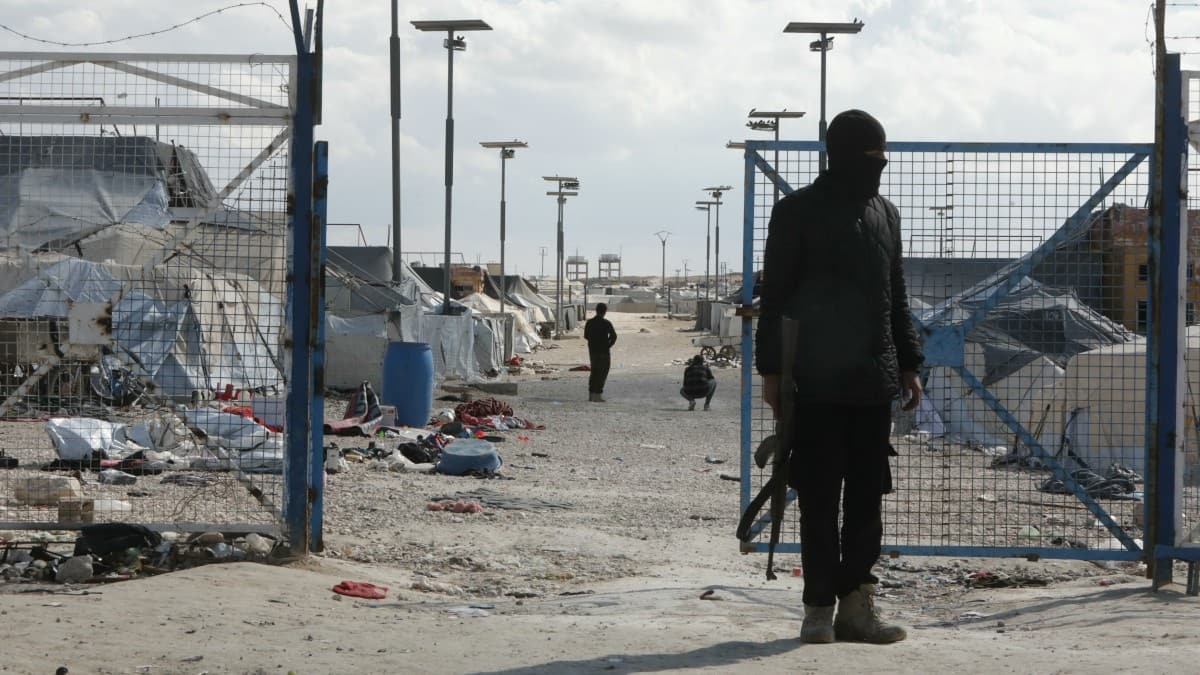
Most reporting on the Al-Hol or Ain Issa camps treats them like maximum-security prisons. They aren't. They are open-air holding pens for the world's geopolitical leftovers. When a few families "escape" during a Turkish bombardment or a local riot, the press acts like a containment breach in a bio-lab has occurred.
Here is the truth: These people aren't "escaping" to go plot high-level insurgencies. Most are trying to find a village where they won't starve.
The "lazy consensus" suggests that more guards and thicker wire equals more safety. This is objectively false. I have watched security budgets triple in "high-risk" zones only to see the internal black market thrive. In these camps, the guards are often the ones selling the bolt cutters. When the international community refuses to repatriate citizens, they turn the Kurdish-led Syrian Democratic Forces (SDF) into reluctant jailers of a population that outnumbers them.
The breakout isn't a failure of security. It is a failure of sovereignty.
The Repatriation Cowardice
Western governments love to talk about human rights until those rights belong to someone with a "link" to a terrorist organization. Then, suddenly, "due process" becomes a logistical impossibility.
France, the UK, and several EU nations have spent years performing a slow-motion shrug. They claim it is too dangerous to bring these women and children home. They claim the "legal hurdles" are insurmountable.
Nonsense.
The real reason is political optics. No prime minister wants to be the one who "invited ISIS back," even if that person is a six-year-old child born in a tent. So, they leave them in Syria. They outsource their security to a non-state actor (the SDF) and then act shocked—shocked—when the SDF, under fire from Turkey and abandoned by the US, can't keep the gates locked.
If you leave a wound to fester, you don't blame the bandage when it falls off.
The Data of Radicalization
Let’s talk about the numbers. The "security" approach creates a feedback loop.
Imagine a scenario where you take 50,000 people, deprive them of education, limit their caloric intake, and subject them to the constant ideological pressure of the "true believers" who dominate the camp's inner social circles. You have created a pressure cooker.
- Fact: Over 60% of the population in Al-Hol is under the age of 18.
- Fact: There is no formal education system that counters extremist narratives.
- Fact: The longer they stay, the more the "ISIS-linked" label becomes a self-fulfilling prophecy.
By keeping these families in a state of stateless limbo, we are providing the greatest recruitment tool since the invasion of Iraq. Every day a child spends in Al-Hol is a day they learn that the "rules-based international order" is a myth that doesn't apply to them.
The Tech Gap in the Desert
The "insider" secret that no one mentions is how primitive the tracking actually is. We talk about "ISIS-linked" individuals as if there is a massive, searchable database with biometric 1:1 matches for every person in the camp.
There isn't.
Biometric collection in Northeast Syria is a mess of fragmented datasets. When someone "flees," the authorities often don't even have a clear fingerprint or iris scan to put on a watch list. We are using 20th-century policing methods to fight a 21st-century ideological war.
If we actually cared about security, the focus wouldn't be on more guards. It would be on aggressive, transparent repatriation combined with high-fidelity digital identity management. But that requires admitting these people belong to us. And nobody wants to admit that.
Stop Asking "How Did They Escape?"
You are asking the wrong question. The escape is a symptom. The question you should be asking is: "Why are we still maintaining a pre-cracked crucible for the next generation of militants?"
The breakout isn't the threat. The status quo is the threat.
The people who fled during the chaos aren't the masterminds. The masterminds are the ones who stayed behind, running the internal courts, taxing the aid shipments, and waiting for the West to finally lose interest.
We are so obsessed with the "breakout" headline that we missed the fact that the "ISIS-linked" families have already won. They've successfully turned a temporary displacement camp into a permanent sovereign shadow-state.
Stop worrying about the hole in the fence. Start worrying about the fact that the fence is the only thing keeping the West's conscience from dealing with its own failures.
Pack the bags. Send the planes. Bring them home and put them in a courtroom or a reintegration center. Anything else is just waiting for the next "shocking" headline while the fuse keeps burning.
The gates are already open. You just haven't looked at the hinges yet.