The boots come off at the mudroom door. Every night, without fail, forty years of red clay, crushed limestone, and stubborn grass stains stay on the linoleum so they don't ruin the living room rug. You spend four decades learning the grammar of dirt. You know which hillside washes out in a heavy April squall, where the frost lingers longest in the hollows, and how many head of cattle a forty-acre pasture can carry before the turf gives up the ghost.
Then, one Tuesday morning, a certified envelope lands on the kitchen table. Inside isn't a weather forecast or a feed bill. It is a notice from the federal government informing you that the low spot behind the south barn—the one that dries up every July and cracks like old pottery—is a protected wetland. And digging a drainage ditch through it just cost you $3.7 million.
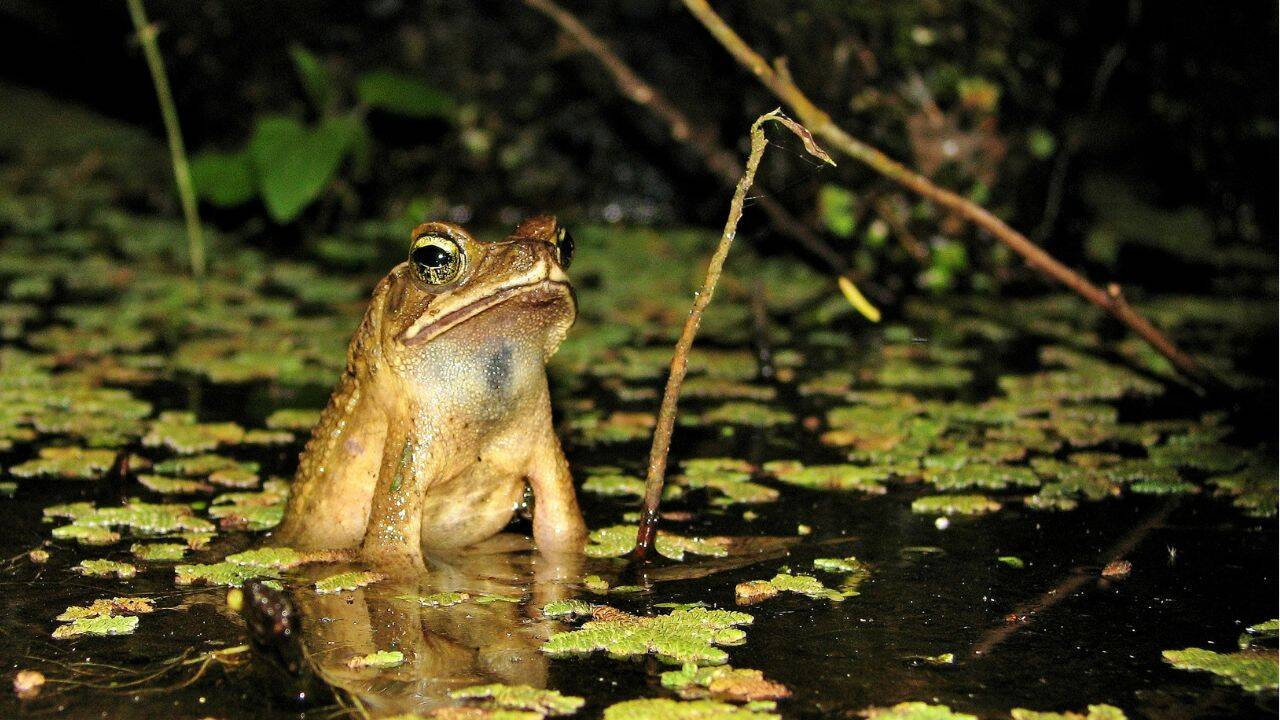
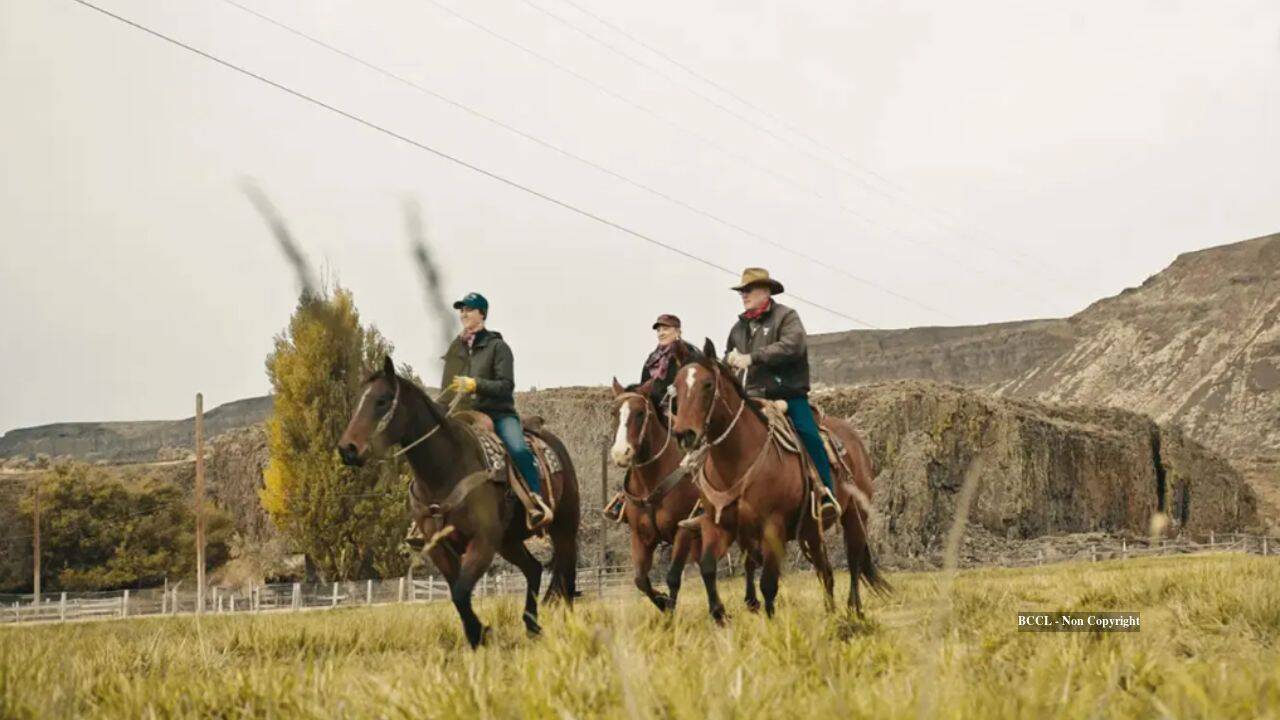
This isn't a fever dream dreamed up by an anti-regulation talk radio host. It is the exact legal purgatory swallowing a cattle ranching couple right now, caught in the grinding gears of a Clean Water Act enforcement fight that demands millions of dollars in wetlands restoration on top of crushing federal fines.
To understand how a family operation ends up staring down a seven-figure invoice for moving dirt on land they hold the deed to, you have to step away from the courtroom briefs and stand in the pasture.
When Dirt Becomes a Federal Crime
Imagine—and let us be clear, this is a composite sketch drawn from dozens of real agricultural enforcement cases across the American West and Midwest—a third-generation rancher named Dale and his wife, Clara. They aren't corporate agribusiness titans with a floor of environmental compliance attorneys in Chicago. They run four hundred cow-calf pairs. Their profit margin fluctuates with the price of diesel, the whim of the commodity markets, and whether the spring rains arrive on time.
After a particularly brutal wet winter, water pools in a low pasture where the herd winters. Mud up to a calf's hocks isn't just an eyesore; it is a vector for foot rot, pneumonia, and hypothermia. So Dale fires up the bulldozer he bought used at an estate auction ten years ago. He grades a shallow swale, pushes some dirt to build up a dry pad for the hay rings, and clears out a silted-in stock pond so the cattle have clean water come August.
In Dale's mind, he is practicing basic animal husbandry. He is stewarding his land.
In the eyes of the Environmental Protection Agency and the Army Corps of Engineers, Dale just discharged "pollutants"—the legal term for dredged or fill material—into "Waters of the United States" without a federal permit.
Stop and let that phrasing sink in. Under Section 404 of the Clean Water Act of 1972, dirt moved from one part of a field to another by a bulldozer blade legally transforms into a regulated pollutant the moment it touches a jurisdictional wetland.
The disconnect is staggering. On one side of the fence stands a family whose livelihood depends on keeping the soil healthy and the water clean. On the other sits an administrative apparatus operating on satellite imagery, hydrological modeling, and a regulatory definition of "waters" that has ping-ponged through the federal courts for half a century.
The Invisible Geography of the Clean Water Act
Why does a dry meadow or an ephemeral creek suddenly fall under federal jurisdiction? The answer lies in a legal tug-of-war that most Americans never think about until it ruins someone's life.
When Congress passed the Clean Water Act in 1972, the goal was obvious and universally cheered: stop factories from dumping toxic sludge into the Cuyahoga River until it caught fire, and clean up America's navigable waterways. The statute gave federal agencies authority over "navigable waters," defined simply as "the waters of the United States."
Five words. Seven syllables. Billions of dollars in litigation.
Over the next fifty years, regulators steadily expanded what those five words meant. First it was rivers you could float a barge on. Then it was the tributaries feeding those rivers. Eventually, the definition stretched to include prairie potholes, seasonal washes that only flow during snowmelt, and damp depressions miles away from the nearest river, connected only by a theoretical subsurface trickle or a roadside ditch.
Consider what happens next: a rancher looks at a pasture and sees grass, thistles, and occasional mud. A federal hydrologist looks at the same acreage and sees hydric soils, hydrophytic vegetation, and wetland hydrology—the three technical criteria that turn private farmland into federal territory.
Even after the Supreme Court stepped in with its landmark Sackett v. EPA decision in 2023—ruling that wetlands must have a "continuous surface connection" to actual, permanent bodies of water to be federally regulated—the battle on the ground didn't magically evaporate. Enforcement actions already in the pipeline kept grinding forward. Disputes over what counts as a "continuous surface connection" simply shifted the battlefield from the high court to regional field offices and federal district courtrooms.
For the cattle ranching couple now staring down a $3.7 million restoration demand, the Supreme Court's philosophical clarity hasn't stopped the financial bleeding.
The Anatomy of a $3.7 Million Bill
How on earth does fixing a pasture cost $3.7 million? You could buy an entire working ranch in several states for less than that.
The math of federal wetlands enforcement operates in a universe entirely divorced from agricultural economics. When the government determines a landowner has impacted a wetland without a permit, the penalties come in two devastating waves.
First come the statutory civil penalties. Under the Clean Water Act, fines are calculated per day, per violation. Adjusted for inflation, those penalties routinely exceed $60,000 per day. Not per acre. Per day. Every single day the moved dirt sits in that pasture constitutes a fresh, ongoing violation. A month of bureaucratic back-and-forth can theoretically rack up nearly two million dollars in fines before a single witness ever takes the stand.
Second—and often far more lethal—is the mandatory restoration order.
The government doesn't just want you to push the dirt back with your own tractor. Restoring a disturbed wetland to federal satisfaction requires hiring specialized environmental engineering firms, certified wetland delineators, and ecological consultants. You have to strip away the fill, re-contour the topography to within inches of its pre-disturbance elevation, replant native sedges and rushes at commercial nursery prices, eradicate invasive species for five to ten years, and pay for ongoing hydrological monitoring reports submitted to federal regulators.
And if the agency decides on-site restoration isn't enough to offset the "temporal loss" of ecological function while the dirt was moved, you are forced to buy mitigation credits.
Think of a mitigation bank as a carbon offset market for mud. Private companies buy up degraded land, restore it into pristine wetlands, and sell "credits" to developers who pave over swamps to build shopping malls. In high-demand regions, a single wetland mitigation credit can cost anywhere from $50,000 to over $200,000. If regulators decide your farm work impacted ten or fifteen acres at a two-to-one or three-to-one replacement ratio, the bill rockets past three million dollars before you've even paid your own defense lawyers.
I have sat across kitchen tables from landowners going through this exact meat grinder. You watch the color drain from their faces when their attorney explains the economics of fighting back. Litigating against the Department of Justice costs half a million dollars just to get through discovery and expert witness depositions. The government has unlimited taxpayer funding and salaried lawyers who get paid whether the case takes six months or six years. The rancher has to sell off breeding stock, mortgage the land his grandfather homesteaded, and liquidate his retirement account just to stay in the courtroom.
It is a war of attrition where the process itself is the punishment.
The Stewards Caught in the Crossfire
There is a bitter irony at the heart of every agricultural wetlands prosecution, and anyone who has actually worked cattle knows it immediately.
Ranchers are the original conservationists. Not out of ideological purity, though many hold a deep, quiet reverence for the land, but out of sheer economic survival. If you overgraze your native grasses, the topsoil blows away and your cows starve. If you poison your groundwater or foul your creeks, your herd gets sick and your calves don't gain weight. A well-managed cattle ranch preserves vast expanses of open space, filters rainwater, sequesters carbon in deep root systems, and provides critical habitat for migratory birds, elk, pronghorn, and pollinators.
Compare a working ranch to the alternative. When a family operation is bankrupted by a $3.7 million federal enforcement action, what happens to that land?
It doesn't turn into a pristine wildlife refuge. The bank forecloses, or the family is forced to sell to the highest bidder to pay off the judgment. And the highest bidder in modern America isn't another young couple trying to raise beef. It is a residential developer who will carve the pasture into forty-acre ranchettes, pour concrete driveways, drill dozens of new domestic wells, and string barbed-wire fences across every wildlife corridor in the county.
In trying to save a seasonal mud flat from a rancher's bulldozer, federal enforcement routinely destroys the very open-space ecosystem it claims to protect.
Why Permits Aren't the Simple Answer
Whenever these stories hit the local news, a predictable chorus chimes in from the sidelines: Why didn't they just get a permit? Ignorance of the law is no excuse.
It sounds so reasonable when you're sitting in a climate-controlled office. Follow the rules, fill out the paperwork, pay the fee, and dig your ditch.
In reality, obtaining an individual Section 404 permit from the Army Corps of Engineers is a labyrinth designed for multinational corporations building interstate pipelines, not a couple trying to fix a washout before spring calving.
A full permit application requires formal jurisdictional delineations, environmental assessments, public comment periods, endangered species consultations, and cultural resource surveys. The average timeline stretches from eighteen months to over three years. The average consulting cost runs into the tens—and frequently hundreds—of thousands of dollars.
And what about the Clean Water Act's famous "normal farming and ranching" exemption? Congress explicitly wrote Section 404(f) into the law to protect routine agriculture—plowing, seeding, cultivating, minor drainage, and maintaining stock ponds.
Ask any agricultural lawyer how that exemption works in practice, and watch them give a hollow laugh. Federal regulators have narrowed the farming exemption so aggressively that almost any improvement—clearing brush from a pasture that hasn't been plowed in a decade, deepening an old pond, or shifting a fence line through a wet meadow—triggers what the government calls the "recapture provision." The moment regulators decide your routine maintenance brings an area into a "new use" or alters the flow of water, the exemption vanishes, and you are treated like an industrial polluter.
The rules aren't written in plain English on a single laminated card. They are buried across thousands of pages of federal register notices, agency guidance memos, and conflicting circuit court opinions. Even the federal inspectors standing in the pasture frequently disagree on where a wetland begins and ends. Expecting a working rancher to possess a clearer grasp of administrative hydrology than the experts who argue over it in Washington isn't accountability. It's a trap.
The Chill Across Rural America
Look past the $3.7 million price tag on this single case, and you see the invisible damage spreading across every rural county in the country.
Fear changes how people care for the land. When word gets around the local sale barn that a neighbor is facing financial ruin over a drainage ditch or a stock pond, every other landowner within a hundred miles parks their tractor.
They stop clearing deadfall out of seasonal creeks, even when the debris jams threaten to flood county roads. They let silted-in ponds choke out rather than risk dredging them. They hesitate to build erosion-control berms on steep hillsides because moving dirt near a low spot might attract an aerial drone inspection or a satellite audit from a regional enforcement office.
Trust between the people who feed the country and the agencies tasked with protecting its resources has fractured almost beyond repair. When regulators act as partners—offering technical advice, cost-share programs through the Natural Resources Conservation Service, and clear, predictable boundaries—ranchers line up out the door to build riparian buffers and restore wetlands voluntarily. Millions of acres of private habitat have been restored across North America through voluntary, incentive-based partnerships like Ducks Unlimited and state conservation districts.
When regulators show up with a subpoena and a seven-figure fine, that goodwill turns to stone overnight.
What Is Actually at Stake
Strip away the legal jargon—the hydric soils, the statutory maximums, the mitigation ratios—and look at what sits on the table in that courtroom.
It isn't just a stack of legal briefs or a line item in an agency's annual enforcement report. It is a lifetime of calloused hands, missed holidays, 3:00 AM calving checks in sub-zero blizzards, and the quiet, stubborn pride of passing a piece of earth to the next generation in better shape than you found it.
A $3.7 million penalty doesn't just punish a violation. It erases a family's history. It liquidates a business that can never be rebuilt once the land is broken up and sold off.
Out in the pasture tonight, the wind is moving through the bluestem grass, indifferent to the lawyers drafting motions in fluorescent-lit offices a thousand miles away. The low spot behind the barn is dry again, just like it is every autumn, holding nothing but hoofprints and cracked clay—waiting to see if the people who know its name will still own it come spring.