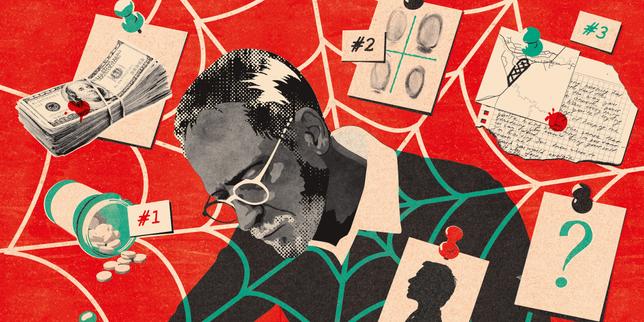
We live in an age that demands speed. A headline flashes across a glass screen, reducing a human life, an economic collapse, or a war to a fifty-character summary. Swipe left. Swipe right. Discard. We have become fluent in the language of abstracts, scrolling through endless seas of data where numbers replace names and statistics substitute for breath. Yet, beneath this frantic digital surface, a quiet rebellion is taking root. Writers are dropping their notebooks, stepping off the curb, and walking directly into the fire.
They call it narrative non-fiction. But that academic label smells too much of chalk dust and lecture halls. Call it what it actually is: the art of the witness.
Consider a reporter sitting on a wooden folding chair in a federal courtroom in lower Manhattan, listening to the rhythmic clicking of a stenographer's machine. To the algorithm, the trial is a metadata tag: corporate fraud, trial, verdict, sentence. To the writer sitting three rows back, the trial is the trembling of a defendant's left thumb against a leather binder. It is the specific, stale scent of rain-soaked wool mixing with floor wax. It is the way a human being unravels in slow motion under the fluorescent glare of public scrutiny.
Facts tell you what happened. Narrative non-fiction tells you what it felt like to be standing there when the floor fell out.
This literary form has experienced a profound renaissance in America and across Western publishing houses, crossing over into European markets where readers find themselves gasping for air in a library of hollowed-out truths. Why now? Because we are drowning in information while starving for wisdom. When the boundary between fabricated hysteria and verified reality becomes a blur of flashing pixels, pure journalism often reads like a weather report from a planet we no longer inhabit. We need something sturdier. We need the anchor of a fully realized human experience.
Think about how we process trauma or transformation. If you read that four million people lost their homes in a housing crash, your brain files it away as a grim abstraction. It is a macro-economic concept. It is a line on a quarterly chart.
Now, imagine a hypothetical journalist named Clara, who spends six months following a single laid-off steelworker in a hollowed-out Ohio town. Clara does not start with interest rates. She starts with the kitchen table. She notices the concentric rings left by coffee mugs on a laminate surface. She hears the silence that settles over a home when the television is turned off to save electricity. She watches a father rehearse an explanation for why his daughter's soccer cleats have to wait until next season.
That is not just reporting. That is an act of restoration. It takes the shattered pieces of a broken statistic and glues them back together using the adhesive of empathy.
There is a common critique leveled at this genre: does narrative bend the truth? Does the desire for a compelling scene, a sharp piece of dialogue, or a sweeping emotional arc invite fiction into the house of journalism?
It is a fair question. The line between reporting and storytelling has always been defended by sharp wire. When Truman Capote wrote In Cold Blood in 1966, he pioneered what he called the "non-fiction novel," openly admitting that he compressed scenes, reconstructed dialogue from memory, and shaped reality to fit a narrative arc. Purists hissed. Traditionalists threw up their hands. Yet, decades later, Capote’s book remains a towering monument because it captured the psychological terror of a community in a way that daily newspaper clippings never could.
The secret lies in a strict ethical covenant. The writer of narrative non-fiction is bound by a sacred oath: you can shape the presentation, but you can never invent the core. You can orchestrate the pacing, but you cannot fabricate the heartbeat. When a scene is reconstructed, the source material must be interrogated with the same ruthless skepticism that governs a police interrogation or a financial audit. If a quote is polished for flow, the original meaning must remain unblemished.
(Note: When I speak of Clara and her notebooks, I am using a composite narrative device to illustrate the daily reality of dozens of investigative reporters working across the country right now.)
We crave this because reality is inherently messy. Real life rarely respects the clean, three-act structure of a Hollywood script. Real life trails off into confusing anti-climaxes. It leaves loose ends dangling for years. A traditional news piece tries to tidy up that mess, wrapping a bow around a catastrophe before the ink is dry. Narrative non-fiction sits in the mess with you. It looks the chaos square in the eye and refuses to blink.
Look at how the movement has evolved over the past decade. We have moved away from the breathless, sensationalized memoirs that dominated the early 2000s—books obsessed with personal shock value. Today’s narrative non-fiction is outward-facing. It trains its lens on environmental collapse, systemic corruption, and forgotten communities. It is deeply investigative work wrapped in the velvet glove of literary prose. Authors spend years embedding themselves in maximum-security prisons, corporate boardrooms, psychiatric wards, and indigenous reservations.
They do this because the modern reader has developed a sophisticated radar for artificiality. We can smell a manufactured plot from a mile away. We want the grit. We want the footnotes, but we also want the poetry. We want to know that behind every data point stands a living, breathing person who woke up on a Tuesday morning, poured a cup of coffee, and had no idea that their world was about to pivot on its axis.
Consider the historical weight we carry. Every epoch of crisis—whether the industrial upheaval of the late nineteenth century or the digital disorientation of our current decade—sparks a literary counter-weight. When society fragments, literature gathers the shards. In an era where deepfakes can generate photorealistic lies in seconds, and artificial intelligence can churn out ten thousand words of plausible-sounding nonsense before you finish your morning toast, human-authored narrative non-fiction becomes a radical act of resistance.
It says: I was here. I checked the records. I spoke to the survivors. I smelled the dust. I measured the grief.
You cannot automate that kind of presence. You cannot algorithmically generate the moral weight of a writer who spent three sleepless nights in a motel room agonizing over whether they told their subject's story with absolute justice.
When you close a truly great work of narrative journalism, your view of the sidewalk outside your window has shifted. The stranger standing next to you on the subway platform is no longer an anonymous blur; they are a universe of untold complications, hidden losses, and quiet triumphs.
The world is loud, fast, and constantly trying to flatten your attention span into a fine powder. Do not let it win. Find the writers who refuse to look away. Pick up the book that takes its time. Allow yourself to be slowed down by the heavy, beautiful gravity of the real.