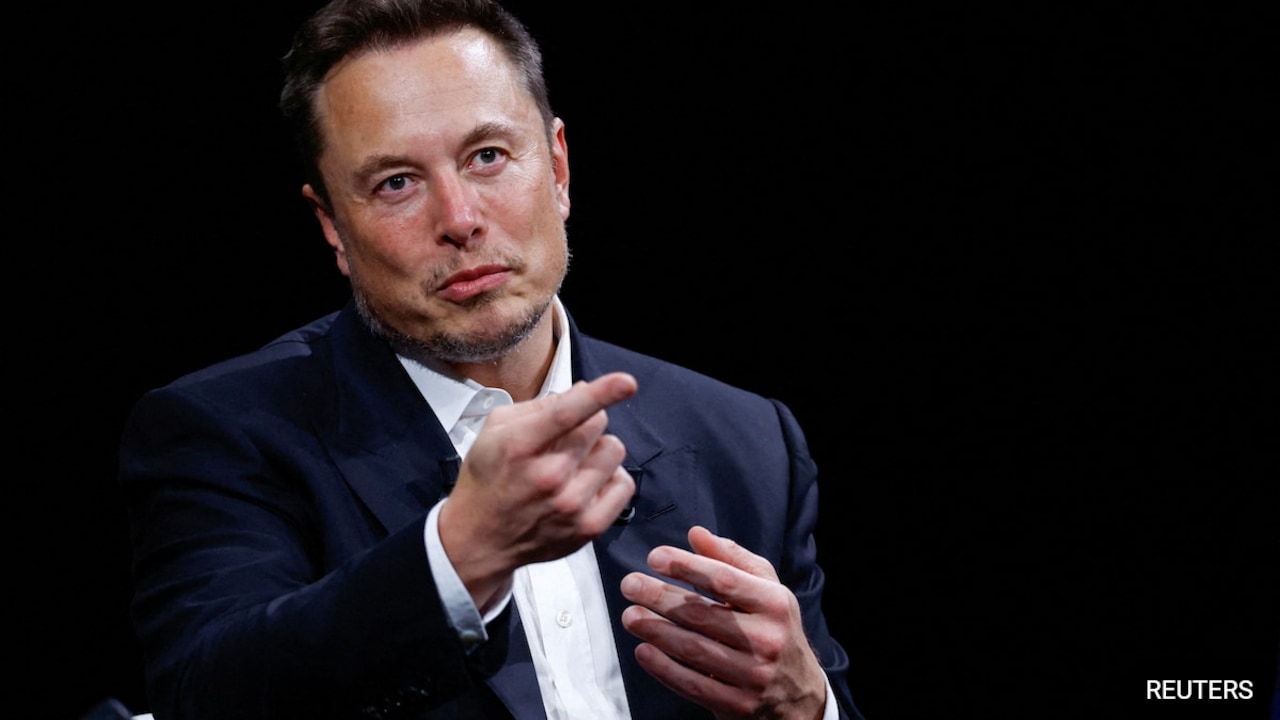
The political commentariat loves a collective meltdown. When Elon Musk's America PAC announced a $1 million daily giveaway to registered voters in swing states who signed a petition supporting the First and Second Amendments, the outrage machine instantly redlined. Mainstream legal analysts rushed to microphones, confidently proclaiming a slam-dump violation of federal and state election laws.
They got it wrong. Not because Musk is a saint, but because they fundamentally misunderstand how the American legal system handles the intersection of private wealth, petition drives, and voter registration.
The lazy consensus screams that this was simple voter bribery. The reality is a masterclass in exploiting legal gray zones that exist because our regulatory frameworks are built for the 20th century, not the era of weaponized hyper-wealth.
The $1 Million Misdirection
The standard narrative, parroted across cable news and legal blogs, relies on a simplistic reading of 18 U.S. Code § 597 and Wisconsin Statute § 12.11. These statutes prohibit paying, or offering to pay, someone to register to vote or to vote.
On its face, the logic of the critics seems straightforward:
- Only registered voters can sign the petition.
- Signers are entered into a lottery to win $1 million.
- Therefore, Musk is paying people to register.
It sounds like a airtight case. It is not.
In law, the distinction between a condition precedent and the subject matter of a contract is everything. Musk did not offer to pay people to register. He offered to pay people who had already registered to sign a petition.
[Standard View: Payment] ──> [Voter Registration] (Illegal)
[Musk's Loophole: Payment] ──> [Petition Signature] ──> (Requires Registration as a Pre-requisite) (Legal Gray Area)
This is not a pedantic semantic trick; it is the core of how transactional law operates. If a company offers a discount on car insurance only to people who own a garage, they are not buying garages. They are incentivizing insurance sign-ups among a specific, pre-qualified demographic.
By targeting registered voters who sign a petition, the PAC bypassed the direct prohibition on purchasing registrations. The act of registering is merely a qualifying condition, not the transaction itself. Legal giants have tried to argue this distinction is a distinction without a difference, but in a courtroom, definitions are the difference between a multi-million dollar fine and a dismissed case.
Why Wisconsin’s Bribery Statutes Are Toothless in the Digital Age
Let’s look at the Wisconsin law specifically. Wisconsin Statute § 12.11 outlaws "election bribery," which includes offering anything of value to induce an elector to go to the polls, vote, or refrain from voting.
Notice what is missing from that list? Signing a non-governmental petition.
Petitions advocating for constitutional rights are protected political speech under the First Amendment. This creates an immediate constitutional shield. Any attempt by a state attorney general to prosecute Musk for funding a petition drive—even one restricted to registered voters—faces a massive hurdle: the doctrine of unconstitutional conditions and strict scrutiny review.
If the government attempts to criminalize paying people to sign a petition advocating for the First Amendment, it is regulating core political speech. To survive a court challenge, the state must prove it has a compelling interest and that its restriction is narrowly tailored. Preventing "the appearance of corruption" is a high bar when no actual vote or candidate is being bought or sold.
I have spent years watching corporate compliance departments navigate PAC regulations. The rule of thumb is simple: if the law does not explicitly forbid it, and it can be framed as issue advocacy, you push the line. Musk did not just push the line; he redrew it.
The Illusion of a "Clean" Campaign Finance System
The outrage over the $1 million giveaway exposes a deep hypocrisy in how we view money in politics.
Every election cycle, billions of dollars flow through Super PACs. These organizations spend millions on highly targeted, psychological profiling databases to identify unregistered voters. They hire armies of canvassers, offering them bonuses and incentives based on how many people they register.
- Scenario A: A Super PAC spends $1,000,000 on digital ads, consultants, and canvas managers to yield 10,000 new registrations. Cost per registration: $100. This is universally accepted as standard practice.
- Scenario B: A billionaire bypasses the consultants, cuts out the middleman, and offers the money directly to the public through a lottery system to achieve the same data collection goal. This is treated as an existential threat to democracy.
Why is the former seen as healthy civic engagement while the latter is viewed as a crime? Because the political class hates disintermediation.
Musk’s move was a direct-to-consumer play. It bypassed the bloated ecosystem of political consultants, agencies, and strategists who make their livings off the traditional, inefficient flow of campaign cash. By turning voter acquisition into a sweepstakes, he utilized a classic tech growth-hacking tactic. It was gamification applied to the electorate.
The True Value Proposition: The Data Play
To understand why this was a brilliant, albeit polarizing, maneuver, we have to stop looking at it through the lens of ideology and start looking at it through the lens of database architecture.
Musk’s PAC did not care about the $1 million. That is couch money to the world's richest man. What they cared about was the first-party data.
To sign the petition, participants had to provide:
- Full Name
- Email Address
- Cell Phone Number
- Mailing Address
- Confirmation of voter registration status
In modern campaigning, clean, verified data of highly motivated, ideologically aligned voters in swing states is the holy grail. Purchasing cold lead lists from data brokers is expensive and yields low conversion rates.
By requiring a petition signature supporting the First and Second Amendments, Musk’s PAC successfully built a self-segmenting database of millions of conservative-leaning voters in key battleground states. They did not just get names; they got active, verified contact methods of people who are highly responsive to financial incentives and specific ideological triggers.
The value of this database far exceeds the few million dollars paid out to winners. It is an asset that can be used for micro-targeting, fundraising, and get-out-the-vote efforts for decades. It was not a bribe; it was a highly efficient customer acquisition cost (CAC) campaign.
The Risk of the Playbook
This strategy is not without its vulnerabilities. The primary risk is not criminal conviction—which is highly unlikely given the burden of proof and the ambiguity of the statutes—but rather regulatory backlash.
When you exploit a loophole this aggressively, you guarantee that the loophole will eventually be closed. By demonstrating that the federal prohibition on voter inducements can be bypassed through petition-linked sweepstakes, Musk has virtually ensured that future state legislatures will draft hyper-specific laws banning financial incentives of any kind tied to voter-restricted activities.
But for a tech disruptor, that is a acceptable trade-off. The goal was to win this election cycle, using this specific window of regulatory lag. By the time the laws are rewritten, the strategy will have already served its purpose, and the campaign apparatus will have moved on to the next unregulated frontier.
Stop waiting for a legal deus ex machina to penalize the move. The system was designed by politicians, and it has always been highly deferential to creative uses of wealth. If you want to understand modern political warfare, stop reading the statutes as they are taught in law school, and start reading them like a software engineer looking for an exploit.