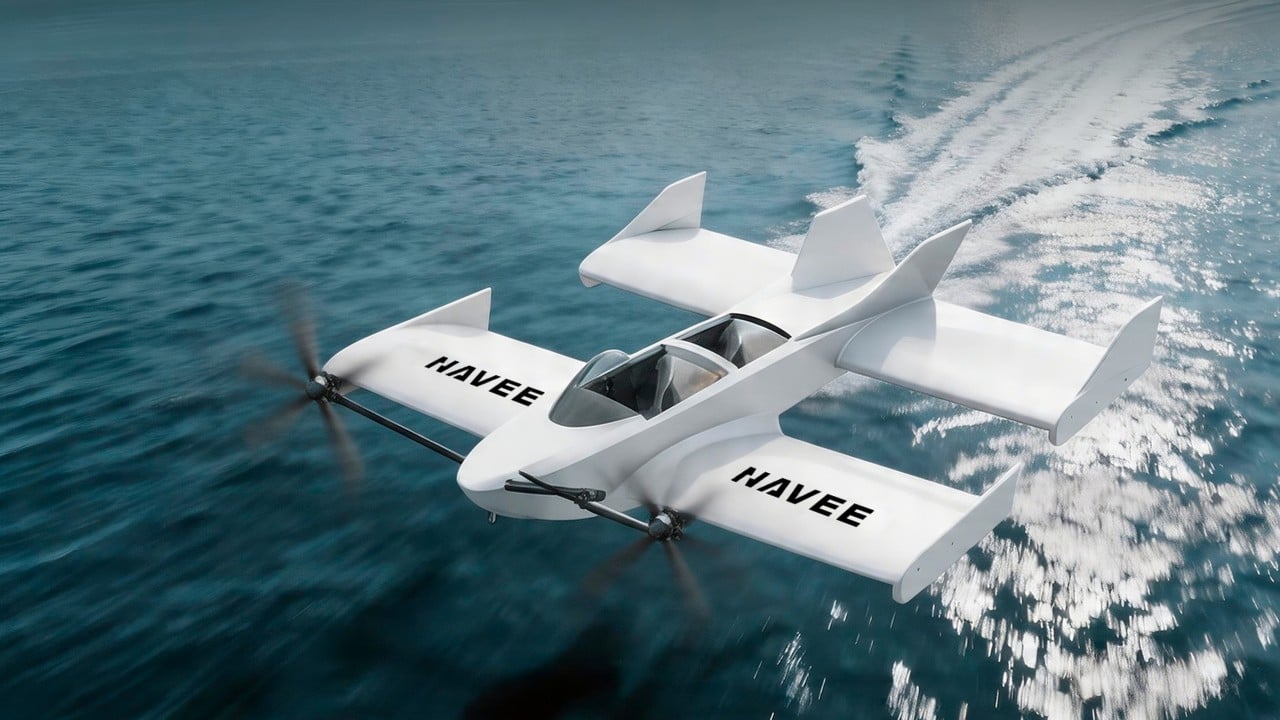
Mainstream tech journalism has fallen for the shiny object routine again. This time, it is the collective gasp over China’s deployment of consumer flying watercraft—vehicles that supposedly blur the line between a speedboat and an airplane. The media frames this as a revolutionary leap in personal transport, a sci-fi dream realized for the wealthy adventurer.
It is not. It is an old aerodynamic exploit wrapped in carbon fiber and sold to investors who do not understand maritime law or fluid dynamics.
What the breathless headlines call a "flying boat" is actually a Wing-in-Ground-effect (WIG) craft. The tech media treats this like a novel breakthrough. In reality, the Soviet Union poured millions into the Caspian Sea Monster and the Lun-class ekranoplans back in the 1960s and 1980s. They abandoned the concept for the same reasons these modern startups will eventually stall: physics is non-negotiable, and maritime infrastructure is completely unprepared for high-speed, low-altitude chaos.
The False Promise of the Ground Effect
To understand why the mainstream narrative is broken, we have to look at the actual physics, not the marketing B-roll.
When an aircraft flies very close to a flat surface—roughly within a distance equal to its wingspan—it experiences the ground effect. As the wing moves forward, it traps a cushion of high-pressure air beneath it. This increases lift and dramatically reduces induced drag.
On paper, the efficiency is staggering. You get the speed of flight with a fraction of the fuel consumption.
But the media ignores the terrifying catch: altitude stability. A standard airplane operates in three dimensions with plenty of margin for error. A WIG craft operates in a hyper-compressed envelope just meters above the water.
- The Pitch Up Disconnect: As a WIG craft accelerates and tries to climb out of the ground effect, the aerodynamic center of pressure shifts dramatically. If the pilot pulls up too high, the craft loses that high-pressure air cushion instantly. The nose pitches up violently, the wings stall, and the craft slaps back into the water at 100 knots.
- The Sea State Problem: The ground effect requires a flat surface. The ocean is rarely flat. A three-meter wave is a minor bump for a cruise ship or a container vessel. For a consumer WIG craft flying four meters above the surface, that same wave is an incoming wall of concrete.
I have watched venture funds throw tens of millions at amphibious concepts over the past two decades. The pitch decks always look identical. They promise to bypass airport congestion by using the open ocean as a runway. They never mention that hitting a rogue wave at high speed delivers the exact same structural force as a hard landing on a tarmac runway without landing gear.
The Maritime Regulatory Trap
Let us address the premise that these vehicles will democratize coastal travel or provide a frictionless playground for the wealthy. The public asks: "When can I buy one, and do I need a pilot's license?"
The mainstream answer is usually a vague timeline about regulatory approvals and simplified joystick controls. The real answer is a bureaucratic nightmare that makes standard aviation certification look simple.
The International Maritime Organization (IMO) classifies WIG craft into three distinct categories:
| Type | Operational Capability | Regulatory Oversight |
|---|---|---|
| Type A | Cannot operate outside the ground effect. Entirely bound to the surface cushion. | Strictly Maritime (IMO) |
| Type B | Can temporarily jump over obstacles up to 150 meters in altitude. | Hybrid (IMO and Local Aviation Authorities) |
| Type C | Can leave the ground effect entirely and fly like a traditional aircraft. | Strictly Aviation (ICAO / FAA) |
The consumer craft currently generating hype are trying to position themselves as Type A or Type B vehicles to dodge the brutal rigor of civil aviation certification. They want you to think it is just a fast boat.
Think about the operational reality of putting these in the hands of consumers. The maritime environment is already crowded with jet skis, yachts, commercial shipping lanes, and unpredictable weather. A standard speedboat moves at 30 to 40 knots and requires constant vigilance. Now, introduce an amateur pilot moving at 110 knots in a vehicle that cannot turn sharply without digging a wingtip into the water and cartwheeling across the bay.
If you operate under maritime law, you must yield right-of-way according to international regulations for preventing collisions at sea. Good luck calculating overtaking angles on a slow-moving fishing trawler when you are closing the distance at highway speeds while hovering five feet above the spray. If you operate under aviation law, you need a full pilot’s license, thousands of dollars in instrument training, and constant communication with air traffic control. You cannot just park it at a public marina next to a pontoon boat.
The Manufacturing Reality Check
The narrative claims that modern materials and electric powertrains have finally made these craft viable for the mass market. This ignores the brutal reality of salt-water operations.
Aerospace engineering prioritizes absolute weight minimization. Maritime engineering prioritizes corrosion resistance and structural massiveness to withstand hydrodynamic pounding. When you try to build a vehicle that does both, you compromise everything.
Carbon fiber composites are fantastic for weight, but they do not tolerate the repetitive, high-frequency slamming forces of water impact well without massive internal reinforcement. The moment you add that reinforcement, the vehicle becomes too heavy to lift off the water efficiently.
Furthermore, electric propulsion systems face a severe penalty here. A traditional airplane spends a massive amount of energy to climb to altitude, but then cruises efficiently in thin air. A WIG craft spends its entire journey fighting the dense, humid air right at sea level, constantly bombarded by salt spray. The energy density of current battery technology means these "futuristic" watercraft have an operational range that makes them little more than expensive toys for protected bays. They are completely useless for genuine regional transit.
Stop Asking if It Flies, Ask Where It Lands
The media focuses entirely on the thrill of the cruise. Nobody asks about the logistics of the destination.
Imagine a scenario where a wealthy tech executive buys one of these craft to commute from a coastal suburb into a major city harbor. They step into the cockpit, skim across the water at incredible speeds, and arrive at the city harbor in record time.
Then what?
They cannot dock at a standard slip because the massive wingspan blocks the entire fairway. They cannot beach it because the lightweight hull will rip open on gravel or sand. They cannot easily transition to land because most harbors lack seaplane ramps, and the infrastructure to lift, wash down, and store these vehicles does not exist.
The industry is building a vehicle for a transportation ecosystem that fundamentally rejects its form factor.
The obsession with personal flying craft is a distraction from what actually works. If the goal is fast, efficient coastal transit, the answer is hydrofoils. Companies are successfully using computer-stabilized hydrofoils to lift electric ferries out of the water, reducing drag and bypassing wave action without ever leaving the surface. Hydrofoils operate within existing maritime frameworks, use standard docks, and do not risk a catastrophic aerodynamic stall if the wind shifts.
The consumer flying watercraft is a spectacular engineering exercise built for a world that only exists in renders. It solves a problem that hydrofoils solve better, at a fraction of the regulatory and physical risk.
Stop looking at the sky. The real disruption is happening six feet lower.