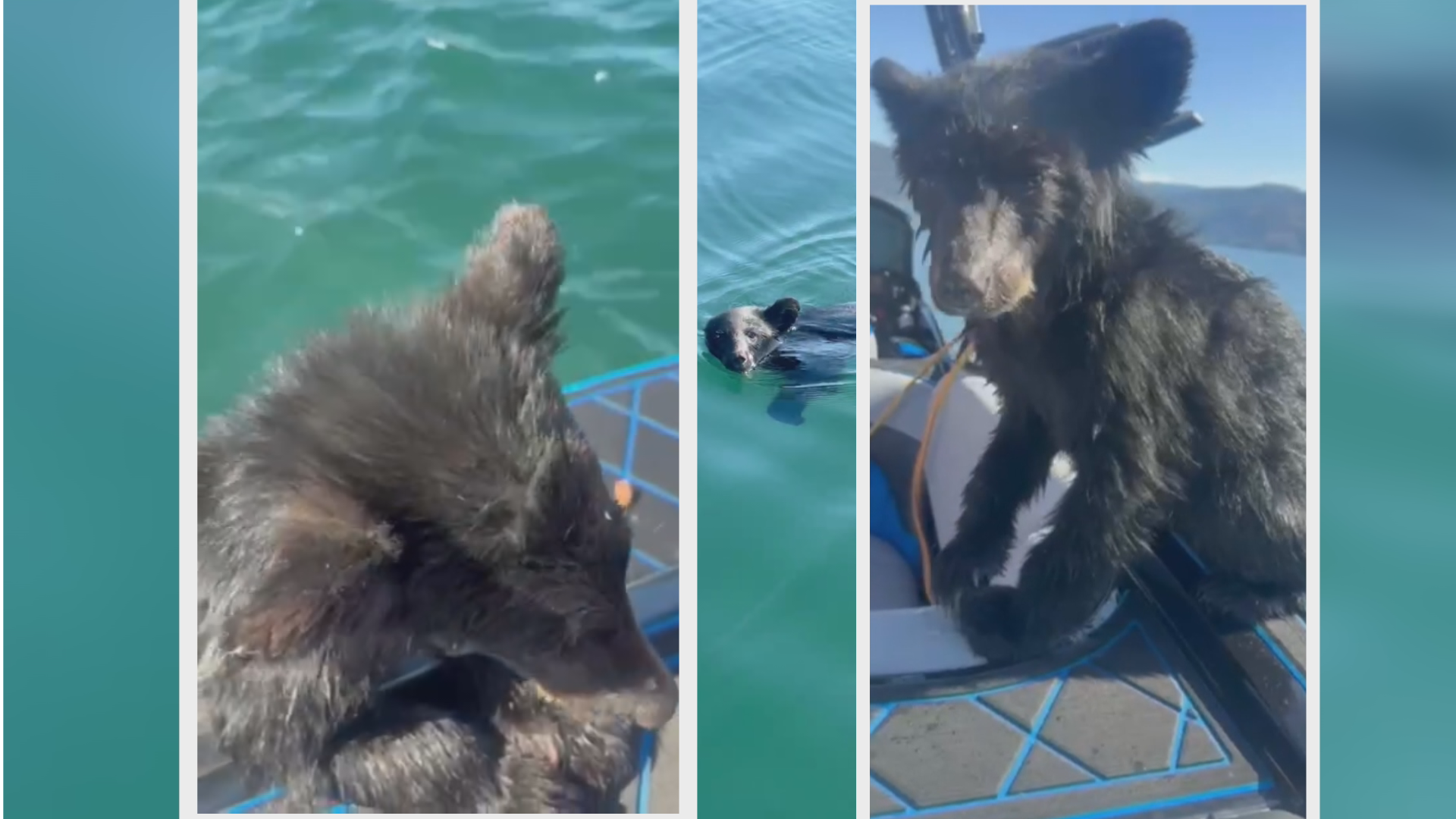
Wildlife management agencies face a recurring structural failure whenever high-profile animal rescue events occur in populated recreational zones. The incident involving a bear cub extracted from Okanagan Lake illustrates a fundamental tension within modern conservation frameworks: the divergence between acute humanitarian impulses and chronic ecological capacity. When an orphaned or distressed sub-adult ursid makes landfall in a human-dominated shoreline corridor, the resulting public intervention triggers a complex cascade of economic, behavioral, and biological costs that standard media narratives routinely omit.
To evaluate the true trajectory of such interventions, one must deconstruct the event through three analytical lenses: the physiological and behavioral baseline of the animal, the institutional capacity constraints of wildlife authorities, and the systemic consequences of habituation vectors.
The Developmental Vulnerability Matrix of Sub-Adult Ursids
A bear cub operating without maternal guidance suffers from an immediate deficit in learned foraging strategies and territorial navigation. In the specific ecosystem surrounding the Okanagan basin, black bear populations rely on seasonal pulses of high-calorie resources, ranging from riparian spawning channels to upland berry crops and mast yields. Maternal rearing functions as an intensive behavioral transfer mechanism. Without this direct transmission, a cub exhibits a high rate of behavioral entropy.
The biological costs facing an isolated sub-adult can be categorized across three distinct vectors:
- Foraging Efficiency Deficit: Lacking maternal demonstration, young bears experience prolonged search times for low-density natural foods, precipitating a negative energy balance before winter dormancy.
- Anthropogenic Attraction Bias: High energetic deficits drive sub-adults toward high-calorie, low-effort urban interfaces, including residential refuse, orchards, and lakeside picnic areas.
- Intraspecific Competitiveness: Displaced or rehabilitated cubs released into established adult territories face severe competition, often resulting in mortality or immediate expulsion into marginal habitat.
These variables dictate that a rescue operation does not solve an ecological problem; it merely pauses a natural mortality filter, shifting the burden of management from natural selection to institutional intervention.
Institutional Capacity and the Cost Function of Rehabilitation
Wildlife rehabilitation facilities operate under severe structural constraints, characterized by fixed capacities and highly volatile demand curves. When an animal like the Okanagan bear cub enters the custody of a provincial or state agency, it initiates a high-friction resource allocation process.
The economic model of long-term ursid rehabilitation relies on minimizing human habituation while providing intensive nutritional support. This creates an operational paradox. To prevent the animal from associating humans with food, protocols demand minimal human contact, often requiring remote feeding stations or specialized enclosure designs. However, this level of isolation demands capital investment that most regional facilities lack.
The financial cost function comprises three primary components:
$$C_{total} = C_{facility} + C_{feed} + C_{behavioral_assessment}$$
Where facility overhead includes secure fencing, veterinary isolation units, and environmental enrichment structures. Feed costs scale exponentially as the sub-adult approaches its autumnal hyperphagia phase, requiring massive caloric inputs. Behavioral assessment involves prolonged monitoring to determine whether the animal retains wild avoidance instincts toward humans.
When regional agencies evaluate these costs against finite budgets, the decision matrix often narrows to two outcomes: long-term captive placement or terminal intervention. True rehabilitation followed by successful wild reintegration remains statistically rare for young cubs that have already experienced close human contact during a high-profile rescue.
The Feedback Loop of Human-Wildlife Coexistence
The proximity of Okanagan Lake's recreational zones to dense black bear habitats creates a permanent interface friction. Every time a rescue is broadcast through media channels, public perception skews toward intervention as a universal remedy. This creates a cultural feedback loop that undermines systemic prevention strategies.
Public demand for rescue and rehabilitation incentivizes reactive symptom management rather than proactive environmental hardening. Homeowners and municipalities frequently underinvest in secure waste management infrastructure, relying on the safety net of provincial wildlife services to remove problem animals after conflicts arise.
[Urban Waste Vulnerability]
       │
       ▼
[Sub-Adult Foraging Pressures]
       │
       ▼
[Shoreline Interface Encounters]
       │
       ▼
[Public Rescue Demand]
       │
       ▼
[Institutional Capacity Strain]
This cycle concentrates risk on the animal. A rescued cub that undergoes rehabilitation carries a compressed timeline for adaptation upon release. If it returns to the wild landscape without concurrent shifts in human waste management practices within the Okanagan corridor, the probability of recidivism approaches certainty.
Strategic Operational Forecast
Managing the future of displaced wildlife in recreational watersheds requires shifting from emotional triage to hard resource allocation. Agencies must establish objective triage protocols that quantify rehabilitation success rates before committing public funds to individual sub-adults. Concurrently, municipalities surrounding water-adjacent habitats must enforce strict containment ordinances for attractants, effectively severing the caloric feedback loop that draws young bears into populated zones. Without structural changes to urban containment, every shoreline rescue remains a temporary postponement of an inevitable systemic failure.