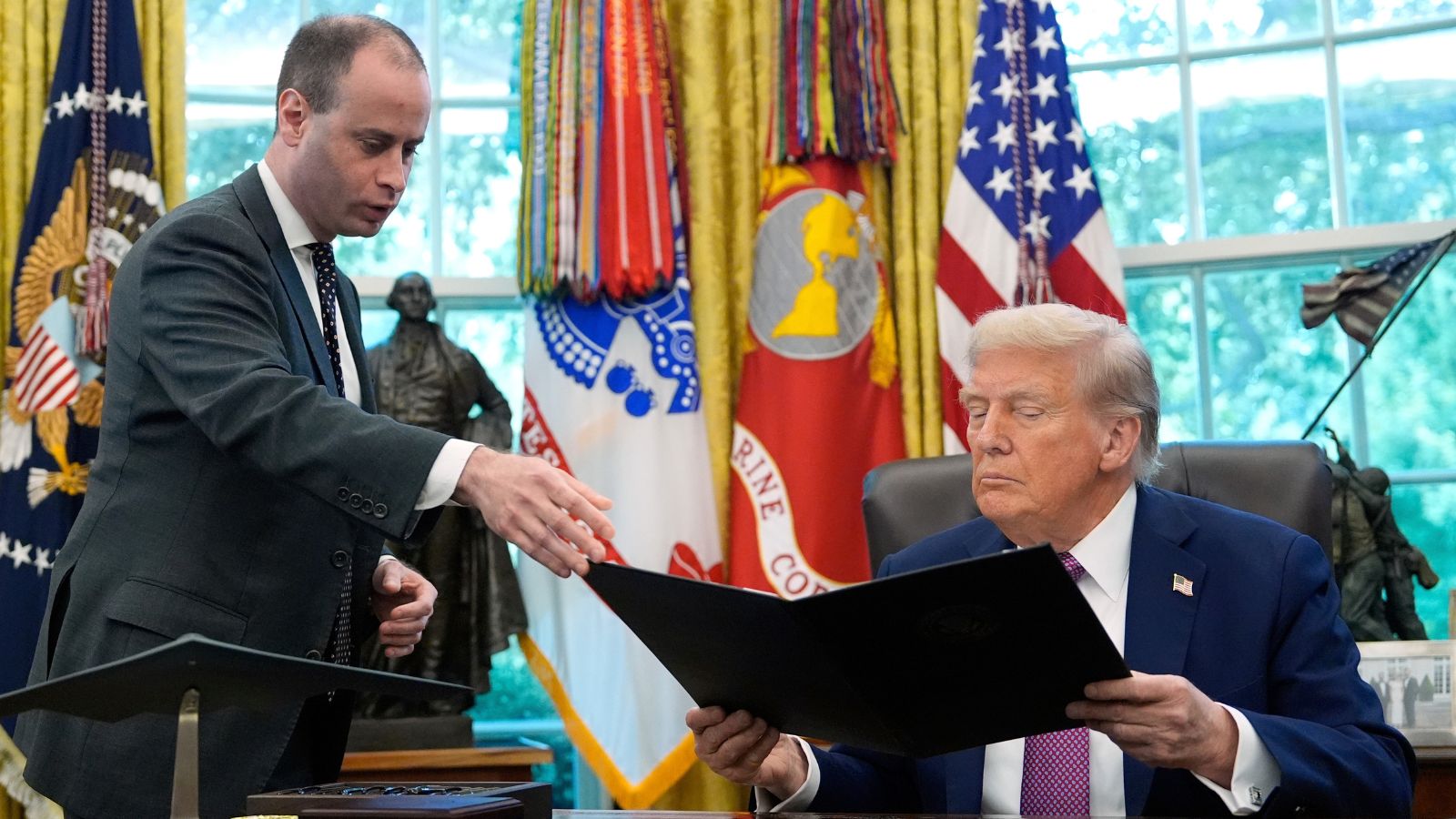
Everyone in the beltway is hyperventilating over Donald Trump naming Will Scharf as his new White House counsel.
The media narrative writes itself. Headlines scream about loyalty, hardball legal strategies, and institutional warfare. Pundits on cable news are already hyperventilating about constitutional crises and norm-breaking. They think this appointment is about building a legal bunker. They are looking at the chessboard and missing the entire game. Recently making news recently: The Empty Shelf That Could Break the World.
This isn't about walling off the Oval Office with aggressive litigators. It's about operational mechanics.
I have watched administrations burn millions of dollars and countless months on high-profile legal talent who looked great on paper but could not navigate the actual machinery of the executive branch. The lazy consensus says a White House counsel is just a top-tier defense attorney for the president. That is a dangerous misunderstanding of the job description. Further details regarding the matter are detailed by The New York Times.
The Myth of the Crusading Defender
Let us clear up the core misconception right away. The White House counsel is not the president’s personal criminal defense lawyer. That is what outside counsel is for.
The White House counsel is the head of the Office of Legal Counsel within the staff—a hybrid role of corporate general counsel, compliance officer, and constitutional traffic cop. Their primary client is the institution of the presidency, not the individual sitting in the chair. When you confuse the two, administrations implode from internal friction.
Scharf comes from a background that makes the establishment nervous, not because he is a bomb-thrower, but because he understands administrative procedure better than the bureaucrats trying to slow-walk executive orders. During his time litigating high-stakes constitutional questions, he didn't just throw punches at agency overreach; he mapped out the structural vulnerabilities in the administrative state.
That is not a qualification for a street brawler. That is a qualification for an efficiency expert.
Why the Establishment Hates Procedural Competence
The panic from institutionalists isn't about ethics. Washington loves institutional grease when it keeps the machine running its way. The panic is about speed.
For decades, the administrative apparatus has relied on procedural sludge to neuter presidential agendas. You issue an executive directive. Career civil servants bury it in environmental impact studies, inter-agency reviews, and endless comment periods. By the time the legal defense mounts, the presidential term is half over.
A competent White House counsel with a background in appellate strategy and structural litigation flips that dynamic entirely. They do not just react to lawsuits filed by hostile state attorneys general. They pre-emptively draft executive actions that survive the Administrative Procedure Act on day one.
Imagine a scenario where an administration stops treating legal defense as a courtroom drama and starts treating it as a supply chain problem. Every memo, every appointment, every agency directive must flow through a strict clearance protocol designed to withstand judicial review before ink hits paper. That requires a very specific type of operator. Not a television talking head. Not a seasoned ivory-tower academic who thinks the courts still operate on gentleman's agreements from 1950. A structural mechanic.
The Downside Nobody Wants to Admit
Let us be completely transparent about the risk here. Every contrarian play has a dark side, and I am not here to sell you a clean narrative.
When you prioritize hyper-efficient legal engineering inside the West Wing, you run the risk of creating a pressure cooker environment where internal dissent is treated as administrative friction. If the counsel office becomes too effective at bulldozing bureaucratic roadblocks, the guardrails against unintended consequences start to look optional.
History shows us that when executive legal teams get too good at finding statutory workarounds, future administrations of both parties inherit those expanded powers. Power is a ratchet. Every shortcut you build today becomes standard operating procedure for your political opponents tomorrow. That is the trade-off. Scharf and his team are stepping into a machine designed to check executive power, and their mandate is to test those checks to their absolute breaking point.
The Real Question Nobody is Asking
People keep asking whether this appointment signals a more confrontational approach to the judiciary. That is the wrong question.
The right question is whether the White House can finally bypass the internal resistance of the federal bureaucracy without triggering catastrophic injunctions.
The answer doesn't lie in political loyalty tests or cable news bluster. It lies in the boring, unsexy mechanics of federal rulemaking, statutory interpretation, and judicial mapping. Scharf’s appointment isn't a declaration of war on the Constitution. It is a technical upgrade to the legal plumbing of the executive branch.
Stop looking at the theatrics. Watch the paperwork.