The Nevada desert does not keep secrets; it merely buries them under layers of dust and indifference. For nearly thirty years, the murder of Tupac Shakur felt like one of those permanent fixtures of modern mythology. It was a tragedy frozen in amber, endlessly debated in barbershops, analyzed in documentaries, and romanticized by a generation that grew up too fast to the rhythm of All Eyez on Me. People spoke of drive-by shootings on Flamingo Road as if they were scenes from an ancient script, inevitable and untouchable.
Then came the courtroom.
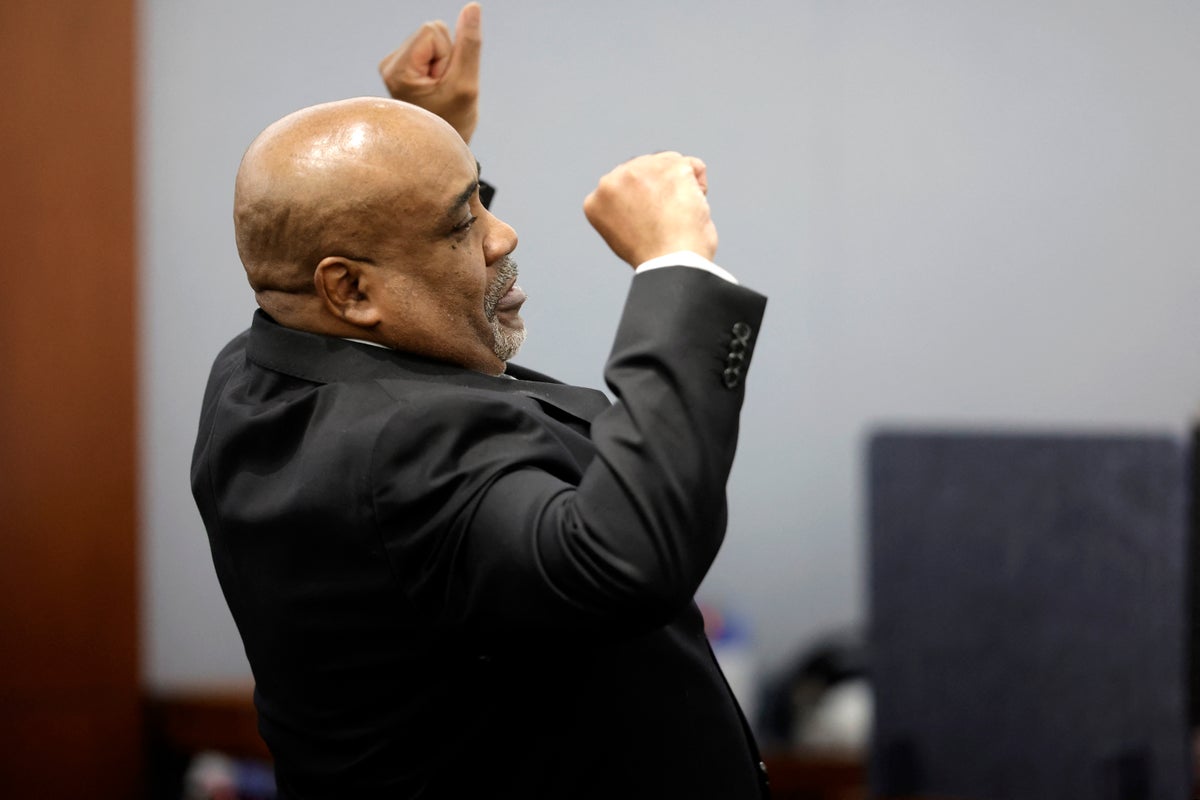
Fluorescent lights hummed against beige walls. The air smelled of stale coffee and bureaucratic dread. Sitting at the defense table was Duane Davis, a man whose very presence had hovered at the edges of the narrative for decades like a persistent ghost. Everyone knew him as Keefe D. Everyone knew the legends. But legends do not bleed, and legends do not sit trial for murder.
Silence stretched across the room.
When the prosecution presented its case, it didn't rely merely on the cold math of ballistics or the fading memories of asphalt witnesses. It relied on a voice. A recorded voice. Duane Davis's own voice, captured on tape years prior, talking too freely, boasting too loudly, and finally slipping the exact name the world had waited a lifetime to hear.
He named his nephew. Orlando Anderson.
Consider the weight of that single revelation hanging in the air. This was not just a legal maneuver. It was the tearing open of a family vault. For years, the narrative of that night in Las Vegas—September 7, 1996—was defined by mythic clashes, East Coast versus West Coast rivalries, and the romanticized tragedy of hip-hop royalty cut down in his prime. But the courtroom stripped away the neon and the gold chains, leaving behind a grim, domestic reality. It was a street fight. It was retaliation for a casino brawl hours earlier. And at the center of it all stood an uncle and a nephew, bound by blood and a spiral of choices that could never be undone.
Memory is a fragile curator. Ask ten people what happened on a street corner, and you will get ten different versions of the truth, each warped by fear, loyalty, or time. But a recorded confession is an anchor. When the jury listened to Davis describe the events leading up to the fatal shots fired from a white Cadillac, the abstraction vanished. You could almost hear the hum of the Las Vegas strip outside that car window. You could feel the suffocating heat of the desert night. You could sense the terrifying momentum of a tragedy unfolding in slow motion, where a simple fistfight metastasized into a murder that altered the cultural landscape of a decade.
The courtroom jurors sat transfixed. These were ordinary citizens thrust into an extraordinary theater of history, forced to weigh the bragging of a street boss against the stark gravity of a homicide charge. They listened not just to the words spoken, but to the cadence, the bravado, and the eventual cracking of armor.
When a man talks about murder on tape, he often believes he is safe from the consequences of his own breath. He thinks time is a shield. He forgets that words are physical things, capable of traveling across decades to land squarely in the present.
The defense tried to frame the audio as posturing, a tall tale told by a hustler eager to inflate his own legend in a documentary or a police interview. They argued it was fiction masquerading as confession. But fiction does not carry the specific, bitter weight of family betrayal. When Davis pointed the finger at his own blood—the nephew who died in a separate shooting years later, forever silencing his side of the defense—it ceased to sound like a movie script. It sounded like a confession born of exhaustion.
We often look for grand conspiracies when humans are merely messy, impulsive, and tragic. We want history to make sense, to have thematic arcs and neat moral resolutions. The truth of Tupac Shakur's death is far more mundane and infinitely more devastating. It was petty. It was quick. It was born of bruised egos in a casino lobby and executed in the dark of a neon-lit avenue.
The trial did not resurrect the fallen icon. No courtroom verdict can return a voice that shaped the consciousness of a generation. What the trial did was heavier, and perhaps more necessary. It replaced mythology with accountability. It took a ghost story and forced it to look into a mirror.
As the jury deliberated, the silence outside the courthouse felt different than the silence of the past thirty years. It wasn't the quiet of mystery anymore. It was the quiet of a ledger finally being balanced, sentence by agonizing sentence, under the harsh glare of reality.