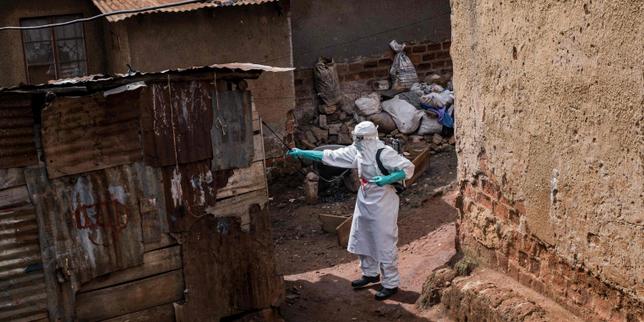
The mainstream media loves a predictable hero narrative. When an Ebola outbreak hits the Democratic Republic of the Congo (DRC), international headlines instantly pivot to a familiar script: brave foreign doctors flying into the jungle, standardizing containment protocols, deploying high-tech Personal Protective Equipment (PPE), and saving locals from their own cultural practices.
It is a comforting story for Western donors. It is also dangerously wrong.
For decades, the global health apparatus has treated Ebola outbreaks as purely biomedical emergencies. The formula is always the same: build a sterile Ebola Treatment Center (ETC), isolate the sick, enforce strict burial protocols, and wait for the virus to burn out. If the local population resists, the medical community chalks it up to ignorance, superstition, or a lack of communication.
This is a fundamental misdiagnosis of the problem.
The catastrophic failure to contain the 2018–2020 Kivu outbreak—which dragged on for nearly two years and claimed over 2,200 lives despite the availability of a highly effective vaccine—proved that the traditional containment model is broken. I have watched international agencies dump hundreds of millions of dollars into bio-secure tents, only for those tents to be burned down by angry local communities.
The harsh reality that epidemiologists refuse to admit publicly is this: Western security-first protocols do not protect people. They alienate them, drive the virus underground, and actively accelerate transmission.
The Biosecurity Illusion: Why Bio-Tents Backfire
Go to any standard global health conference and you will hear experts praise the evolution of the Ebola Treatment Cube—the transparent plastic tents designed to allow families to see their loved ones without risking infection. They call it a triumph of humanitarian design.
In reality, it is a psychological prison.
To a villager in North Kivu, an ETC is not a place of healing; it is a black hole. Patients walk in, and they rarely walk out. The clinical obsession with absolute isolation strips away the one thing patients need most when facing a disease with a high mortality rate: human contact.
When you force a dying person into a plastic bubble, surrounded by heavily camouflaged healthcare workers wearing positive-pressure suits that resemble alien invaders, you destroy trust.
Here is the data point the World Health Organization (WHO) avoids plastering on its press releases: during the Kivu outbreak, a significant portion of infected individuals chose to hide their symptoms at home or flee to traditional healers rather than enter an ETC. When patients hide, contact tracing becomes impossible. The virus spreads silently through households, completely neutralizing the efficacy of advanced therapeutics like mAb114 and REGN-EB3.
The "lazy consensus" dictates that strict isolation is a scientific necessity. It isn't. It is a logistical convenience for international NGOs.
True clinical efficacy requires shifting the paradigm from total isolation to decentralized, community-managed care. If you cannot treat a patient with dignity, they will ensure you never get the chance to treat them at all.
The Myth of "Ignorant Resistance"
Whenever an Ebola response team faces community pushback, the immediate response from Geneva or Washington is to fund more "sensitization campaigns." They hire local radio stations to blast public health warnings. They print glossy brochures about handwashing. They treat the population like children who simply forgot to read the instruction manual.
This is an insult to the intelligence of the Congolese people.
The population of the eastern DRC does not resist Ebola interventions because they do not understand viruses. They resist because they understand the political economy of aid all too well.
Imagine a scenario where your village has been terrorized by armed militias for twenty years. Your children are dying of malaria, clean water is nonexistent, and the local clinic lacks basic antibiotics. The international community ignores you. Then, a single case of Ebola is detected. Within 48 hours, white SUVs roll in, millions of dollars in funding materialize, and foreign workers arrive earning Western salaries.
The local population looks at this sudden influx of wealth and asks a logical question: Why do you only care about us when we have a disease that can kill you?
Resistance to Ebola teams is not a rejection of science; it is a rational political protest against a system that commodifies local suffering while ignoring chronic, systemic poverty. When armed escorts from the UN peacekeeping mission (MONUSCO) are used to enforce health measures, the medical response becomes indistinguishable from military occupation.
If you want to stop Ebola, you stop treating it as an isolated crisis. You fund the existing, broken healthcare infrastructure before the outbreak occurs.
The Safe and Dignified Burial Lie
No part of the Ebola protocol causes more friction than the management of dead bodies. The viral load in an Ebola corpse is extraordinarily high. Traditional washing and burial practices involve direct contact with body fluids, making them highly efficient amplification events for the disease.
To solve this, international teams implemented "Safe and Dignified Burials" (SDB). The theory was that trained teams would handle the bodies respectfully while preventing transmission.
In practice, the execution was a disaster of cultural illiteracy.
Early SDB teams routinely arrived in villages, snatched bodies from grieving families, sprayed them with chlorine, zipped them into opaque body bags, and dumped them in unmarked graves. In Congolese culture, failing to honor the dead correctly is not just a breach of etiquette; it is a spiritual catastrophe that curses the community.
By criminalizing grief, the international response created a black market for corpses. Families began burying their dead secretly at night, in shallow graves, without any protection. The rigid enforcement of the "scientific" burial protocol directly caused the exact outcome it was designed to prevent: massive, unmonitored exposure to highly infectious bodies.
The alternative is demanding and uncomfortable for Western bureaucrats. It requires allowing family members to participate in the process, wearing modified protective gear, and adapting rituals rather than banning them. It means realizing that a ritual modified by 20% is vastly superior to a perfect protocol that is 100% ignored.
The Vaccine Monopoly and the Ring Vaccination Failure
The deployment of the Ervebo (rVSV-ZEBOV) vaccine was supposed to end Ebola forever. The strategy used is known as "ring vaccination"—vaccinating the contacts of a confirmed case, and the contacts of those contacts.
On paper, the mathematical models look flawless. In the messy reality of a conflict zone, the strategy falls apart.
Ring vaccination requires hyper-accurate data and total community cooperation. If a single contact lies about their whereabouts due to fear of being forced into an ETC, the ring breaks. Furthermore, the strategy creates intense local jealousy. When one neighborhood receives a life-saving vaccine and the adjacent village is left unprotected because they do not fit the strict epidemiological definition of a "contact," violence breaks out.
The insistence on maintaining a rigid ring vaccination protocol, rather than executing geographic or mass vaccinations in high-risk zones, is driven by cost and supply chain limitations disguised as scientific rigor. We rationed the vaccine because ultra-cold chain logistics (requiring storage at $-60^\circ\text{C}$ to $-80^\circ\text{C}$) are a nightmare in areas without electricity, not because ring vaccination was the superior epidemiological choice for a civil war zone.
The Playbook for Dismantling the Status Quo
If we want to stop repeating the deadly mistakes of the past, the global health framework must be violently re-engineered. The current top-down, colonial model of outbreak response must be defunded.
First, strip international NGOs of their frontline operational roles and transfer budgets directly to local Congolese health zones (zones de santé). Local nurses and doctors understand the social landscape; they do not need a foreign consultant to tell them how to talk to their neighbors.
Second, dismantle the centralized Ebola Treatment Center model. Integrate Ebola triage and treatment into existing general hospitals. When Ebola care is segregated, it becomes stigmatized. When it is integrated, it becomes normal healthcare.
Third, ban the use of military or paramilitary escorts for medical workers. If a community is too dangerous for health workers to enter without assault rifles, you have already lost the epidemiological battle. Security cannot buy trust; it only buys compliance, and compliance does not stop a virus.
This approach has distinct downsides. It is slower to spin up. It requires ceding financial control to local institutions that Western auditors distrust. It means accepting higher baseline risks during the initial phases of an outbreak. But the alternative is continuing to fund a multi-million-dollar biosecurity theater that looks spectacular in PowerPoint presentations but fails catastrophically on the ground.
Stop trying to optimize a broken containment machine. The next pandemic will not be defeated by better plastic tents or stricter enforcement. It will be defeated by giving up the illusion of absolute control and trusting the people who actually live there.