The air in a courtroom doesn’t just sit there. It presses. In Abuja, that pressure carries the scent of old paper, floor wax, and the distinct, metallic tang of fear. When six individuals walked into the dock recently, they weren't just faces in a crowd of legal filings. They were the physical manifestations of a nation’s deepest anxieties. Nigeria is a place where the history of power is written in sudden movements and midnight decrees. To be charged with treason is to be accused of trying to tear the very fabric of the state.
Six people. A number small enough to fit around a dinner table, yet large enough, according to the state, to threaten the seat of a president.
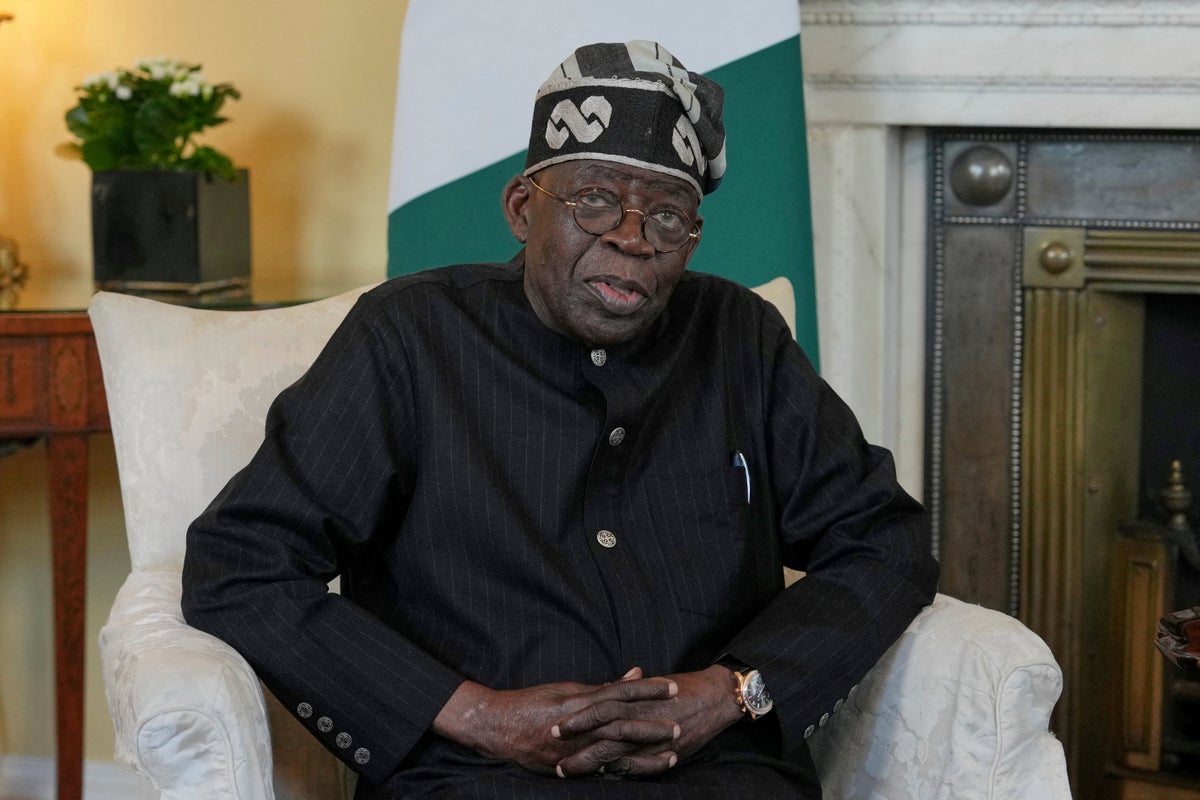
The charges filed by the Nigerian authorities are heavy. Treason. Inciting mutiny. Attempting to destabilize a democratically elected government. These aren't the kind of accusations that allow for a quiet life. They are the kind that echo through the halls of the Villa and ripple out into the markets of Kano and the tech hubs of Lagos. The state alleges these individuals were part of a coordinated plot to overthrow President Bola Tinubu.
Consider a hypothetical shopkeeper in Garki. Let’s call him Amadi. For Amadi, news of a coup plot isn't just a headline on a smartphone. It is a memory of checkpoints and the silence of a country holding its breath. When the state claims people are plotting, the ghost of the 1960s, 70s, and 90s begins to stir. The "invisible stakes" aren't about who sits in the big chair; they are about whether the person in that chair got there by a ballot or a bullet.
The Mechanics of Accusation
The government’s case rests on the idea that dissent had crossed the line into sedition. There is a fine, often blurry boundary between a protest and a putsch. During the recent waves of "End Bad Governance" demonstrations, the streets were loud. People were hungry. Inflation wasn't a statistic; it was the empty plate at the end of the day.
In that cauldron of frustration, words become volatile. The authorities claim these six individuals didn't just want change; they wanted a collapse. They are accused of communicating with foreign entities and distributing materials meant to trigger a military takeover. This is where the narrative of the state meets the lived reality of the accused. For the prosecution, this is about national security. For the defense, it is often about the right to be angry in public.
The legal process is a slow grind. The courtroom becomes a theater where the script is written in statutes. Each motion filed is a beat in a high-stakes drama. But outside the wood-paneled rooms, the public is left to wonder where the truth lies. Is this a genuine threat thwarted? Or is it the heavy hand of a government trying to quiet the noise of a disgruntled populace?
The Architecture of Power
Nigeria’s democracy is a young, scarred thing. It has the enthusiasm of a teenager and the trauma of a war veteran. Since 1999, the country has fought to keep the military in the barracks and the politicians in the light. This latest round of treason charges is a reminder of how fragile that arrangement remains.
When you charge someone with trying to overthrow a president, you are saying the system is vulnerable. You are admitting that a few determined people—or perhaps a few misplaced ideas—could bring the whole house down. It is a paradox of strength and weakness. A strong state protects itself; a truly secure state doesn't feel the need to see a shadow behind every curtain.
The "human element" here is the uncertainty. It’s the mother of one of the accused waiting in the hallway, clutching a rosary or a prayer mat, wondering if her son is a revolutionary or a scapegoat. It’s the young lawyer taking on a case that might mark them for life. It’s the soldier at a checkpoint, hearing the news and wondering if his orders are about to change.
The Cost of Silence and the Price of Noise
There is a specific kind of silence that follows a treason charge. It’s the silence of people checking their phones before they speak. It’s the hesitation in a WhatsApp group. The state argues this is necessary to prevent chaos. They point to the "End Bad Governance" protests as a moment where legitimate grievances were hijacked by those with darker motives.
They speak of flags that shouldn't have been flown and slogans that crossed the line. But who draws the line? In a country where the cost of living has skyrocketed, the line moves every time the price of petrol goes up. For the six people in the dock, that line has become a wall.
They face potential death sentences or life imprisonment. These are not abstract penalties. They are the end of lives, the breaking of families, and the cauterization of political discourse. If the state proves its case, it justifies its vigilance. If it fails, it leaves behind a legacy of intimidation that is hard to wash away.
The Invisible Threads
To understand this story, one must look at the invisible threads connecting Abuja to the rest of the world. The authorities have hinted at foreign influence—the classic "outside agitators" trope that has been a staple of political drama for centuries. By suggesting that the plot had roots or support beyond Nigeria’s borders, the government elevates a local legal battle into a matter of international intrigue.
This moves the goalposts. It’s no longer just about six people in a room; it’s about sovereignty. It’s about the idea that Nigeria is a prize being fought over by forces that don't have to live with the consequences of their interference. Whether these links are substantive or merely rhetorical remains the pivot point of the entire saga.
The logic of the state is often a cold, geometric thing. It sees patterns where others see coincidences. It sees a plot where others see a mess. In the eyes of the law, the intent is everything. Did these six people intend to spark a fire, or were they just standing too close to the sparks?
The Long Shadow of the Dock
The dock in an Abuja court is a lonely place. It is a wooden square that separates the individual from the world. For the duration of the trial, these six people are no longer teachers, activists, or citizens; they are "the defendants." They are the protagonists in a story they didn't necessarily choose to write.
Every piece of evidence presented—every intercepted message, every witness testimony—is a brick in a wall being built around them. The prosecution aims to make that wall impenetrable. The defense looks for the cracks. And the public watches, not because they are all legal scholars, but because they know that what happens to these six people sets the temperature for everyone else.
If the air in Abuja feels heavy, it’s because it is saturated with the weight of these questions. Can a democracy survive if it treats its loudest critics as its greatest enemies? Can it survive if it doesn't?
The gavel will eventually fall. The headlines will move on to the next crisis, the next scandal, the next fluctuation in the exchange rate. But for the six people who stood in that dock, the world has already changed. They have become part of the long, complicated history of a nation trying to figure out how to talk to itself without screaming.
The sun sets over the Zuma Rock, casting a long, jagged shadow toward the city. In the quiet of the evening, the legal arguments fade into the background noise of traffic and generators. What remains is the stark reality of power and the people caught in its gears. Nigeria continues its long walk, sometimes stumbling, sometimes sprinting, always shadowed by the fear that one wrong step—or one whispered word—could change everything forever.
The court rises. The doors swing shut. The city waits.