The phone rings at three in the morning. For those of us who have spent years navigating the frayed edges of international diplomacy, that sound is never neutral. It is a siren. It is a heartbeat skipping in the chest.
Right now, a group of people in Washington are staring at that exact kind of silence. Somewhere in the sprawling, windowless complexity of the Situation Room, maps are spread across mahogany tables. There are no dramatic speeches. Just men and women—human beings with families, anxieties, and bad habits—trying to calculate the cost of a Sunday morning that hasn't happened yet.
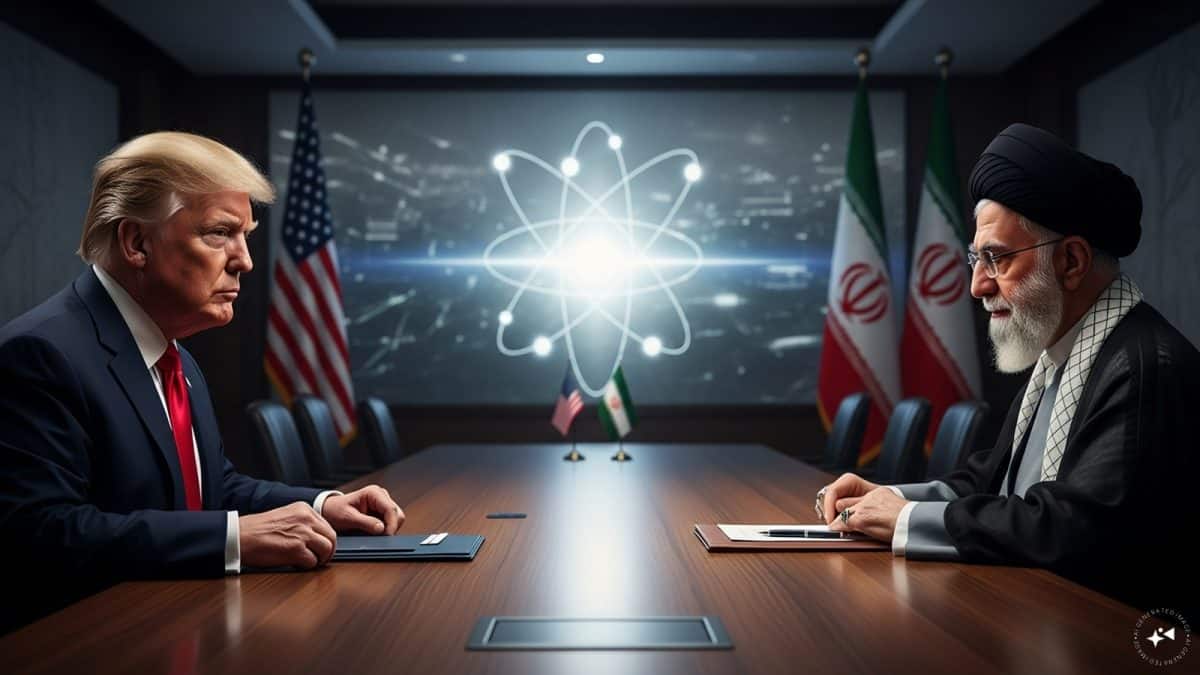
President Trump sits at the center of this gathering. He is, by all accounts, hesitating.
To the outside world, this looks like indecision. Analysts on television will call it a delay or a lack of strategy. But those who have stood in that room know better. It is the crushing reality of the calculus. When you hold the power to launch a strike, you are not just authorizing a military maneuver. You are setting in motion a series of events that will rewrite the morning routine of a baker in Tehran and a sailor in the Persian Gulf.
Consider the hypothetical, yet painfully familiar, experience of a young officer stationed on a destroyer in the Strait of Hormuz. He spends his days reading radar blips. Most are fishing boats. Some are commercial tankers. Occasionally, the blips belong to something more sinister. He knows that a strike is on the table. He knows that if the order comes, the sky will light up, and the quiet rhythm of his shift will shatter into a frantic, mechanical dance of survival.
He is not a policy expert. He is a twenty-two-year-old from Ohio who just wants to make it home for his sister's wedding.
This is the invisible stake of the weekend strike. It is not just about geopolitical signaling or deterrent strength. It is about the thousands of lives currently suspended in the amber of a decision that has not yet been made.
The core of the issue is a jagged, uncomfortable paradox. The current administration has signaled a desire for a muscular, decisive posture. Yet, every time the target locks, the variables shift. Does a strike solve the aggression, or does it merely feed the fire? Does it force a retreat, or does it ensure a retaliation that spills over into a regional conflagration?
History offers no easy comfort here. We look back at the late twentieth century, at the moments where the world held its breath while a leader weighed the cost of iron against the cost of blood. It never feels like a historical event when you are living it. It feels like a bad headache. It feels like the air getting too thin to breathe.
Trump is facing a classic trap of executive power. If he strikes, he is the aggressor, inviting a cycle of retribution that could define the remainder of his term. If he abstains, he risks appearing weak, a vulnerability that emboldens opponents who view restraint as an invitation to escalate.
There is no middle ground.
I recall a briefing room decades ago, watching a senior official trace the coast of a hostile nation with a trembling finger. He was debating a similar strike. He leaned back, looked at the rest of us, and whispered, "The problem isn't the explosion. It's the echoes."
Those echoes are what fill the silence in the Oval Office today.
When a superpower engages, the fallout is rarely contained by borders. It hits the markets. It hits the price of oil, which in turn hits the grocery bill of a grandmother in Des Moines. It ripples through diplomatic channels, freezing progress on a dozen other fronts. It forces allies to choose sides, sometimes against their own national interests.
We often imagine these leaders as cold, calculating machines. They are not. They are terrified by the same things that terrorize us: the fear of making the wrong move, the fear of the unintended consequence, the fear of being remembered as the person who tipped the first domino.
The decision to strike over the weekend is not a policy choice. It is a gamble on the nature of human behavior. Can you scare someone into submission, or does the blow only harden their resolve?
As the hours tick by, the world remains in a state of suspended animation. The jets are fueled. The crews are standing by. The maps are ready.
But the ink is not dry.
There is a strange, unsettling beauty to this hesitation. It suggests that even in the most hardened halls of power, there is still a recognition that war is the ultimate failure. Every hour of delay is an hour where the unthinkable has not yet become the inevitable.
Perhaps the most important thing to recognize is that this isn't a game of chess. In chess, the pieces are expendable. In this scenario, the pieces are flesh and blood. They are people who have never met one another, people whose only common ground is the fact that they are waiting to see if their world will remain intact by Monday.
The lights in the executive wing stay on. The coffee gets cold. The files stay open. Outside, the world goes on as if nothing is happening, oblivious to the fact that the trajectory of the next decade is being negotiated in the quiet spaces between heartbeats.
Whatever happens when the sun rises, the decision will leave a mark. It will be carved into the stone of history, a permanent record of what one human being decided to do when confronted with the crushing, silent weight of potential violence.
For now, there is only the waiting. And in the waiting, there is the hope that the hesitation is not a weakness, but a recognition of how much is truly at stake.
The horizon remains quiet. For now, the tide is still just water.