The coffee in the press room at a G7 summit always tastes like jet fuel and anxiety. It is a specific kind of cold, fluorescent purgatory where the leaders of the free world gather to decide the geometry of global survival while translators hyperventilate in soundproof booths. Outside, the manicured lawns of the luxury resort look peaceful. Inside, the air smells of expensive wool suits and the metallic tang of adrenaline.
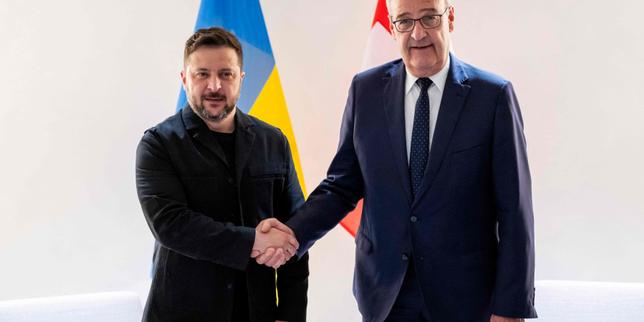
Everyone is waiting for the man in the olive-green sweatshirt.
When Volodymyr Zelensky enters a room like this, the contrast is jarring. He does not wear the uniform of diplomacy. He wears the dirt of a nation under siege, stitched into the very fabric of his cotton fleece. To understand what is happening at the G7 right now, you have to look past the official communiqués and the stiff, choreographed handshakes. You have to look at the invisible lines connecting a boardroom in Puglia to a freezing trench in Kharkiv, and a banking terminal in London.
History is being written not with weapons, but with ledgers and ink.
The Cold Anatomy of a Sanction
To the average person, the phrase "economic sanctions" sounds like a bureaucratic yawn. It evokes images of dusty policy papers and mid-level compliance officers staring at spreadsheets in a basement office.
But talk to someone like Mikhail.
Mikhail is a hypothetical composite of the dozens of logistics managers currently working within Russia’s military supply chain. He doesn't carry a rifle. He uses an encrypted laptop. For the past two years, Mikhail’s entire existence has been a high-stakes game of whack-a-mole. Every time the UK or the US bans a specific dual-use microchip, Mikhail has to find a new shell company in a third country to buy it for him. He routes money through Dubai, ships goods through Central Asia, and falsifies customs declarations.
When the United Kingdom announced its newest, sweeping package of sanctions to coincide with the G7 summit, they weren't just making a political statement. They were aiming a sledgehammer directly at Mikhail’s laptop.
The new British measures target the shadow fleet—the ghost ships that carry Russian oil across the oceans under flags of convenience, ignoring the price caps set by the West. They target the Moscow Exchange, aiming to paralyze the trading of foreign currencies inside Russia.
Imagine trying to run a global business when your bank suddenly forgets how to convert your money into dollars or euros. It doesn't stop the machine instantly. It introduces friction. It adds a tax on every single transaction. The price of an illicit semiconductor doubles. The delivery time triples. In war, friction is a slow, invisible killer.
The Psychology of the Green Sweatshirt
While London tightens the financial noose, Zelensky’s presence at the G7 summit serves a completely different, deeply psychological purpose.
There is an undeniable fatigue that creeps into any long-term conflict. For Western leaders, the war in Ukraine can easily become a line item in a budget proposal, a talking point for a reelection campaign, or a source of friction among voters worried about domestic inflation. It is easy to look at a billion-dollar aid package as an abstract number.
Zelensky’s job is to prevent that abstraction.
When he sits across from the leaders of the world's wealthiest democracies, he forces them to look into the eyes of a man who knows exactly how many civilian apartments were hit by glide bombs the previous night. He changes the physics of the room. A president or prime minister might find it easy to say "no" or "not yet" to a written memo from a defense ministry. It is a different matter entirely to look a wartime leader in the eye and explain why the promised air defense systems are still sitting in a warehouse in Europe.
The stakes at this specific summit have shifted from immediate survival to long-term endurance. Ukraine is no longer just asking for ammunition for the next month; they are asking for the institutional framework to survive the next decade.
The $50 Billion Gamble
The centerpiece of the discussions behind closed doors isn't just about sending more tanks. It is about a complex, brilliant, and legally terrifying financial maneuver involving frozen Russian assets.
When the war began, Western nations froze roughly $300 billion of the Russian central bank’s sovereign assets. For two years, that money has sat in financial institutions, mostly in Europe, gathering dust and generating billions of dollars in interest.
For months, a quiet ideological battle has raged among Western economists and lawyers.
- The Aggressive View: Seize the entire $300 billion outright and hand it to Ukraine to rebuild their schools and power grids.
- The Cautious View: Seizing sovereign assets violates international law and could cause countries like China or Saudi Arabia to pull their money out of Western banks, destroying trust in the global financial system.
The compromise being hammered out at the G7 is a piece of financial engineering that sounds like a corporate leveraged buyout. The plan is to use the future interest generated by that frozen money as collateral to take out a massive $50 billion loan. The loan goes to Ukraine immediately to buy weapons and stabilize its economy. Russia’s money stays frozen, and the interest pays off the loan over time.
It is a poetic kind of justice, but it is also a massive gamble. It signals to Moscow that the West has found a way to fund Ukraine’s defense indefinitely, without constantly having to beg their own parliaments for taxpayer money.
The Ghost in the Machine
But money only matters if it can be translated into steel, gunpowder, and radar waves.
A few miles away from where the world leaders are eating their state dinners, the true cost of these diplomatic maneuvers is paid in places the cameras never see. Consider the drone operators in the forests outside Kupiansk. They don't care about the complex legalities of frozen asset interest rates. They care about whether the lithium-ion batteries they need for their quadcopters will arrive before the next Russian assault wave.
The connection between the G7 table and the Ukrainian trench is direct, yet incredibly fragile.
Every delay in the diplomatic ballroom translates to a lost village or a destroyed power plant on the ground. This summer, Ukraine is facing a catastrophic energy shortage because Russian missiles have systematically dismantled their thermal and hydroelectric power stations. The country is rationing electricity. Kyiv faces dark, hot months ahead, with hospitals relying on generators and citizens climbing twenty flights of stairs to their apartments because the elevators don't work.
When Zelensky pleads for Patriot missile systems, he isn't asking for military dominance. He is asking for electricity. He is asking for running water for children.
The Changing Tides of Power
The real story of this summit is the quiet acknowledgment that the old world order is gone, and the new one is incredibly messy.
The G7 used to represent the unquestioned economic engine of the planet. Today, it represents a coalition of old powers trying to maintain stability in a world where shadow networks, cryptocurrency, and asymmetric warfare have leveled the playing field. The British sanctions against Russia's financial heart show that the West is willing to take unprecedented risks with the global economy to enforce its rules.
We are watching the decoupling of the modern world. Two distinct financial systems are forming: one transparent and tied to the West, the other dark, resilient, and anchored in Moscow, Beijing, and Tehran.
The press conferences will end. The flags will be packed away into velvet-lined boxes. The leaders will board their private jets and fly back to their capitals to face domestic scandals and sinking poll numbers.
But the ink on the documents they signed will remain.
The true measure of this G7 summit won't be found in the soaring language of the joint declarations. It will be found in the quiet panic of a logistics manager in Moscow trying to clear a blocked wire transfer, and in the sigh of relief from a Ukrainian air defense crew as a new shipment of interceptor missiles finally rolls across the border under the cover of night.