Jean-Pierre keeps his passport in a ziplock bag inside his breast pocket. It is a small, irrational habit born of an rational fear. Water destroys paper, and paper is the only thing standing between him and a country he no longer recognizes. For three years, he has built a life in Ohio, working the late shift at a logistics hub, sending money back to Port-au-Prince, and sleeping with one eye open.
Lately, he doesn't sleep much at all.
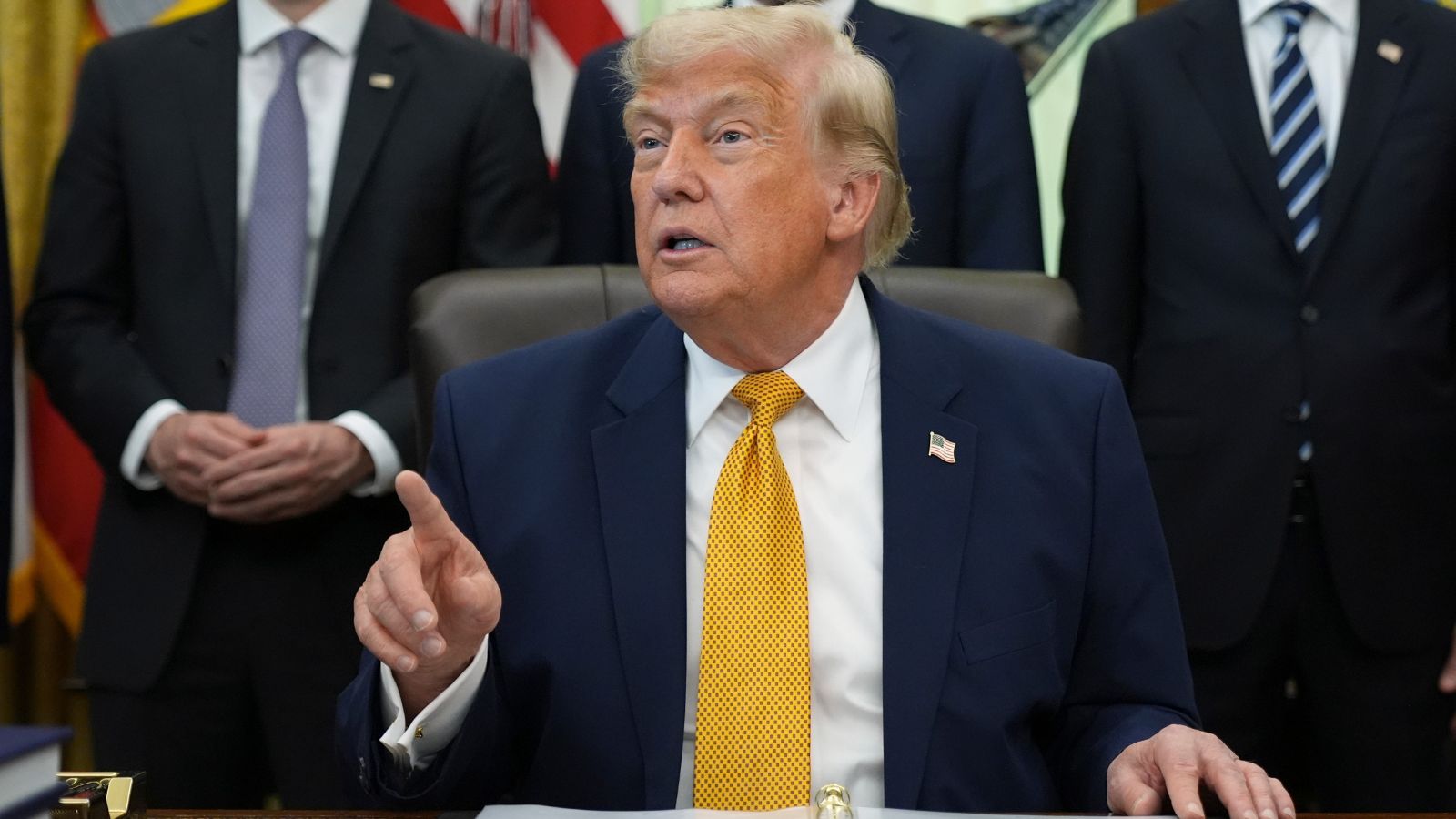
The conversation around immigration in America has shifted from a policy debate to a visceral threat. For tens of thousands of Haitians living in the United States under Temporary Protected Status (TPS) or humanitarian parole, the horizon has suddenly turned opaque. The talk of mass deportations is no longer just campaign rhetoric broadcast on cable news; it is a heavy, suffocating fog that settles over living rooms from Miami to Springfield.
But there is a second half to this terror, one that rarely makes the nightly news broadcast. It is the fear vibrating across the Caribbean Sea. Haiti, a nation currently buckling under the weight of institutional collapse, is looking north with a profound sense of dread. The country cannot sustain the people it already has. The prospect of absorbing hundreds of thousands of deported citizens is not a logistical challenge. It is an existential catastrophe.
The View from the Porch
To understand the stakes, you have to look past the spreadsheets and the legal jargon. Consider a hypothetical family, woven from the very real threads of those currently caught in this limbo. Let us call them the Celestins.
In Port-au-Prince, Martine sits on a concrete porch. The air smells of burning charcoal and exhaust. Her phone buzzes. It is her brother, calling from Boston. He is terrified. He tells her about neighbors who have stopped going to the grocery store, who are packing small bags just in case ICE knocks on the door in the pre-dawn darkness.
Martine feels a cold knot tighten in her stomach. If her brother is sent back, the fragile ecosystem of her entire family collapses.
The math is simple and brutal. The money her brother sends home pays for her children’s school tuition, the clean water they buy in blue plastic jugs, and the security guard who watches the entrance to their neighborhood block. In Haiti, remittances are not extra income. They are oxygen. According to World Bank data, remittances account for over twenty percent of Haiti's gross domestic product. It is a decentralized, citizen-funded lifeline that keeps millions of people from starvation when the state cannot provide basic infrastructure.
If those funds dry up, the collapse will be instantaneous. But the physical return of the people is what truly terrifies local officials.
A System Fractured Beyond Repair
Imagine trying to pour a gallon of water into a thimble. That is the reality of the Haitian state infrastructure facing a potential influx of returnees.
Port-au-Prince is currently a city held hostage by armed factions. Gangs control major transit routes, the seaport, and neighborhoods that were once peaceful suburbs. The police force is underfunded, outgunned, and exhausted. The healthcare system is functioning on life support, with hospitals frequently running out of basic antibiotics and fuel for generators.
When the United States deports someone to Haiti, they do not simply arrive at an airport and walk home. They land at Toussaint Louverture International Airport, a facility that has itself been the target of gang violence and temporary closures. From there, where do they go?
Many of those facing potential deportation have been away for years. Their homes have been destroyed by earthquakes or seized by gangs. They have no families left in the capital who can safely shelter them. A mass return would create an immediate, catastrophic internal displacement crisis. People would be forced into overcrowded, unsanitary camps, ripe for outbreaks of cholera—a disease that has repeatedly ravaged the island when sanitation systems failed.
The psychological toll on the ground is palpable. Local non-governmental organizations, already stretched to their absolute limits providing basic food and medical care, openly admit they have no contingency plans for an influx of this scale. You cannot plan for an avalanche when you are already buried in snow.
The Invisible Threads of Integration
Back in the United States, the narrative often paints immigrants as transient figures, hovering on the margins of society. The reality is far more deeply rooted.
Over the past several years, Haitian communities have revitalized dying rust-belt towns and filled critical labor shortages in agriculture, food processing, and healthcare. They have bought homes, opened businesses, and paid taxes. Their children attend local schools, speaking English with midwestern accents, completely disconnected from the violence of their parents' homeland.
The threat of sudden removal creates a profound psychological paralysis. When you believe your time in a place is finite, you stop investing. You don't buy the house. You don't fix the car. You don't sign the long-term lease. The entire economy of these immigrant enclaves begins to stutter and stall.
It is a strange, cruel irony. The very people who fled violence and instability are now being told that their safety was merely a temporary luxury, subject to the political winds of a nation thousands of miles away.
The legal mechanisms at play are intricate and often confusing, even to those who study them. TPS and humanitarian parole were designed as temporary fixes for extraordinary circumstances. But when the ordinary reality of a homeland is permanent crisis, "temporary" becomes a cruel euphemism. There is no path to permanent residency built into these programs, leaving recipients in a perpetual state of legal purgatory. They are authorized to work, but forbidden to belong.
The Sound of the Gate Closing
The debate will continue in courtroom sessions and legislative chambers. Policy analysts will argue about numbers, sovereignty, and the rule of law. These are necessary conversations in any sovereign nation. But the human cost must be factored into the ledger.
If the gates close, and the planes begin to fly south in numbers never seen before, the impact will reverberate far beyond the borders of Haiti or the United States. It will be felt in the empty shifts at manufacturing plants, the quiet classrooms in Florida and Ohio, and the desperate, darkened streets of Port-au-Prince.
Jean-Pierre sits on the edge of his bed in Ohio, the late shift still clinging to his muscles. He unbuttons his shirt and sets the ziplock bag on the nightstand. The passport inside is blue and stamped with the coat of arms of a country that cannot protect him, held by a man whom the country he lives in might soon reject. He looks at it for a long time before turning off the lamp, listening to the quiet American night, wondering how much longer it will belong to him.