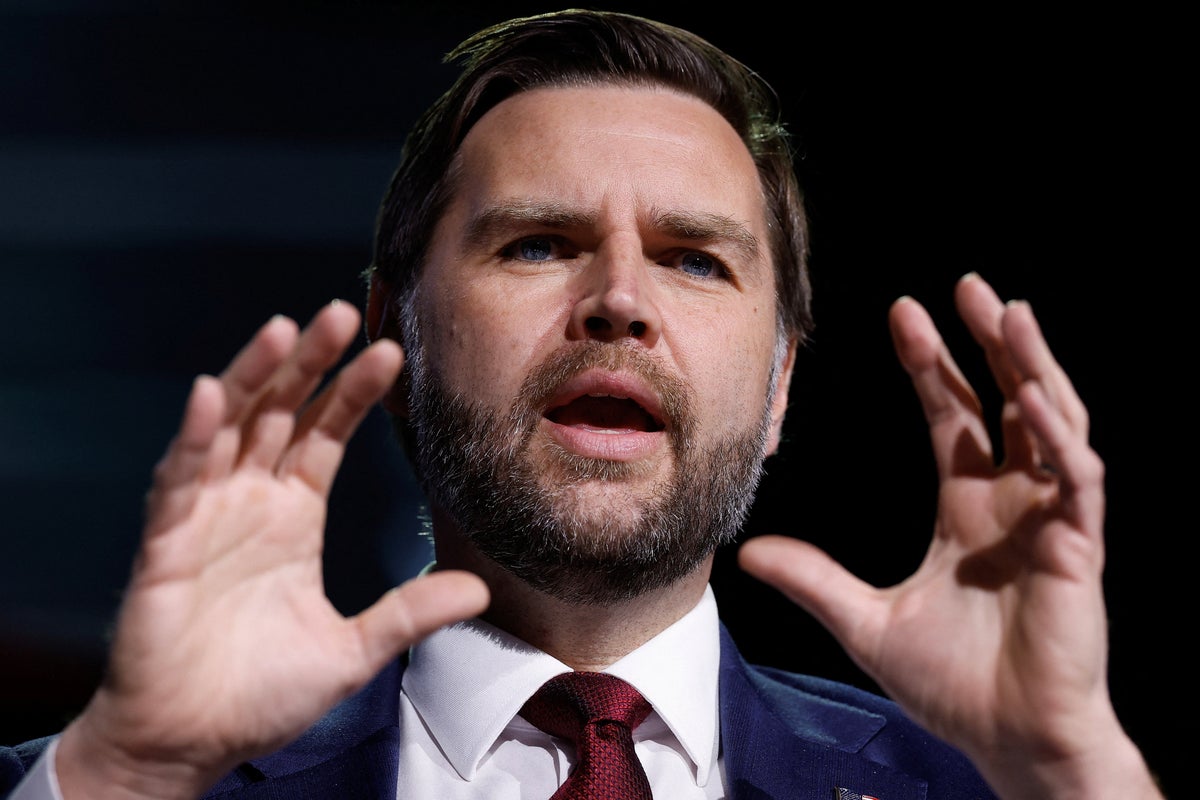
The online firestorm surrounding Erika Kirk’s mourning of her late husband, Charlie Kirk’s brother, reveals a jagged new reality in American public life where even the most intimate human experiences are treated as political assets or liabilities. JD Vance’s intervention into this digital pile-on was not merely a defense of a grieving family member; it served as a calculated strike against a culture that demands ideological purity before granting the right to sorrow. When Vance rebuked critics for scrutinizing Erika’s public expressions of loss, he highlighted a growing trend where private tragedies are forcibly drafted into the culture wars.
The mechanics of this controversy started with a simple, painful human reality: a sudden death. However, in the high-stakes environment of 2026, no event exists in a vacuum. Because Erika Kirk is adjacent to a prominent political figure, her methods of processing grief—her social media posts, her public tributes, her very visibility—became fair game for a certain breed of internet inquisitor. These critics weren't looking for flaws in her character; they were looking for ways to hurt her political circle.
The New Architecture of Online Outrage
For decades, the boundaries of public decency generally shielded the immediate family of political figures during times of bereavement. That unspoken treaty has been shredded. The architecture of modern social platforms incentivizes the "hot take" over the moment of silence. When a public figure’s relative dies, the algorithm doesn't see a tragedy. It sees an engagement opportunity.
The criticism leveled at Erika Kirk often centered on the perceived "appropriateness" of her mourning. This is a classic move in the modern outrage playbook: moving the goalposts on how a person is allowed to behave in their worst moments. If she stays quiet, she’s hiding something. If she speaks out, she’s performing. It is a trap designed to ensure the target can never actually win.
Vance’s response was a sharp pivot. He didn't just ask for privacy; he attacked the premise that the public has a right to judge the internal emotional state of a grieving widow. By doing so, he positioned himself as the protector of the "real" world against the "vicious" digital world. It’s a powerful narrative tool, one that resonates with a base of voters who feel that the traditional media and online activists have lost their humanity in pursuit of political points.
The Business of Being Relatable
To understand why this happens, we have to look at the commodification of the personal. In the current media ecosystem, relatability is a currency. Political figures and their families are often encouraged to share "authentic" moments to build trust with their audience. The Kirk family has built a massive platform on the idea of being a bulwark for traditional American values.
The danger of this strategy is that when you invite the public into your living room to show them your triumphs, they feel entitled to stay for the funerals. The boundary between the public person and the private individual becomes a blur. When Erika Kirk shared her grief, she was using the same tools used for political messaging. This gave her detractors a perceived opening. They argued that if the life is public, the death is public, and therefore the grief is subject to public review.
This logic is flawed, but it is pervasive. It ignores the fundamental biological and psychological reality of loss. Grief isn't a press release. It is messy, inconsistent, and often irrational. Trying to apply a political lens to a widow’s Instagram post is like trying to measure a heartbeat with a thermometer. You’re using the wrong tool for the job.
The Psychology of the Digital Mob
Why does a total stranger feel the need to tell a woman she is grieving "wrong"? The answer lies in the dehumanization inherent in screen-based interaction. When we look at a screen, we don't see a person. We see a symbol. Erika Kirk ceased to be a person with a broken heart and became a representative of a movement that the critics despise.
By attacking her, they aren't attacking a widow; they are attacking the "brand." This abstraction allows people to say things to her that they would never dream of saying to a neighbor or a coworker. It is a psychological distancing mechanism that fuels the most toxic corners of the internet.
JD Vance knows this. His defense was as much about the platform as it was about the person. By calling out the "vultures," he tapped into a widespread exhaustion with the constant state of conflict. Most people, regardless of their politics, find the mockery of grief to be distasteful. By stepping into the fray, Vance claimed the moral high ground in a way that is difficult for his opponents to counter without looking even more callous.
Political Capital and the Defense of the Private Sphere
There is a strategic element here that cannot be ignored. Every time a prominent figure like Vance defends a family member from online harassment, he reinforces the "us vs. them" narrative that is central to modern campaigning. The "them" in this scenario are the faceless, heartless elites and activists who have forgotten how to be human.
It is an effective tactic because it is grounded in a kernel of truth. There is a visible lack of empathy in much of today's political discourse. When that lack of empathy is directed at someone who is demonstrably suffering, it makes the attacker look weak and the defender look strong. Vance isn't just being a friend; he’s being a leader of a specific kind of cultural resistance.
However, we must also consider the cost. When we rely on political leaders to set the boundaries of empathy, we further politicize the human experience. If we only defend the grieving people who are on "our side," we haven't actually solved the problem of the digital mob. We’ve just given it a different set of targets.
The Death of the Middle Ground
The Kirk situation is a symptom of a larger cultural rot where the middle ground—the place where we can disagree on tax policy but agree that death is sad—has been firebombed. Everything is now a signal. A black-and-white photo is a signal. A specific Bible verse is a signal. A silence is a signal.
When every action is interpreted as a maneuver, nothing can be taken at face value. This creates a permanent state of paranoia. For the grieving family, this means their period of mourning is interrupted by the need to manage their image. They are forced to become the PR agents of their own heartbreak.
Consider a hypothetical example: A politician’s son dies of an overdose. If the politician talks about it, they are accused of using their son's death to push drug policy. If they don't talk about it, they are accused of being ashamed or heartless. There is no neutral path. The Kirk family is navigating this same impossible terrain.
Restoring the Boundary
The only way out of this cycle is a collective commitment to restoring the boundary between the political and the personal. This isn't about "politeness." It’s about the preservation of our own humanity. If we lose the ability to see a grieving woman as anything other than a political pawn, we have lost something fundamental to our civilization.
The scrutiny of Erika Kirk wasn't an act of "holding power to account." It was an act of recreational cruelty masquerading as social commentary. True investigative work focuses on the actions of the powerful and the systems they control. It does not focus on the tears of a widow.
Vance’s "firing back" was a necessary correction, but it is a temporary fix. The underlying infrastructure that allowed this to happen—the algorithms, the anonymity, the reward systems for outrage—remains untouched. Until we address the way our digital tools shape our capacity for empathy, these episodes will only become more frequent and more vicious.
We must stop treating every person we see online as a character in a drama we are binge-watching. They are not characters. They are people with internal lives that we will never fully understand. The Kirk family’s loss is theirs alone. No amount of commentary, defense, or attack will change the reality of the empty chair at their table.
Respecting that silence isn't a political act. It is a human one.
We must demand more of ourselves as consumers of information. When an algorithm serves up a post designed to make us hate a person for how they cry, we have a choice. We can lean into the hate, or we can look away. The most radical thing a person can do in 2026 is to leave a grieving stranger alone.