The rain stopped, but the water stayed.
That is the particular cruelty of a modern flood in a ancient delta. When the clouds finally burn away and the bruised purple skies of the monsoon season give way to a blinding, merciless tropical sun, you might be forgiven for thinking the crisis has passed. You look up. You feel the sudden, dry heat bake the wet pavement. You listen for the cessation of that relentless drumming against corrugated tin roofs. Silence returns to the alleyways.
Then you look down.
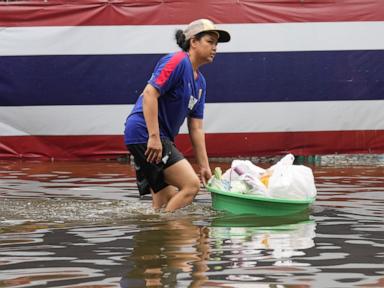
At your ankles. At the threshold of your kitchen. At the floating sandals, the waterlogged electrical cords, the sluggish brown current swirling around the legs of your dining table.
For Somchai, a fifty-four-year-old mechanic whose garage has sat in the same low-lying lane of Bangkok for three decades, the quiet after the storm is not relief. It is waiting. It is the agonizing realization that even though the sky has closed its sluice gates, the city he loves has become a bowl with no drain.
Thousands know this feeling intimately. Across the sprawling, neon-drenched arteries and quiet backstreets of Thailand’s capital, persistent flooding has forced families to pack what they can carry into plastic bags, abandon their ground-floor rooms, and seek refuge in temporary shelters. They are the invisible casualties of a meteorological pause—dry overhead, submerged underfoot.
To understand why Bangkok drowns when the rain stops, you have to look beneath the asphalt.
Imagine a sponge. A thick, natural sea sponge that has spent centuries absorbing the seasonal overflows of the Chao Phraya River and the gentle tides of the Gulf of Thailand. This was the geography of the delta: a vast, interconnected web of wetlands, marshes, and hundreds of winding canals known locally as khlongs. Water arrived, water spread, water soaked in, and water receded. It was a fluid, breathing equilibrium.
Now, imagine wrapping that sponge in thick sheets of concrete. Pouring multi-lane highways over it. Building steel-and-glass skyscrapers that plunge deep into its soft clay. Paving over the very arteries designed by nature to let the breath out of the land.
That is Bangkok today. A modern metropolis built on a sinking foundation—literally sinking, as groundwater extraction and the crushing weight of concrete push the city deeper into the soft mud beneath it. When millions of gallons of rainwater fall upon a city paved like a parking lot, they cannot sink. They must run. And when they run, they collect in every depression, every alley, every subterranean parking garage, turning neighborhoods into inland lakes.
When the storm clouds broke this week, meteorological stations registered a significant easing of rainfall. The immediate typhoon-like downpours that had battered central Thailand for days finally downgraded to scattered showers. Meteorologists breathed a sigh of relief. Headlines flashed across international news feeds: Rain eases in Bangkok.
The headlines missed the point entirely.
Water does not obey human news cycles. It does not pack up and leave just because the storm has passed. Massive volumes of water, funneled down from the northern provinces through the swollen main channel of the Chao Phraya River, were already marching inexorably toward the Gulf. They had to pass right through the heart of the capital to get there. At the same time, local drainage basins—overwhelmed, silted up, and choked with decades of urban debris—simply could not swallow the runoff fast enough.
Consider what happens next: the river swells, high tides push back against the river's mouth from the sea, and the water has nowhere to go. It backs up into the drainage pipes. It bubbles up through the street grates. It transforms toilets into geysers. The city’s elaborate network of massive drainage tunnels and industrial-scale water pumps—engineering marvels in their own right—work around the clock, roaring day and night to push millions of cubic meters of water back into the river. Yet, physics remains undefeated. When the river is higher than the street, pumping water out is like trying to bail out a sinking boat with a spoon while standing underwater.
And so, the evacuation orders came.
In districts like Lat Phrao, Bang Khen, and along the winding banks where the river bends like a sleeping snake, thousands faced an impossible choice. Stay behind with the rising rot, guarding refrigerators elevated on cinder blocks and watching out for venomous snakes displaced from their nests, or leave.
Leaving is never simple. It means locking a door against a tide that doesn’t care about your possessions. It means walking through knee-deep, gray-brown water that carries the invisible signatures of industrial runoff, sewage, and decaying organic matter. It means finding a cot in a crowded school gymnasium or a makeshift camp on higher ground, where privacy is an abstraction and tomorrow is entirely unwritten.
We often talk about natural disasters as if they are singular, explosive moments. We remember the thunderclap, the flash of lightning, the dramatic video of a car half-submerged in a raging torrent. But the true weight of a disaster like this lives in the long, gray hours after the cameras leave.
It lives in the smell of damp mold creeping up freshly painted walls. It lives in the quiet despair of a small business owner calculating whether insurance will cover inventory that turned to pulp overnight. It lives in the strained muscles of volunteers carrying boxes of instant noodles and bottled water through slick, flooded alleys where motorbikes are useless and every step is a gamble on unseen hazards beneath the surface.
There is a profound psychological toll to living on the edge of the water. Bangkok has weathered floods for centuries; its people are famously resilient, possessing a cultural grace and humor—mai pen rai, it doesn't matter, it will pass—that has carried them through generations of deluge. But the frequency and intensity are changing. What used to be a once-in-a-generation crisis is becoming a recurring seasonal tax on urban life. Climate change is rewriting the rules of the monsoon, packing more fury into shorter windows, while sea levels rise and the land beneath the city continues its slow, downward drift.
When you speak to people in the shelters, you hear less anger at the weather and more exhaustion with the math. They know the geography. They know that the city is sitting lower every year while the ocean rises to meet it. They know that concrete cannot hold back a tide forever. They are not asking for miracles; they are asking for a sustainable future in a city that feels increasingly like it is sinking beneath their feet.
Outside, the sun begins its slow descent toward the western horizon, painting the clouds in bruised shades of violet and gold. The floodwaters in Somchai’s lane have receded by perhaps two inches—a cruel tease measured against a ruler taped to his front pillar. He stands on his raised front porch, holding a broom he hasn't used yet, looking out over a mirror-flat street that reflects the empty sky.
The rain has stopped. But the water remains, watching, waiting, and reminding everyone on the banks of the river just how fragile our concrete kingdoms truly are.