The rain in Bangkok does not simply fall. It arrives with the heavy, calculated persistence of an uninvited creditor, turning the familiar concrete skin of the metropolis into a series of dark, churning mirrors.
Consider Somchai. He is not a statistic pulled from a municipal disaster report, though the city administration will eventually count him in one. He is a fifty-four-year-old vendor who has spent two decades frying skewers of marinated pork over glowing coals in a narrow alley off Sukhumvit. When the skies broke open this week, dumping months of drainage expectations into mere hours, Somchai did not pack up his stall. He watched the grey tide creep over the rubber threshold of his family's ground-floor room, inch by muddy inch, absorbing the silent, sickening realization that his inventory, his electric generator, and his children's school books were about to drown in the same murky soup. If you found value in this piece, you might want to check out: this related article.
Water has a memory. And Bangkok is built on a marsh.
For days, headlines across the globe flashed the dry mechanics of the event. Bangkok floodwaters recede after torrential rain as residents count losses. It sounds sterile. It sounds like an administrative footnote, something solved by gravity and the routine opening of sluice gates. But gravity is a cold comfort when your living room smells of petroleum, canal silt, and rotting garbage. For another perspective on this story, check out the latest update from The New York Times.
To understand what happened when the clouds finally emptied, you have to look past the bureaucratic press releases and peer into the visceral reality of a city sinking under its own weight. Bangkok lowers by a centimeter or two every single year. It is a delta city, carved out of the soft mud of the Chao Phraya River basin, engineered into submission by canals, concrete dikes, and towering skyscrapers. But concrete cannot permanently outvote physics.
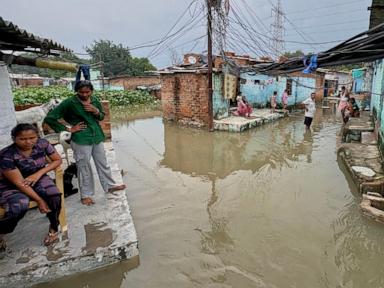
When the torrential downpours hit, the drainage systems—strained by rapid urbanization, blocked by plastic waste, and overwhelmed by sheer volume—simply surrendered. The streets did not just puddle; they transformed. Within hours, major thoroughfares turned into rushing brown rivers where commuter shoes became useless and motorbikes stalled out, their exhaust pipes gargling dark water before dying entirely.
People waded waist-deep through the urban runoff. They carried their pets in plastic crates balanced precariously on their shoulders. They pushed stalled sedans with water sloshing against their chests, laughing nervously to keep panic at bay, because panic does not bail out a kitchen.
This is the invisible cost of modern monsoon seasons. It is not just the property damage, though the insurance adjusters will soon be drowning in paperwork. It is the psychological toll. It is the frantic midnight scramble to lift refrigerators onto cinder blocks. It is the metallic taste of anxiety when you look at the sky and see a bruised, purple horizon promising more of the same tomorrow.
And then, just as quickly as it arrived, the water began to recede.
The Chao Phraya River, swollen to the very edge of its masonry walls, finally accepted the push of industrial pumps and drainage canals, drawing the urban lake back into its muddy channel. The surface of the streets emerged from the brown flood like an old scar drying in the sun, revealing a thick, slick coat of silt.
By Tuesday morning, the cleanup had begun with a fierce, quiet dignity.
Across the neighborhoods, the soundtrack of the city shifted from the roar of pumps to the relentless scrape of push brooms against asphalt. Shopkeepers hauled ruined merchandise out onto the sidewalks, stacking soggy cardboard boxes next to shattered display cases. Women in rubber boots hosed down tiled floors with soapy water, washing away the evidence of the invasion. Somchai was back at his station too, scraping hardened mud from the metal legs of his grill, his clothes smelling of damp earth and charcoal smoke.
Nothing had fundamentally changed, yet everything was different.
The water had receded, leaving behind the hard work of accounting. How much did the storm cost? The city council will tally the millions of baht in infrastructure damage, the lost retail hours, the ruined pavement. But they will never fully quantify the exhaustion etched into the faces of the people who live here, people who love a glittering, chaotic metropolis that demands a heavy tax for the privilege of staying dry.
The sky above Bangkok is clear now. The air is humid, heavy, and hot, baking the mud on the sidewalks into pale flakes of dust. But out in the Gulf of Thailand, miles away from the neon lights and the towering hotels, the clouds are already beginning to gather again.