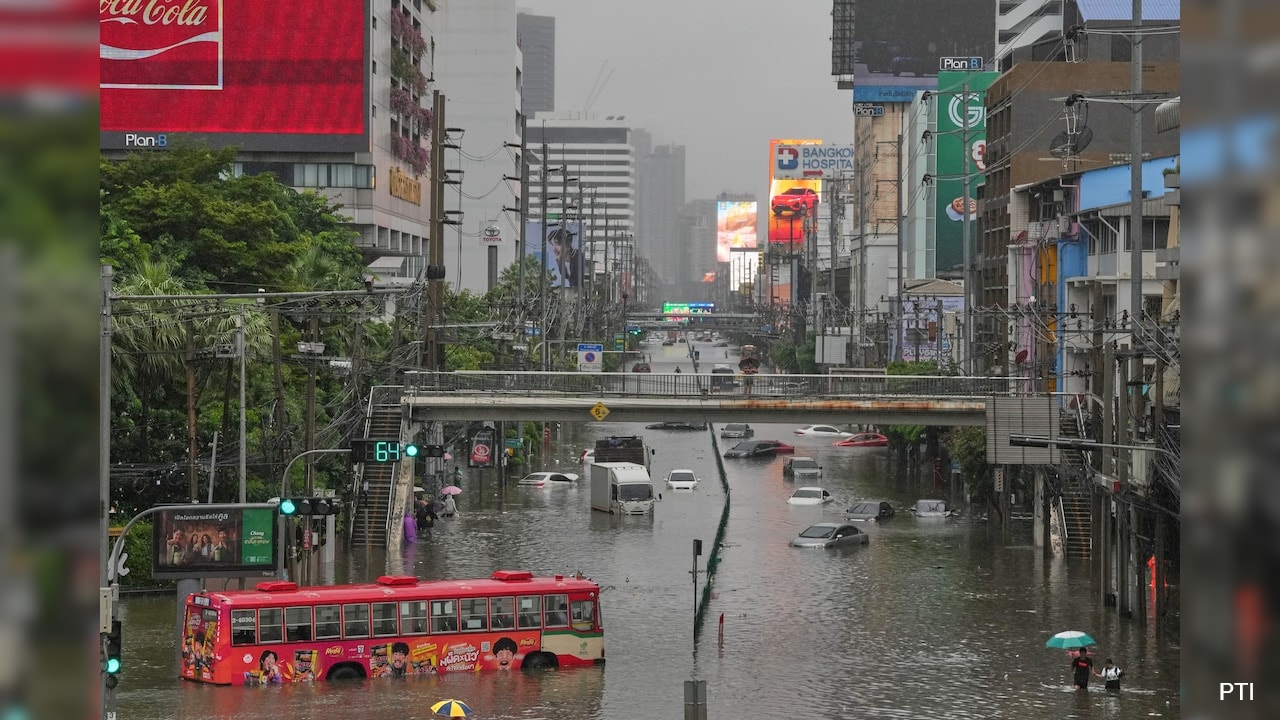
The rain did not sound like rain anymore. It sounded like gravel thrown against glass, a relentless percussion that beat down on the corrugated tin roofs of Bangkok until the metal seemed ready to shatter. Outside, the streetlights bled into long, smeared streaks of amber and green, reflecting off an asphalt surface that had long since ceased to drain. The water was already past the third step. By midnight, it was licking at the porch boards.
In a small home down a narrow soi, Somchai sat cross-legged on a wooden dining table, his legs pulled tightly to his chest. Below him, the dark, oil-slicked water of the monsoon had claimed the floor, swallowing sandals, power strips, and the bottom drawers of cabinets where old photo albums were kept. He had not slept in forty-eight hours. Every time his eyes grew heavy, the slosh of debris-laden water against the table legs—a sudden, hollow knock—jerked him awake.
He was not alone. Across the sprawling expanse of Thailand's capital, more than fifty-two thousand households found themselves locked in the same surreal geometry of survival. When water invades a home, it changes the architecture of daily life. Beds become islands. Doorways become locks. The floor becomes an alien zone, untouchable and toxic, carrying the runoff of a city pushed to its absolute limits.
Water is patient. It does not argue, and it does not tire. It simply rises, inch by measured inch, until the familiar contours of a living room are rendered unrecognizable.
For days, the drainage canals had strained under the weight of unrelenting downpours combined with high tides pushing up from the Chao Phraya River. The city's legendary labyrinth of klongs, once engineered to manage the seasonal floods, groaned beneath millions of gallons of displaced rain. When the banks finally gave way, the water did not arrive as a dramatic wave. It arrived quietly, seeping through floorboards, bubbling up from storm drains, and pooling in alleyways until entire neighborhoods became modern venices without the romance.
Thousands faced a stark choice. Stay and guard what little remained above the waterline, or pack a single plastic bag and step out into the chest-deep current toward an uncertain refuge.
Schools and community centers transformed overnight into cavernous shelters. Cots were lined up row by row beneath fluorescent lights that hummed a continuous, sterile note. Families shared cramped spaces with strangers, their worldly possessions reduced to whatever could be slung over a shoulder or clutched in a wet hand. Children played listlessly with makeshift toys while elders stared blankly at the concrete floors, listening to the distant drone of pumps working frantically against the tide.
In these shelters, time lost its sharp edges. Days bled into nights amid the hum of industrial fans and the low murmur of anxious conversations. People shared bowls of rice ladled out from massive stainless-steel pots by volunteers in high-visibility vests. There was a quiet dignity in the way strangers offered dry towels or shared a charger, a brief spark of human warmth cutting through the cold dampness of displacement.
Yet beneath the immediate logistics of relief lay a heavier, more persistent question. How does a city accustomed to water learn to live with a climate that has rewritten the rules?
Bangkok has always lived with water. Built on a delta, its history is written in canals, stilts, and seasonal inundations. But the scale of modern urbanization has altered the equation. Concrete has paved over the natural absorption zones. Canals that once carried runoff away now struggle against rising sea levels and heavier, more erratic storm cycles. The old rhythms are breaking down.
When the rain finally stopped, the true labor began. The water receded slowly, leaving behind a thick coating of gray silt that coated everything it touched like powdered ash. Somchai stepped down from his table onto the damp tile, his bare feet testing the solid ground for the first time in days. The furniture was warped, the walls bore a dark, stained watermark at chest height, and the smell of damp earth and stagnant runoff hung heavy in the air.
Yet doors were opened. Brooms swept water back into the streets. Neighbors emerged from their dry refuges to check on one another, shovel in hand, mud on their shins.
The water would return with the next season; that much is certain. But in the quiet hours between the storms, the resilience of a city tested by the tide remains its most enduring structure.


