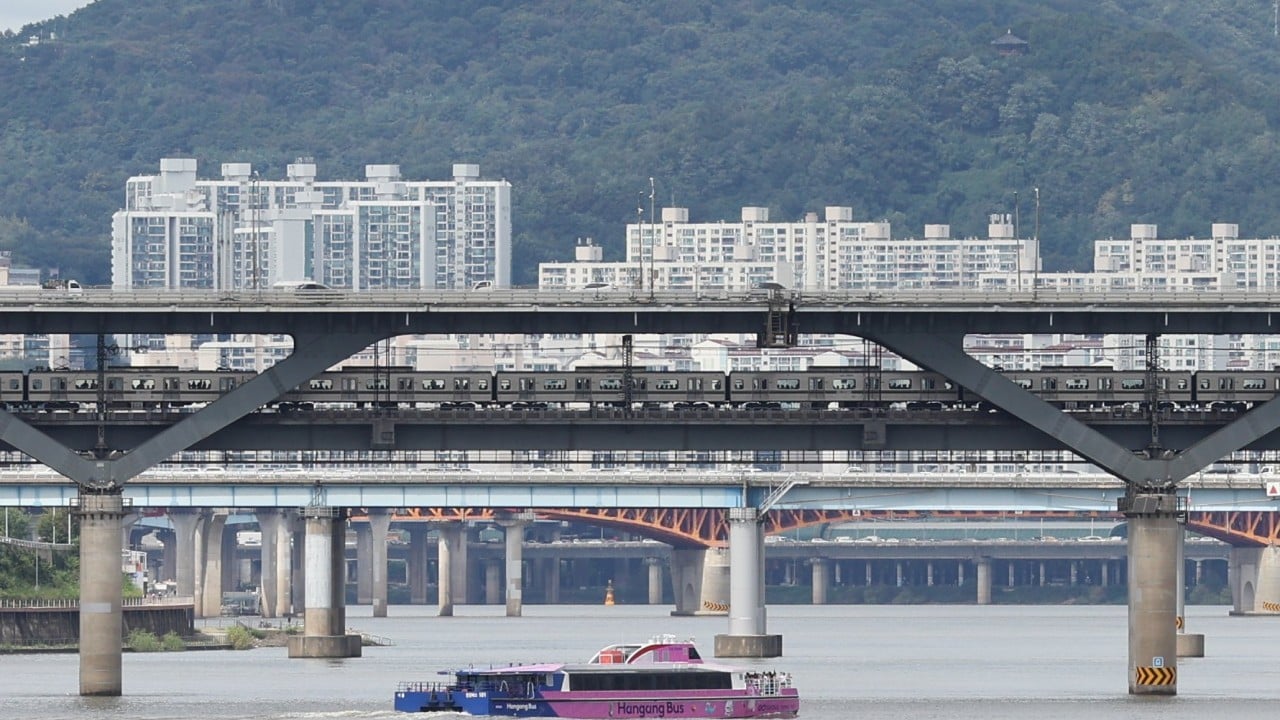
The water looks like black glass from sixty meters up. At three o’clock in the morning, the Mapo Bridge in Seoul doesn’t feel like a miracle of modern engineering. It feels like a high-altitude ledge. The wind off the Han River carries a bitter, metallic chill, and the city hums a low, indifferent bassline in the distance.
For decades, these bridges have held a dark, heavy reputation. They are architectural icons that double as national scars. When the sun goes down, the concrete structures spanning the river become the focal point for a profound human tragedy. Hundreds of people arrive here every year believing they have reached the absolute end of their choices.
Historically, saving them was a matter of tragic math. A lone security guard staring at a wall of two hundred CCTV monitors cannot see everything. Human eyes glaze over after twenty minutes of watching empty, gray asphalt. By the time a guard noticed a figure climbing over the railing, the splash had already happened. The rescue boats would launch into the dark, fighting against time and a treacherous current, often arriving too late.
Then the code changed.
Today, a silent, invisible network of algorithms watches the Han River. It does not sleep. It does not suffer from screen fatigue. By pairing deep-learning artificial intelligence with the city’s rescue infrastructure, Seoul has quietly pulled off something once deemed impossible. They have driven the detection and prevention rate of suicide attempts on these bridges to a staggering 99 percent.
But to understand how we got here, you have to look past the data. You have to understand what desperation looks like to a machine.
The Anatomy of Hesitation
Computers are notoriously bad at understanding human emotion, but they are spectacular at detecting patterns.
When the Seoul Metropolitan Fire and Disaster Headquarters first sought to solve the crisis on the bridges, they realized that standard motion-detection cameras were useless. A camera that triggers an alarm every time a jogger runs past or a tourist leans over to take a photo creates a nightmare of false alarms. If a system cries wolf ten thousand times a night, the human rescuers eventually turn it off.
The breakthrough came when data scientists stopped looking at the act of jumping and started studying the minutes leading up to it.
Consider a hypothetical resident we will call Ji-hoon. He hasn’t slept in three days. His business failed, the debt notices are piling up, and the shame feels like a physical weight crushing his chest. When Ji-hoon walks onto the Mapo Bridge, his behavior is fundamentally different from a commuter or a tourist. He doesn’t walk with a purpose. He paces. He stops. He grips the railing, stares at the water, and walks away, only to return to the exact same spot five minutes later.
This is the geometry of despair.
The AI system, trained on thousands of hours of historical footage from previous incidents, recognizes these exact behavioral anomalies. It analyzes the drift of a person's path, the time spent stationary in high-risk zones, and even the subtle body language of hesitation. The moment the algorithm detects these indicators, it flags the live feed with a red alert, instantly pushing the video to the desks of the Han River rescue teams.
The technology does not try to diagnose Ji-hoon’s pain. It simply measures his hesitation. And in that hesitation lies the window to save a life.
Inside the Control Room
The rescue station sits right on the water, humming with a tense, disciplined quiet. On the screens, the AI maps the bridges using predictive modeling. It transforms the cold concrete structures into a living heatmap of human vulnerability.
When an alert flashes, the system doesn’t just say "look here." It provides context. It evaluates the environmental data. Is it raining? Is it past midnight? Is the river current running unusually fast today? The algorithm synthesizes these variables to give the dispatchers a real-time risk assessment score.
If the score crosses a specific threshold, the response is immediate.
While a human dispatcher verifies the footage, a localized rescue boat is already starting its engines. Concurrently, nearby speakers on the bridge can be activated to offer automated words of comfort or direct the individual to an emergency telephone linked directly to a crisis counselor.
The old way of rescue was entirely reactive. You waited for the crisis to happen, and then you rushed to clean up the pieces. This new framework is entirely preventative. The goal is to intercept the individual while their feet are still firmly planted on the pavement.
The statistics tell a story of radical transformation. Before the deployment of this integrated AI system, dispatchers struggled to parse the overwhelming wave of visual data from the city's vast surveillance network. Success was dictated by luck and timing. Now, with the machines acting as a predictive filter, rescue teams intercept individuals before they ever make the leap in nearly every single recorded instance.
The Limits of the Digital Shield
It is tempting to look at a 99 percent success rate and declare victory. We love tech stories with clean endings. We want to believe that a brilliant piece of software can cure the deepest, darkest fractures in our society.
But the engineers who built this system are the first to admit its limitations.
An algorithm can secure a bridge. It cannot fix the crushing societal pressures that drive a person to walk onto that bridge in the first place. South Korea has consistently battled one of the highest suicide rates among developed nations, a complex crisis fueled by intense educational pressure, economic disparity, an aging population facing isolation, and a lingering cultural stigma around seeking mental health treatment.
The AI is a tourniquet. It is not the cure.
If we rely solely on the technology to police the symptoms of a deeper cultural ache, we are missing the point entirely. The machine buys us time. That is its true value. It grants a young man or an elderly woman one more night, one more conversation, one more chance to find a thread of hope. What we choose to do with that purchased time as a society is where the real work begins.
There is also the uncomfortable conversation regarding surveillance. Living in a world where your every movement, hesitation, and pause on a public bridge is scrutinized by an artificial mind can feel dystopian. It forces us to ask a difficult question: How much privacy are we willing to trade for the preservation of life?
In Seoul, the consensus has leaned heavily toward survival. The cameras do not use facial recognition to identify citizens or log their personal data for law enforcement. They watch the silhouettes, the movement vectors, the human form in distress. The system is designed to care about the what, not the who.
The Weight of the Next Minute
The real test of this technology happens in the silence after the rescue.
Imagine the boat reaching the bank of the river. The rescue workers pull Ji-hoon away from the edge. He is wrapped in a heavy blanket, shivering, perhaps angry, perhaps weeping with a profound sense of relief. The AI has done its job. The alert clears from the monitor in the control room. The screen returns to its steady, gray vigil over the dark water.
The machine doesn't know what happens to Ji-hoon the next day. It doesn't know if he finds a job, if his family forgives him, or if he finds a therapist who helps him unpack the weight in his mind. The algorithm's universe ends at the bridge's railing.
But for that one critical minute, when the human spirit was too exhausted to carry its own weight, the wires held. A sequence of ones and zeros, calculated in a server rack miles away, translated into a second chance.
The Han River still flows silently through the heart of Seoul, reflecting the neon glitter of skyscrapers and the endless parade of headlights. The bridges are still high, and the water is still cold. But above the currents, the invisible watchmen remain awake, staring into the dark, waiting patiently to catch us when we stumble.