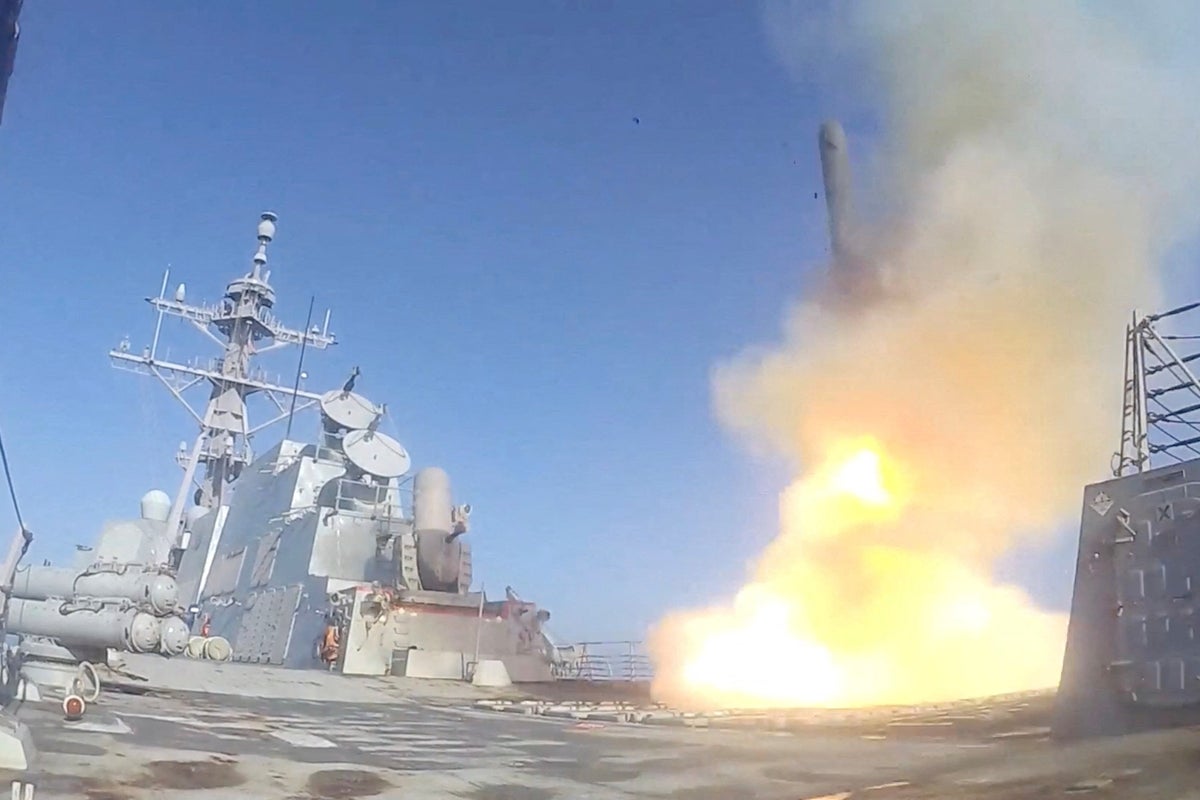
The standard playbook for covering Middle East escalations relies on a lazy, predictable script. A strike hits a regional base, an official steps to a microphone to express grave concern, investigations are promised, and pundits debate whether deterrence has failed. This framing assumes a rational actor framework that died somewhere around the time supply chains, drone commoditization, and asymmetric gray-zone tactics decoupled military power from conventional state borders.
When headlines blare about regional flare-ups and collateral tragedies under investigation, they obscure the structural reality. The entire architecture of modern security management is built on a twentieth-century map that has been shredded.
The Deterrence Fallacy That Keeps Costing Billions
For decades, the defense establishment has operated on a simple premise: proportional kinetic responses restore equilibrium. Hit our forces, and we hit your proxies or supply nodes back just hard enough to send a signal, but softly enough to avoid a regional conflagration.
This is bureaucratic self-delusion.
I have watched defense analysts pore over threat matrices for years, treating adversary escalation ladders as if they were governed by textbook game theory. They are not. When non-state networks integrated with state sponsors possess cheap, mass-produced loitering munitions, the cost-benefit analysis of deterrence flips upside down. A three-thousand-dollar drone forcing the launch of a multi-million-dollar interceptor missile is not a tactical skirmish. It is an economic attrition strategy executed in plain sight.
The conventional commentary fixates on the immediate tragedy of targeted strikes and the political posturing of diplomatic handlers. Meanwhile, the actual mechanics of the conflict have shifted to logistics networks, crypto-funded procurement chains, and cyber-enabled targeting that render traditional red lines obsolete.
Why Investigations Into Operational Chaos Miss the Point
Whenever collateral damage occurs, institutional routines kick in. Investigations are announced. Findings are classified or quietly buried. Oversight committees hold hearings where stern-faced representatives demand accountability for operational friction.
This ritual misses the core pathology.
The friction is not an anomaly in the system. The friction is the system. When you deploy high-value, centralized military infrastructure into decentralized, hostile environments without a coherent political endpoint, tactical errors are mathematically guaranteed. Investigations treat these incidents as isolated mechanical failures rather than the inevitable output of a flawed strategic premise.
Imagine a corporate entity deploying legacy software into a completely restructured cloud environment, then launching an internal inquiry every time a server crashes. That is the exact loop Washington runs every time an asymmetric attack catches regional commanders flat-footed.
The Real Question Nobody Wants to Ask
People ask whether the latest round of retaliatory strikes will restore stability or escalate tensions. This is the wrong question entirely. It assumes stability is still an achievable status quo rather than a historical anomaly.
The correct question is how long western taxpayers will fund an open-ended posture designed for containment in an era of total fragmentation.
The structural incentives for regional actors to keep testing the boundaries will not vanish because of a strongly worded diplomatic demarche or a targeted counter-strike. Their calculus is simple: low-cost persistence wears down high-cost permanence. Until policymakers stop treating asymmetric friction as a temporary glitch and start acknowledging that the old rules of engagement have dissolved, every investigation will be nothing more than theater designed to buy time until the next inevitable collision.