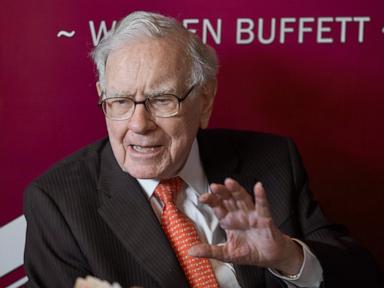
Every financial journalist and retail pundit is currently weeping over Warren Buffett stepping down as chairman of Berkshire Hathaway, writing digital eulogies about Father Time and the end of an era. They are treating a corporate succession plan like a state funeral.
This panic is lazy, sentimental nonsense.
The lazy consensus says that Berkshire without Buffett is just a ship without a rudder, a massive collection of disparate insurance floats, railcars, and candy factories destined to bloat and drift. They argue that the Oracle of Omaha possesses an irreplaceable magic touch, an intrinsic clairvoyance that cannot be codified, taught, or replicated.
I have watched institutional investors panic over legendary founders stepping down for two decades. Every time, the mourners miss the actual mechanics of enterprise scaling. Buffett has not been the sole engine of Berkshire for years; he has been its primary constraint.
The Myth of the Irreplaceable Allocator
Let us define what Berkshire Hathaway actually is today. It is not a scrappy textile mill in New England or a clever partnership buying undervalued cigar butts. It is a three-hundred-billion-dollar compounding machine wrapped in a holding company structure, heavily weighted toward cash generation, energy infrastructure, and an ungodly amount of insurance float.
The standard narrative claims Buffett's genius lies entirely in stock picking—buying Coca-Cola or Apple at the exact psychological bottom. But look at the last ten years. Berkshire has been sitting on mountains of cash precisely because the equity markets have been too rich for Buffett’s strict value discipline. His discipline, while legendary, became an anchor during an era of hyper-growth technology scaling because he openly admitted he did not understand tech well enough to deploy fifty billion dollars into it.
That is not brilliance; that is a blind spot. A multi-trillion-dollar conglomerate cannot afford blind spots based on generational comfort zones.
When Greg Abel takes the complete reins, he does not carry the burden of 1960s investing nostalgia. Abel understands heavy industry, energy transition, and operational execution better than Buffett ever did. Buffett was an investment guy who bought companies; Abel is an operator who optimizes them. The market hates this shift because it lacks romance. But romance does not fund dividend yields or buy back undervalued shares.
The Decentralization Trap and the Decentralization Shield
People love to praise Berkshire’s decentralized model—the idea that dozens of subsidiary CEOs run their businesses with zero interference from headquarters. The trope is that Buffett sits in Omaha reading annual reports while GEICO, BNSF, and Dairy Queen print cash.
Here is the dirty secret Wall Street ignores: decentralized management without aggressive capital reallocation is just a collection of glorified mom-and-pop shops with high insurance liabilities.
Buffett’s hands-off approach worked brilliantly when Berkshire was small enough that a few great capital allocations moved the needle. At its current scale, pure decentralization turns into bureaucracy. Subsidiaries get comfortable. They stop innovating because they have an infinite balance sheet backing their mistakes.
Imagine a scenario where a private equity firm ran Berkshire's portfolio. Every underperforming subsidiary would be aggressively restructured, integrated, or spun off. Berkshire has historically refused to do this out of loyalty to founders and historical sentimentality. Sentimentality is an expensive luxury in modern capital markets.
Abel and investment deputies Todd Combs and Ted Weschler do not have the emotional attachment to these legacy brands that Buffett has. That lack of sentimentality is precisely what will unlock the next wave of shareholder value. They can prune the dead wood without feeling like they are desecrating a temple.
The Conglomerate Discount is Self-Inflicted
For years, analysts have applied a "conglomerate discount" to Berkshire Hathaway. The market assumes that a massive holding company holding everything from freight rail to underwear manufacturing is inherently worth less than the sum of its parts because investors can just buy those sectors individually.
The discount exists because Berkshire became bloated with cash it refused to deploy aggressively and lacked a clear catalyst for returning that cash efficiently to shareholders beyond slow buybacks.
Buffett's exit removes the emotional moat keeping that discount in place. When a company is permanently tied to a living legend, its valuation trades on personality cult metrics rather than pure fundamental cash flow execution. Once that personality cult fades into corporate history, the market is forced to value Berkshire strictly on its balance sheet, its structural advantages in insurance float, and its operational cash generation.
That forces a rerating. The market hates uncertainty, but it loves mathematical clarity even more.
What the Pundits Get Wrong About the Float
Let us talk about the insurance float, because this is where the financial press shows its profound ignorance. Berkshire’s engine is not just Apple stock or Geico car insurance; it is the float—money collected from premiums before claims are paid out, which Berkshire gets to invest for free.
Critics argue that without Buffett's personal credibility in underwriting, insurance partners or massive reinsurance clients might look elsewhere. This is economically illiterate. Reinsurance is a pure math transaction. Swiss Re, Munich Re, and Berkshire do not do business together based on how charming the chairman is at an annual shareholder meeting in Omaha. They do business based on capital adequacy, credit ratings, and claims-paying capacity.
Berkshire's capital fortress is so impregnable that it could be run by a damp dishrag and still command the best reinsurance terms on the planet. Abel inherits a balance sheet so fortified that it acts as a permanent gravitational pull for global risk.
The Real Risk Nobody is Talking About
My contrarian take is not that Berkshire will be fine without Buffett—that is too easy. The real risk is that the successor team becomes too corporate, too conventional, and abandons Berkshire’s unique structural advantage: extreme patience.
Most CEOs are terrified of looking stupid for three consecutive quarters. Buffett had the social insulation of a god king, allowing him to sit on one hundred billion dollars of cash while every Wall Street analyst screamed that he was losing his touch. That supreme indifference to short-term peer pressure is Berkshire's true intellectual property.
If Abel caves to institutional pressure and starts engaging in trendy mergers and acquisitions, or chases high-multiple tech rollups just to appease quarterly earnings calls, Berkshire will destroy its competitive advantage.
The test of the post-Buffett era is not whether they can pick stocks as well as Warren. The test is whether they possess the institutional stubbornness to do nothing when the market demands action.
Buffett is leaving. Good. The cult of personality has masked the structural realities of a modern industrial titan for long enough. Strip away the cherry Cokes, the folksy aphorisms, and the annual pilgrimage to Nebraska, and you are left with the most ruthlessly efficient cash-generating machine in human history.
It didn't need a mascot. It just needed to get out of its own way.