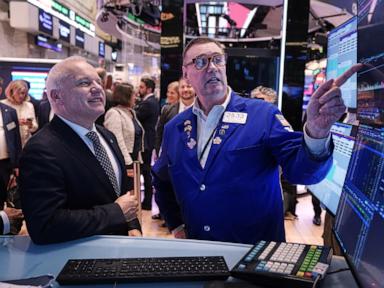
The financial press is running its favorite playbook again. Global shares are slipping, the headlines blauder about "caution over geopolitical tensions," and analysts line up to pretend that an escalation in the Middle East is a brand-new variable the market failed to price in.
It is a tired, lazy consensus.
Markets do not slip because of a war in Iran. Markets slip because short-term traders need an excuse to lock in profits, and retail investors are easily spooked by flashing red chyrons. If you are rebalancing your portfolio based on military conflict headlines, you are playing a loser's game. I have watched fund managers dump millions in capital during sudden geopolitical scares, only to buy back into the exact same positions three months later at a 15% premium. It is panic masquerading as strategy.
The premise that conflict automatically destroys equity value is historically illiterate.
The Myth of the Geopolitical Market Crash
Mainstream financial reporting wants you to believe there is a straight line between geopolitical conflict and a collapsing stock market. The logic seems simple: war threatens oil supplies, oil prices spike, inflation reaccelerates, and corporate earnings suffer.
The data tells a completely different story.
Look at the historical record of major geopolitical shocks over the last eighty years. When Pearl Harbor was attacked in 1941, the S&P 500 dropped, but within a year, it had recovered and moved higher. During the Cuban Missile Crisis—the closest the world ever came to nuclear annihilation—the market barely blinked and actually gained ground over the following months. Even the 1973 oil embargo, which caused genuine structural pain, was a reflection of long-festering macroeconomic imbalances rather than the conflict itself.
Geopolitical events cause volatility, not structural bear markets. Volatility is a metric of speed, not direction. When a market drops 2% on news of escalating tensions in Iran, it is a liquidity event. Algorithms execute automated sell orders based on keyword sentiment analysis, creating a temporary vacuum of buyers.
Smart capital does not run from these vacuums. It steps into them.
What the "Experts" Get Wrong About Crude
The core argument for panic always centers on oil. The narrative insists that any instability involving Iran will choke the Strait of Hormuz, send crude to $150 a barrel, and break the back of the global economy.
This view ignores how the energy market has fundamentally changed. The global energy mix is vastly more decentralized than it was during the shocks of the 20th century. North American production capacity acts as a massive swing producer. When supply disruptions threaten one region, production incentives shift globally.
Furthermore, high oil prices carry the seeds of their own destruction via demand destruction. If crude spikes artificially due to military friction, consumption drops, alternatives accelerate, and prices collapse under their own weight. Betting against global equities based on a temporary commodity spike is a fundamental misunderstanding of structural economic resilience.
Dismantling the Panic Queries
When geopolitical headlines dominate, investor search trends spike with predictable, flawed questions. Let us dismantle the most common premises.
Should I move my portfolio to cash during a war scare?
No. Cash is a guaranteed loss of purchasing power, especially during periods when geopolitical tension causes resource scarcity and drives up baseline inflation. Holding excess cash because you are waiting for the "dust to settle" means you will miss the inevitable, violent relief rally. Markets bottom out when the news is worst, not when the sky clears. By the time the headline reads "Peace Achieved," the market is already trading at all-time highs.
Are defense stocks a safe haven right now?
Buying defense contractors the moment a conflict breaks out is chasing performance. It is a classic amateur move. The valuation of major defense firms already incorporates baseline structural spending from global superpowers. A localized conflict rarely changes the long-term procurement cycles of major nations enough to justify the sudden premium retail investors pay during a news cycle panic. You are buying at the top of the sentiment curve.
The Hidden Structural Risk Nobody is Talking About
If you want to worry about something, stop looking at troop movements and start looking at sovereign debt mechanics.
The real danger of prolonged geopolitical friction is not the immediate disruption of commerce; it is the fiscal response of western governments. Conflict creates a blank check environment. Governments borrow more, central banks are forced to accommodate fiscal deficits, and the long-term structural value of fiat currency erodes.
Geopolitical Shock -> Fiscal Expansion -> Increased Debt Issuance -> Central Bank Intervention -> Currency Debasement
When you understand this chain reaction, selling productive corporate assets (shares) to hold fiat currency (cash) looks absurd. Equities are claims on real assets and real cash flows. Corporations can raise prices to match inflating costs; cash cannot. In a world of perpetual geopolitical friction and fiscal profligacy, high-quality equities are not the risk—they are the hedge.
The Danger of My Own Advice
To be absolutely fair, a contrarian approach requires a iron stomach and a specific type of portfolio. If you are a forced seller—meaning you need your capital next month to pay for a house or retirement—you cannot afford to ride out the volatility of a geopolitical shock.
- The Illiquidity Trap: If you buy the dip while a conflict worsens, your position may remain underwater for six, twelve, or eighteen months.
- The Valuation Premium: Buying during a downturn only works if you are purchasing businesses with pristine balance sheets. Weak, highly leveraged companies can still go under if a temporary economic slowdown restricts their access to credit markets.
If you are going to ignore the headlines and buy when others are fearful, you must do it with capital that has a multi-year horizon and a focus on companies with zero debt and pricing power.
Stop Looking at the Map, Look at the Cash Flow
The competitor article wants you to sit on your hands, watch the news, and wait for global leaders to give you permission to invest. They want you to believe that the world is too dangerous for your capital right now.
That is an expensive illusion.
The global economy is a massive, adaptive system composed of billions of people who wake up every day determined to produce, consume, and survive. It routing around blockades, finds alternative suppliers, and invents new technologies to bypass bottlenecks.
A corporation like Apple, Microsoft, or ExxonMobil does not stop functioning because a regional conflict dominates the news cycle. Their supply chains adapt. Their customer base remains. Their pricing power endures.
Stop treating the stock market like a psychological barometer for global peace. It is a discounting mechanism for future corporate cash flows. When short-term panic drives down the price of those cash flows, your only job is to buy them cheaper than they were yesterday. Turn off the news. Open your brokerage account. Buy the companies that run the world while everyone else is arguing over the map.